
THE APEX TIMES
Mavericks rout Rockets 132-115 in China after Kyrie Irving return
Houston’s second straight overseas game featured a star-light lineup, and Dallas took advantage with a 132-115 win in its “part deux” matchup in China.
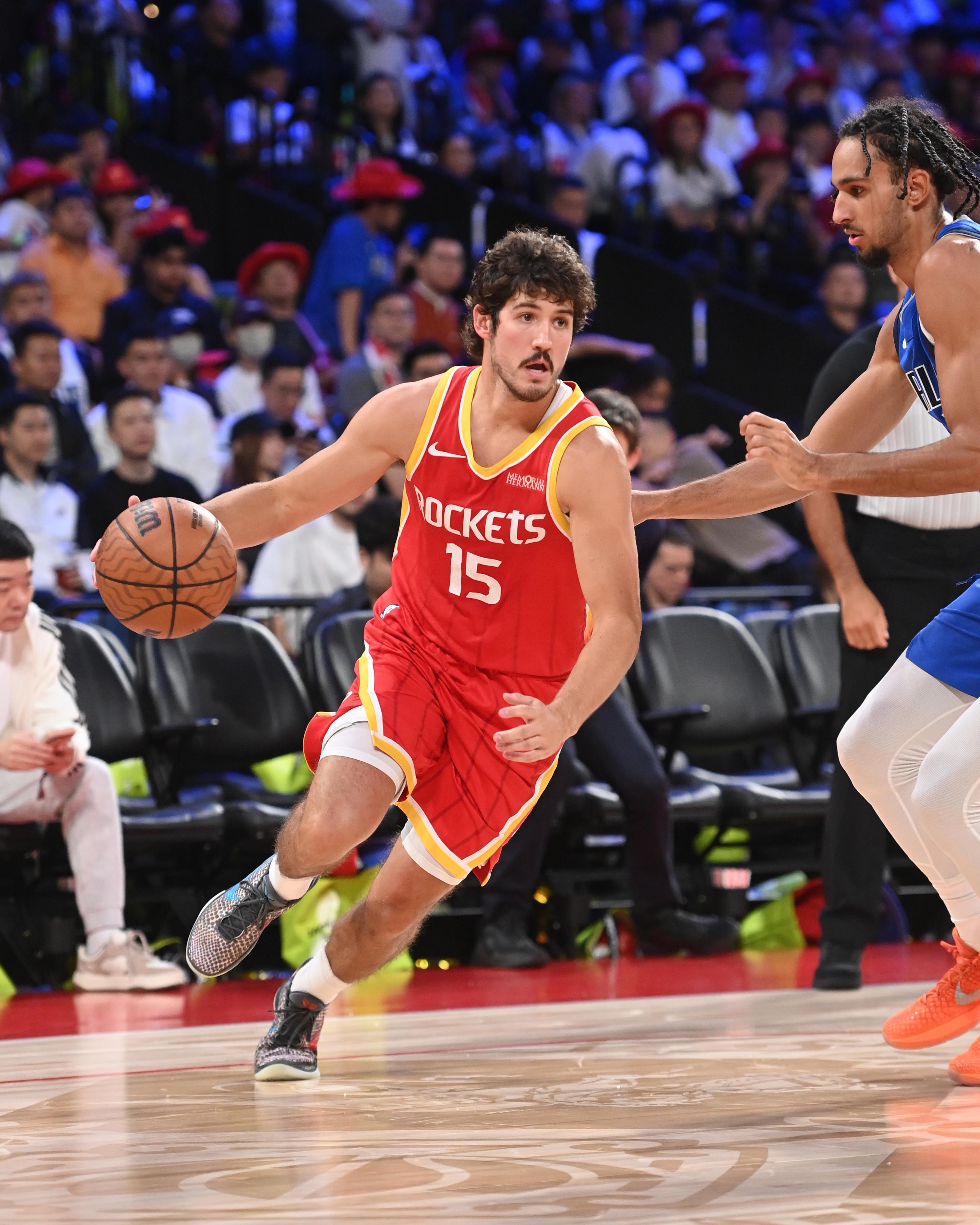
The Dallas Mavericks defeated the Houston Rockets 132-115 in their second game of an overseas set in China, turning the night into a stark contrast from the Rockets’ first matchup on the trip. Dallas’s outcome was shaped by the return of Kyrie Irving, while Houston used a significantly different rotation than it did in game 1, sitting key pieces that included Kevin Durant, Steven Adams, Fred VanVleet and Alperen Sengun.
According to the report, the Rockets had “a tale of two games” in China and ultimately split the overseas series, with Dallas getting the decisive result in the second contest. The decision to rest multiple high-usage players in game 2 dramatically reduced Houston’s scoring and playmaking ceiling, leaving the Mavericks more opportunities to run their offense and punish late-game mismatches.
For Dallas, the presence of Irving acted as the stabilizing factor that can swing an overseas game, especially when the opponent plays without its top creators and anchors. Even without detailed possession-by-possession breakdowns, the structure is clear: when a team brings back its primary perimeter creator after a rest day, the offensive rhythm can look sharper immediately, particularly against a roster that has been rotated heavily.
Houston, meanwhile, leaned into a different strategy for its second China appearance by sitting multiple starters and rotational drivers. With Durant and VanVleet both out, the team’s shot creation and secondary decision-making would have been reduced, and without Sengun, one of Houston’s central inside-out playmakers would have been unavailable. Adams’ absence also changes the spacing and rebounding dynamics in the frontcourt, which matters in a single-game swing like this one.
The scoreline itself, 132-115, suggests a game that tilted toward Dallas’s efficiency and comfort on offense once it had its top guard back. A 17-point margin in the NBA also typically reflects more than one advantage, whether it is scoring consistency, reduced turnovers, or sustained rim pressure, and the resting of Houston’s main scoring and organizing players would reasonably contribute to multiple parts of that equation.
What to watch next is how both teams treat the broader preseason-to-regular-season transition. For Houston, game-to-game continuity matters when stars sit, because timing and role clarity can get fuzzy when multiple lineups are used. For Dallas, a win built around a return game can be a confidence boost, but the bigger question is whether the Mavericks can reproduce that offensive flow without relying on any single player’s availability.
Finally, overseas “part deux” games often come with deliberate roster management, so the matchup’s deeper implications may depend on what each team was testing rather than strictly on the final tally. Still, the result adds a clear datapoint: with Houston’s key players on the bench, Dallas had the advantage to turn its offense into a cushion.
Why It Matters
- The game illustrates how significantly NBA overseas rest decisions can change a team’s offensive and defensive profile from one night to the next.
- For Dallas, Irving’s return highlights how much the Mavericks’ attack can benefit from immediate perimeter creation and ball-handling stability.
- For Houston, the lineup choice in game 2 raises questions about continuity and how quickly backup units can create offense without the team’s primary drivers.
- The final margin provides a clear reminder that rotating out multiple core players can widen gaps quickly, even in a single game.
Key Facts
- The Dallas Mavericks defeated the Houston Rockets 132-115 in China on Oct. 12, 2026.
- The report describes Houston as splitting the overseas set.
- Dallas was “boosted” by the return of Kyrie Irving.
- Houston sat Kevin Durant, Steven Adams, Fred VanVleet and Alperen Sengun in game 2.
- The matchup is described as the “part deux” of the China series.