
THE APEX TIMES
Max Muncy says AI is already changing how MLB teams prepare, as Dodgers third baseman explains what he’s seen
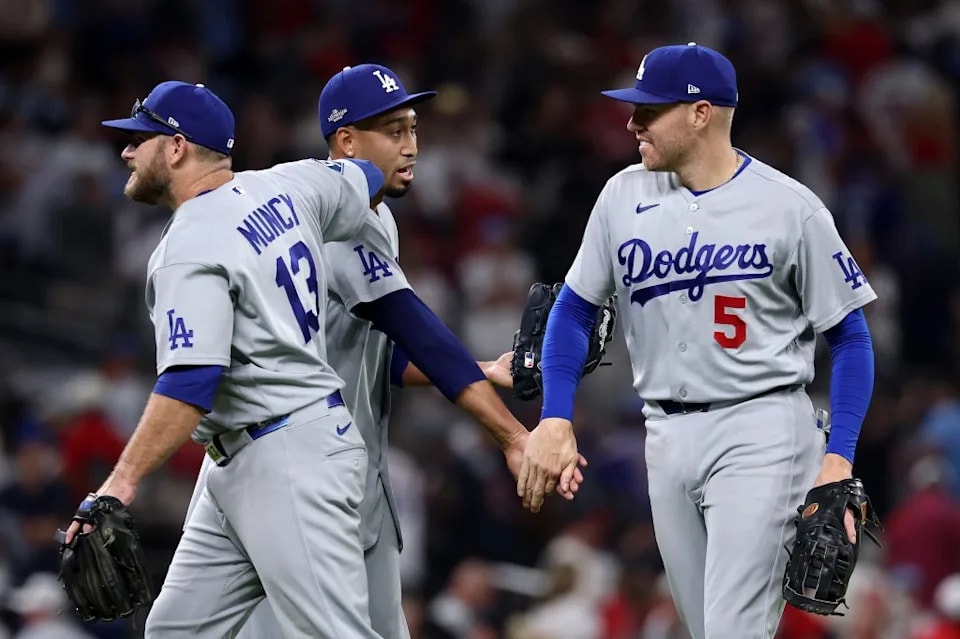
In an appearance on Foul Territory, Los Angeles Dodgers third baseman Max Muncy described the growing role of artificial intelligence across Major League Baseball, framing it as a competitive tool teams are using now rather than a distant idea.
Artificial intelligence is no longer a futuristic talking point in Major League Baseball. Dodgers third baseman Max Muncy, speaking on the Foul Territory program, discussed what he believes is already happening around the league: teams are using AI to gain an edge in preparation and decision-making. His comments place the technology squarely in the day-to-day baseball workflow, not just in isolated experiments or theoretical conversations.
Muncy’s underlying message, as presented in the discussion, is that AI has moved past the novelty phase. When players and teams talk about new tools, there is often a lag between what the sport imagines and what it actually deploys. By describing AI as “already” infiltrated into baseball, Muncy suggested the gap has narrowed, with organizations applying advanced analytics and machine-learning methods in practical ways.
The Dodgers context matters because Muncy is a hitter who lives in the details of scouting and pitch recognition, and third base is a position where preparation is tightly linked to game-time reads. While the interview does not outline a specific, publicly documented AI system by name, the thrust of the conversation was clear: teams around MLB are finding ways to use AI to interpret information faster or more precisely, and those small advantages can show up in at-bats, defensive actions, and in-game strategy.
AI in baseball typically connects to broader categories such as batter-pitcher matchup modeling, video breakdown automation, and the refinement of scouting reports. In that sense, Muncy’s remarks fit a pattern the sport has been following for years, where data-driven approaches have steadily expanded. What may be new, according to the framing from the interview, is the sense that AI methods are now being used as an active advantage rather than simply a supporting analytical layer.
From a competitive standpoint, the most consequential part of any AI adoption is not the technology itself. It is the operational speed and consistency with which teams can turn data into decisions. If AI tools are helping teams process information and translate it into planning, then the clubs that integrate those tools most effectively can put themselves in a better position, even when the on-field differences look marginal at first glance.
There is also a reason player perspectives carry weight in this conversation. Baseball operations can speak in models and dashboards, but hitters and fielders experience the results directly, in the feel of preparation and in how scouting tendencies are translated into game plans. Muncy’s comments reflect that reality from the clubhouse floor, even though the public record here does not provide the technical specifics of what AI is being used and how.
What to watch next is whether MLB coverage and team-released materials increasingly move from general references to AI toward clearer descriptions of applications. As more players discuss AI usage in media, and as teams continue to modernize their baseball operations, fans may get a better sense of which parts of the game are seeing the quickest transformation.
Why It Matters
- If AI helps teams make faster, more accurate preparation decisions, the advantages could show up in day-to-day performance rather than only in long-range planning.
- Player buy-in and on-field experience matter, and Muncy’s comments suggest technology is affecting how teams support hitters and game plans.
- Broader adoption raises the stakes of integration, since organizations that translate analytics into actions most effectively gain an edge.
- It sets up increased public scrutiny of what AI is used for in baseball as more players and media segments discuss the topic.
Key Facts
- Los Angeles Dodgers third baseman Max Muncy discussed AI usage in Major League Baseball in an appearance on Foul Territory.
- Muncy’s comments characterized AI as something teams are using now, not only experimenting with for the future.
- The discussion framed AI as a potential competitive advantage for clubs across the league.
- The reporting centers on Muncy’s player perspective on how technology is showing up in baseball preparation.