
THE APEX TIMES
Mets Face a Big Offseason Decision on Kodai Senga: Keep Building or Shop the Ace-With-Question Marks?
With 2026 shaping up as a tale of two seasons for Kodai Senga, New York’s offseason planning now includes a difficult question: is it better to lean into Senga’s upside or test the market while his value is still moving?
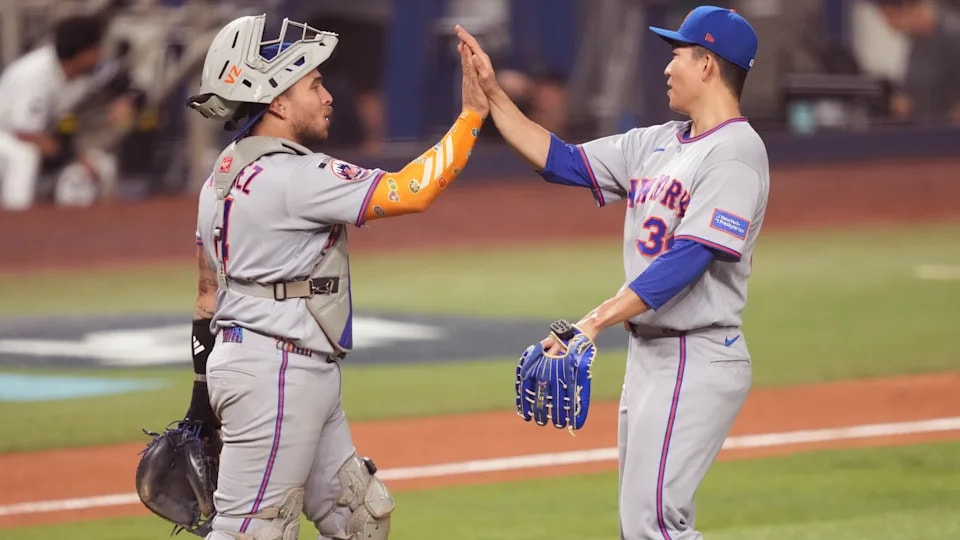
The Mets’ offseason is not just about adding arms. It is also about deciding what to do with Kodai Senga, a pitcher whose 2026 season has been described as a “tale of two seasons,” prompting fresh debate over whether New York should keep him or explore a trade. The central issue is simple: roster construction is easiest when a team knows exactly what it is getting from its top starters, and the story around Senga this year suggests that clarity has been uneven.
In that framework, the question “stay or go” matters because the Mets’ rotation picture directly affects both their short-term playoff window and their long-term approach to contention. If Senga’s 2026 results were strong in segments but inconsistent overall, the Mets have to weigh whether that pattern reflects normal variability or a more structural concern that could follow him into the next contract cycle.
A trade discussion also carries a timing element. Even when a player still has real ability, teams often consider moving when a season produces enough mixed indicates that other contenders may see hidden upside while the selling club sees limited certainty. For New York, the decision is whether Senga’s perceived ceiling justifies absorbing the risk of repeated inconsistency, or whether capital gained in a trade could reduce uncertainty across the staff.
The “stay or go” framing does not, by itself, mean a deal is imminent. It indicates that Senga has become a decision point, not a default rotation anchor, in how the Mets are thinking about their 2027 plans. From a baseball operations standpoint, this kind of offseason evaluation typically involves matching a pitcher’s demonstrated production and health-to-performance translation against the organization’s available resources, whether that is internal development, free-agent targets, or trade market opportunities.
What to watch next is not only whether the Mets publicly close the door on trade speculation, but also whether their broader offseason strategy indicates a commitment to maintaining a stable rotation core. If New York pursues additional starter depth aggressively, it could suggest they are preparing for a reduced role for Senga. If they instead invest in pieces around the staff, it could be read as a vote of confidence in keeping him as a long-term building block.
Until more confirmed reporting arrives, any “trade” narrative should be treated as an evaluation question rather than a transaction plan. Still, the fact that Senga is now being discussed as a potential trade candidate indicates that his 2026 season has created enough doubt to force a genuine offseason conversation, one that could shape the Mets’ rotation identity for the next year or two.
Why It Matters
- Rotation stability is often the difference-maker for teams trying to stay competitive into the playoffs.
- A decision on Senga affects how the Mets allocate pitching resources, whether through trades, internal development, or free-agent additions.
- If New York chooses to shop Senga, it indicates a potentially more aggressive roster rebalancing approach rather than incremental change.
- If the Mets keep Senga, they are effectively betting that 2026’s mixed indicates were temporary and that the next season will smooth out.
- The outcome will influence the Mets’ pitching depth strategy for the next rotation cycle.
Key Facts
- Yahoo Sports raised the Mets’ offseason dilemma of whether Kodai Senga should be traded or retained.
- The discussion is tied to the characterization of Senga’s 2026 season as a “tale of two seasons.”
- The story frames the decision in terms of how New York should manage uncertainty in its rotation planning.
- No confirmation of a trade was provided in the material available for this write-up.
- The debate is presented as an offseason planning question rather than an announced transaction.