
THE APEX TIMES
Mets manager Carlos Mendoza cites defensive “messed up” moment as Cardinals’ offense turns into a 7-0 road win
A sharp baserunning and a misplayed sequence helped St. Louis turn a Mets threat into an early cushion, while a pitching change involving Joey Gerber added another wrinkle to Tuesday night’s game.
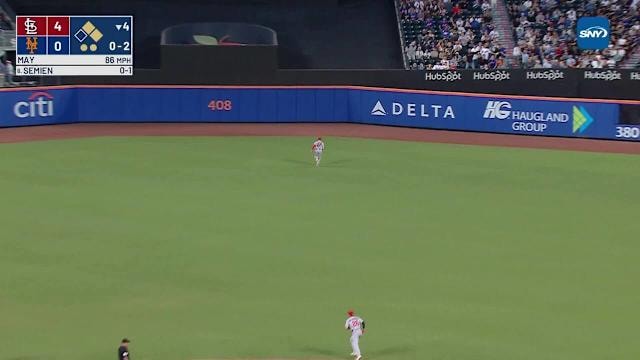
The Cardinals handed the Mets a 7-0 loss on Tuesday night, and in his postgame remarks manager Carlos Mendoza focused on how quickly one sequence can shift the tempo in a game like that. With the Mets down 3-0 and runners on second and third with one out in the third inning, Lars Nootbaar hit a ground ball to Marcus Semien at second base. Mendoza described the moment as a “messed up” play, underscoring how the Mets’ defensive and baserunning indicates broke down in real time.
In the play itself, Semien did what second basemen do on a routine ground ball, holding the runner and checking the third-base situation before making the throw. But as the ball was fielded and relayed toward first base, Ivan Herrera broke toward home. Semien’s throw went to Jared Young at first base, turning the attempted advance into a second out and leaving the inning on a short leash for the Mets to recover.
That type of outcome matters for the Mets because it combines two pressure points: you not only lose the at-bat, you also lose time. With one out and runners already moving, a half-beat error can turn a potential scoring opportunity into an inning-ending pivot. Mendoza’s comments framed it as more than a single mistake, suggesting the Cardinals benefited from the Mets’ inability to settle the situation before the ball was released.
St. Louis’ advantage grew from there, and the pitching staff had to navigate both the early deficit and the consequences of putting runners on. One of the most immediate operational issues for New York came on the mound, where Joey Gerber was pulled before his work could extend further. According to reporting from SNY, the decision was tied to a blister issue, a reminder that even when a pitcher's mechanics are fine, physical comfort and grip can drive bullpen usage quickly.
A blister can change how hard a pitcher can throw, how much he can trust his release, and whether he can repeat his pitches over multiple batters. In games where the first innings set the tone, a midstream change forces the manager to shorten the leash on multiple arms, and it can also affect how the lineup approaches the later innings. The Mets, already playing from behind, needed longer stretches of innings they could control, not additional interruptions that lead to short opportunities and quick bullpen turns.
The Mets’ task in a loss like this is to separate what they can correct immediately from what they can only learn from. The third-inning play is one they can diagram and address in terms of communication and responsibilities, particularly how base runners read defenders and when throw targets are committed. It also shows the Cardinals’ attention to baserunning angles, as Herrera’s decision to take off on the throw turned a standard ground ball into a double-out sequence.
What to watch next is whether New York responds with cleaner sequencing on similar defensive setups and whether the blister-related change affects Gerber’s availability or workload planning. For St. Louis, the takeaway is how it turns small advantages into inning structure, forcing opponents to fight both the scoreboard and the clock. In games decided by a wide margin, those are often the details that tell you what style of baseball is winning and what kind of adjustments will matter most moving forward.
Why It Matters
- For New York, the loss highlights how quickly communication and responsibilities on the infield can cascade into lost scoring opportunities.
- The third-inning sequence illustrates how baserunning reads can turn routine outs into inning-ending outcomes.
- From a team-building perspective, the Mets’ ability to manage short-notice pitching changes can shape their bullpen utilization in future games.
- For St. Louis, the emphasis is on turning operational mistakes by the opponent into run production while maintaining pressure with runners on.
Sources
Key Facts
- The Mets lost 7-0 to the Cardinals on Tuesday night.
- Manager Carlos Mendoza cited a “messed up” defensive sequence in the third inning as a pivotal moment.
- With runners on second and third and one out, Lars Nootbaar grounded to Marcus Semien at second base.
- Ivan Herrera advanced toward home as Semien made the throw to Jared Young at first, resulting in a second out.
- Joey Gerber was pulled during the game, with reporting from SNY tying the change to a blister issue.
- The inning ended with the Mets unable to capitalize on early runners despite being down only 3-0 at that point.