
THE APEX TIMES
Mets take aim at their next wave, landing multiple top prospect assets at the Trade Deadline
MLB’s Trade Deadline prospect carousel moved fast, with dozens of young players switching organizations in a single day and the Mets among the clubs collecting meaningful minor-league talent in the process.
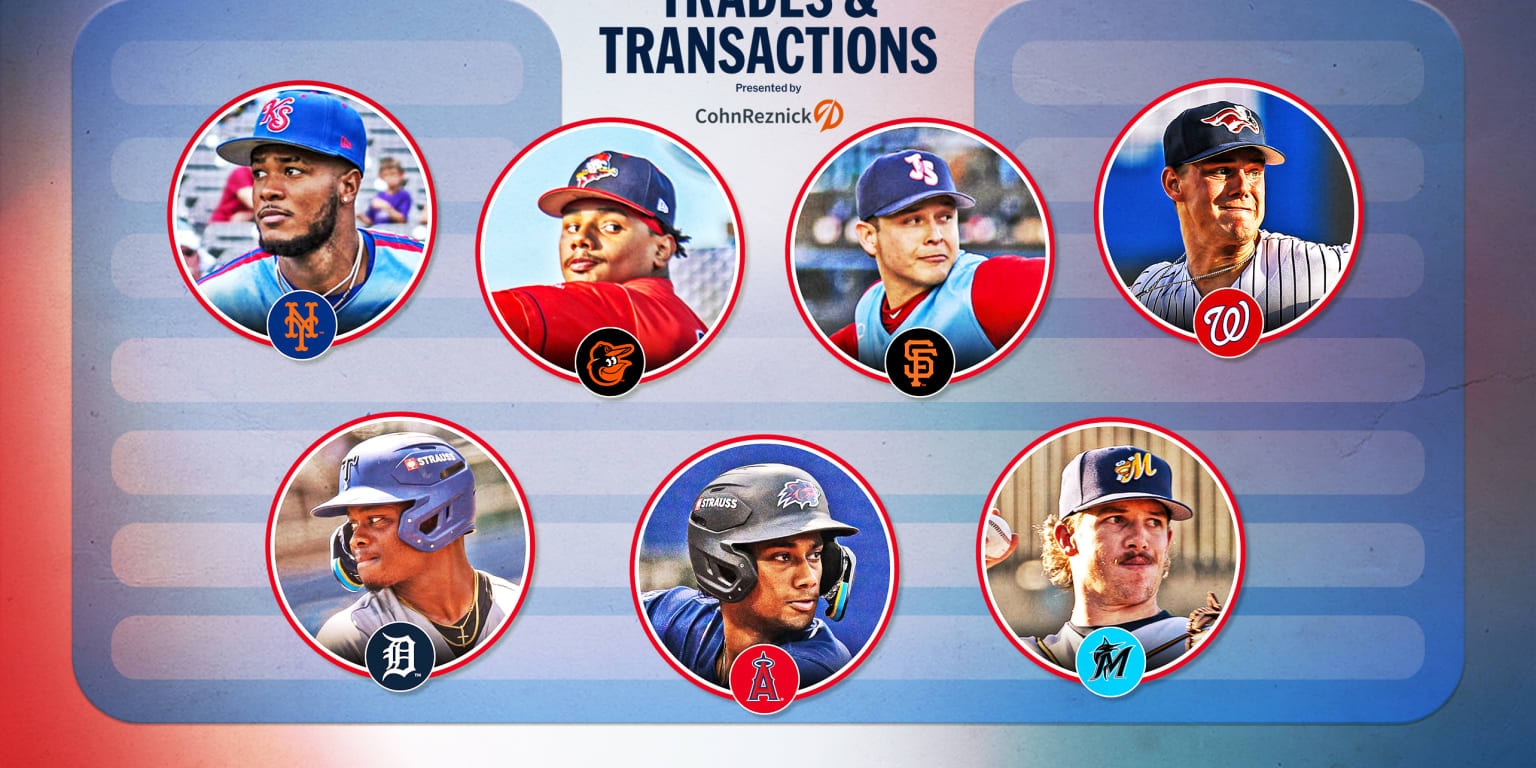
The Trade Deadline did not just reshape major-league bullpens and lineups. It also accelerated the movement of prospects across baseball, and by MLB’s count, it turned into a rapid reshuffling of young talent in the week leading up to the deadline window. In total, 83 prospects were traded in that span, and 62 of them found new homes on Monday alone, underscoring how quickly organizations were willing to swap future inventory.
MLB’s review of the market framed the Mets as one of the teams building around upside during the period, describing them as “load[ing] up on prospects at the Deadline.” The key theme was not only volume, but the likelihood that many of those incoming players were already visible within their new clubs’ internal evaluations. MLB noted that a large number of the prospects who changed organizations are listed on their new team’s Top 30 Prospect list.
For the Mets, the practical value of a prospect haul is straightforward: it creates options. Prospect groups can strengthen the pipeline for starting pitching, bullpen depth, position-player depth, and future rotation flexibility, even when the major-league roster is in flux. MLB did not position the Mets as a team making one “centerpiece” move in isolation, but rather as a club that used the deadline window to collect multiple future contributors.
The overall market picture helps explain how and why that approach spread. Trading 83 prospects in roughly a week suggests teams were not waiting for the final hours, and that negotiations were already in motion as clubs weighed competing priorities: tightening budgets, reshaping farm systems, and preparing for the following several seasons instead of only the immediate one.
A notable wrinkle in MLB’s accounting is that the most intense transfer activity came early on Monday. That pattern matters because it can influence how prospects are valued and packaged, with teams more likely to accept a broader set of return scenarios when there is momentum in the market. For players, being traded at that pace often means reporting to a new organization while their development clock continues to run on schedule.
What to watch next is how the Mets integrate the new prospects into their player-development plan and whether the incoming group includes players who can move quickly through their system. MLB’s broader point about Top 30 visibility suggests at least some of these prospects are regarded as meaningful within their new clubs, which raises the odds that the Mets will treat the group as more than just depth.
Across baseball, the lesson of this Trade Deadline period is that prospect management has become increasingly central to roster construction, not a side project. When 62 prospects change organizations on one day, it becomes clear that teams are treating the farm system as part of the competitive equation, even when the major-league postseason is the most immediate headline.
Why It Matters
- The Mets’ prospect haul reflects how deadline strategy is increasingly tied to future major-league competitiveness, not only immediate roster fixes.
- When large numbers of prospects move quickly, development timelines and organizational depth charts can shift in tandem.
- Visibility on Top 30 Prospect lists suggests the incoming players are at least initially viewed as meaningful developmental pieces.
- A market that trades dozens of prospects early can lead to more structured, multi-asset rebuilding approaches rather than one-off swings.
Key Facts
- MLB reported that 83 prospects were traded in the week leading up to the Trade Deadline period.
- MLB reported that 62 of those prospects found new homes on Monday.
- MLB stated that many of the prospects who changed teams are on their new team’s Top 30 Prospect lists.
- MLB described the Mets as one of the clubs that “load[s] up on prospects at the Deadline.”