
THE APEX TIMES
Mic’d up in Philly: Dylan Cease and Shea Langeliers turn the first inning into a lesson on sequencing
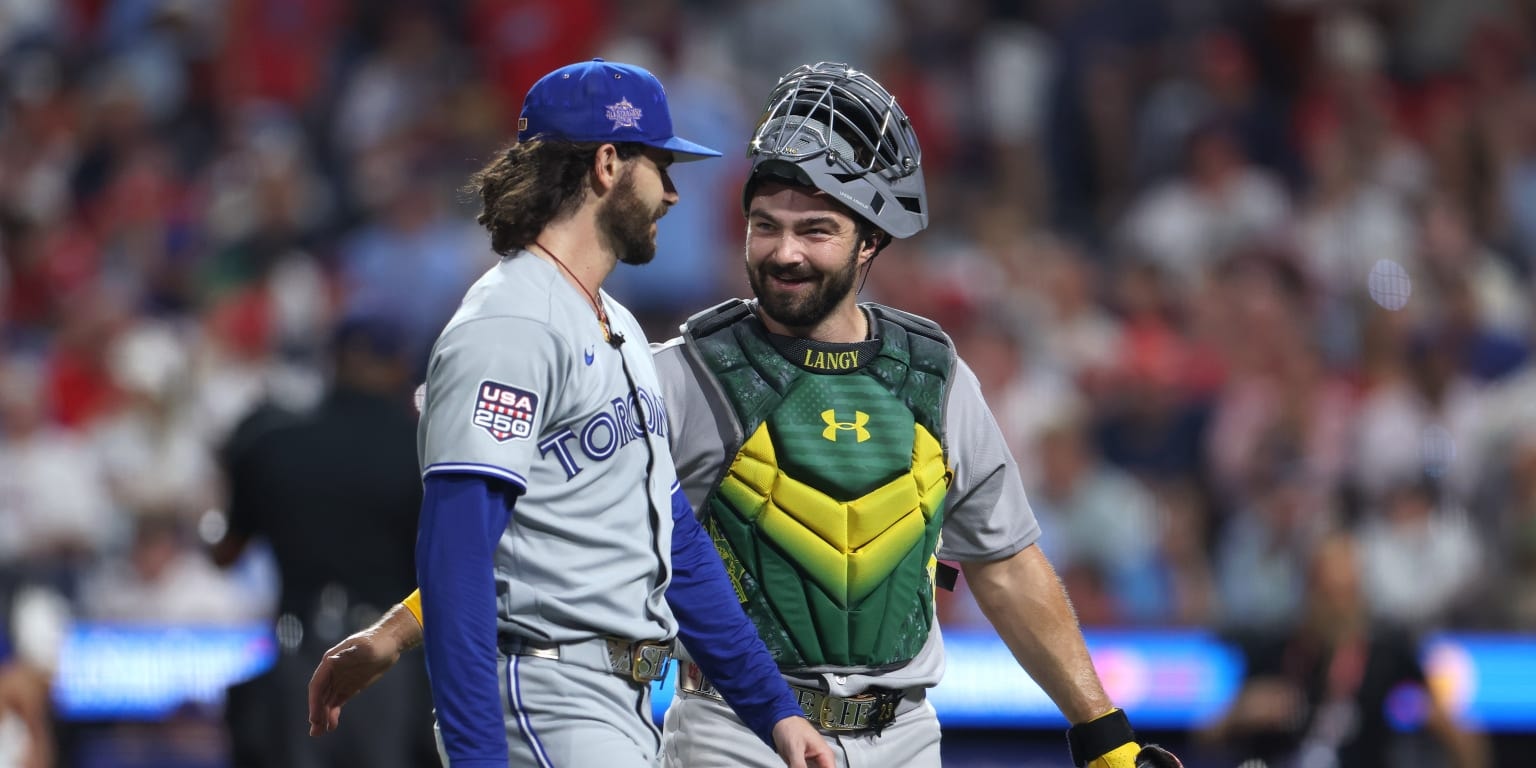
In the 2026 MLB All-Star Game, the American League’s starting pitcher Dylan Cease worked through pitch choices with catcher Shea Langeliers, highlighted by a first-inning run of three strikeouts.
The 2026 MLB All-Star Game in Philadelphia offered the usual mix of highlight swings and showmanship, but one moment landed like a fundamentals reminder. American League starting pitcher Dylan Cease, mic’d up for fans, was joined by catcher Shea Langeliers as they worked through what the game asks most from a staff, pitch sequencing with precision timing.
The payoff came quickly in Cease’s opening frame. According to MLB’s official All-Star Game coverage, Cease struck out three notable batters in the first inning, getting Kyle Schwarber, Juan Soto, and CJ Abrams to miss or be retired on his pitches. The sequence was the kind of brief, repeatable dominance that separates an All-Star appearance from a passing at-bat, because it shows how plan and execution intersect when the opposing lineup has been assembled from the entire sport.
What made the moment stand out was the view of the pitcher-catcher relationship. MLB’s report described Cease and Langeliers “thinking out loud” as they discussed pitch selection during the inning. In practical terms, it is the catcher’s job to translate the pitcher’s plan into the right look on each delivery, and Langeliers’ presence in the mic’d-up segment underscored how Central Casting for an All-Star Game is still, at its core, two professionals coordinating in real time.
Cease, as the American League starter featured in the segment, was also framed by MLB’s coverage as a pitcher whose approach can be explained in short bursts: choose, commit, and adjust. When a pitcher is able to retire a high-end trio consecutively in the same inning, it compresses the margin for error for the hitter. The All-Star environment is full of elite hitters, but it is also full of hitters who may see a specific pitcher only a limited number of times across their careers, which elevates the value of rapid, disciplined adjustments.
Langeliers’ role in the mic’d-up footage matters beyond the novelty of “in-game audio.” Catching at the highest level requires knowing when a plan is working, when hitters are guessing, and how to change the picture without changing the identity of the pitch mix. MLB’s description of the pair working through selections during Cease’s first inning highlighted that process, even as fans were treated to the rare audio window of an All-Star at-bat.
For teams, the implication is straightforward: pitching staffs do not win with pitches alone. They win with trust, communication, and a shared understanding of what the hitter is likely to do next. In an exhibition where lineups shuffle and familiarity is limited, the pitcher-catcher bond becomes more visible, and Cease and Langeliers offered an example of that visibility when the first inning turned into three strikeouts.
What to watch next is how those small, repeatable choices carry over into regular-season routines for each player. Even in a single inning, sequencing can teach both sides something, and All-Star Games can act as a preview of tendencies pitchers carry into their own rotations and the catching styles they build with their staffs back home.
Why It Matters
- It spotlighted how All-Star success often comes from sequencing and real-time communication, not just raw talent.
- The three-strikeout first inning showed how quickly an elite pitcher can change the tone of an at-bat against top-tier hitters.
- The mic’d-up angle added context to the catcher’s role in pitch selection and execution during a high-pressure, short-sample game.
Key Facts
- The 2026 MLB All-Star Game was played in Philadelphia, featuring an on-field mic’d-up segment from Dylan Cease and Shea Langeliers.
- MLB’s coverage said Cease and Langeliers worked through pitch selections together during Cease’s first inning.
- Cease recorded three strikeouts in the first inning, retiring Kyle Schwarber, Juan Soto, and CJ Abrams.
- The segment was described by MLB as a “thinking out loud” look at the pitcher-catcher communication during the game.