
THE APEX TIMES
Michigan names 4 captains for 2026 season, building leadership across offense and defense
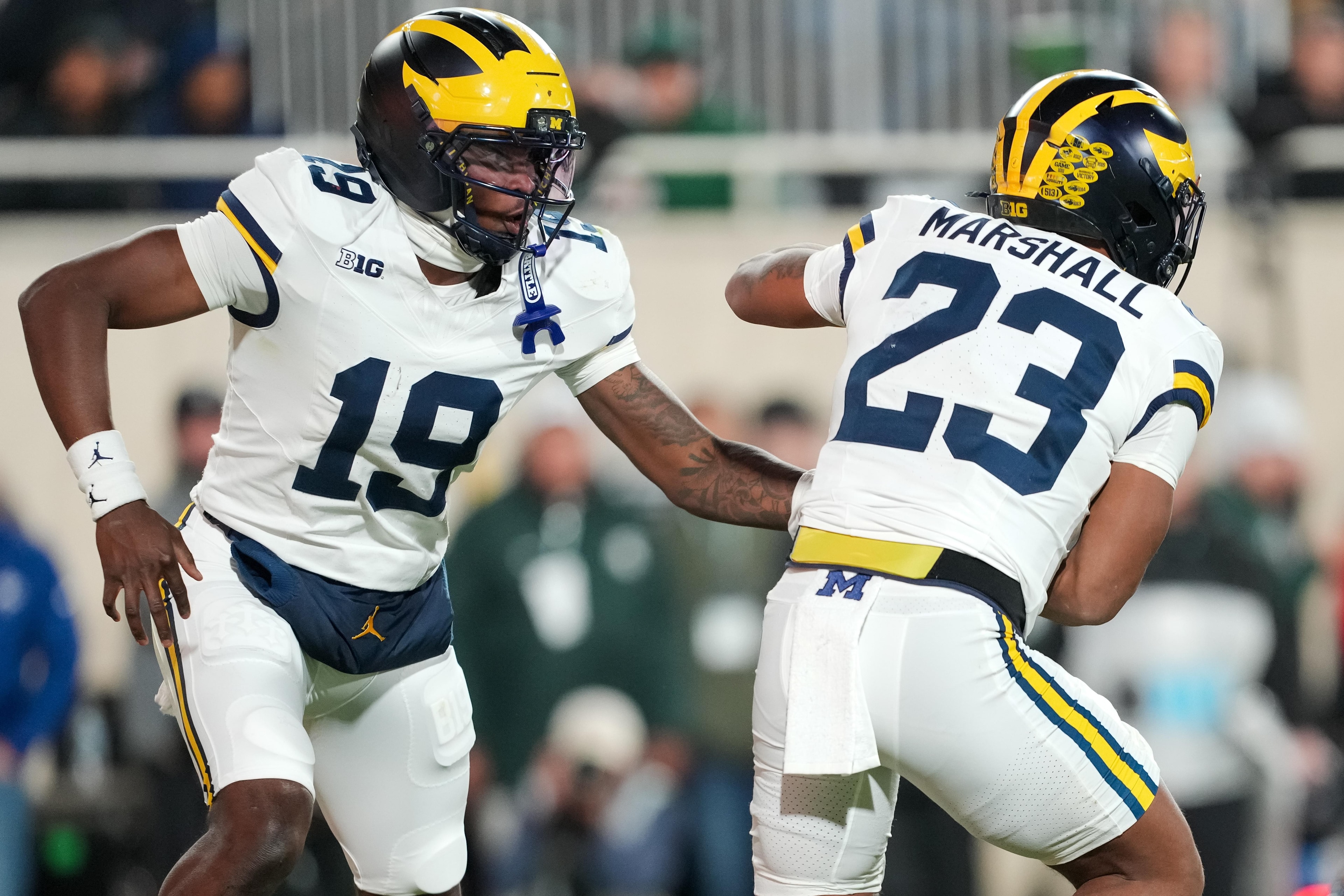
The Wolverines’ 2026 leadership group includes sophomore quarterback Bryce Underwood and junior running back Jordan Marshall on offense, with senior defensive tackle Trey Pierce and graduate safety Rod Moore anchoring the defensive side.
Michigan Football has announced its team captains and leadership council for the 2026 season, selecting four players across both sides of the ball. The program’s captain group is designed to set the tone for practices, game-week preparation, and in-season decision-making as the Wolverines move through another year of expectations in the Big Ten.
On offense, Michigan has named sophomore quarterback Bryce Underwood and junior running back Jordan Marshall as captains. Underwood’s role as the team’s report-caller places him at the center of the Wolverines’ weekly responsibilities, from communication in the huddle to adjustments at the line of scrimmage. Marshall’s captaincy highlights how Michigan is leaning on its run game and the operational rhythm that backs help establish, particularly in the middle phases of drives.
Defensively, Michigan’s captains are senior defensive tackle Trey Pierce and graduate safety Rod Moore. Pierce, as an interior defensive piece, is positioned to influence front-end control, leverage battles, and the tempo of opponents’ rushing attempts. Moore, coming in as a graduate safety, is the kind of leadership role that often matters most to coverage organization and situational football, where late-down recognition and boundary decision-making can shape outcomes.
Along with the four captains, Michigan also named a leadership council, a broader group intended to represent the program’s day-to-day standards beyond just game captains. Those councils are typically where coaches push accountability on film habits, practice details, and team culture, with captains serving as the most visible representatives to teammates.
The announcement lands at a time when the early-season identity of a team is still being formed, especially for squads that rely on multiple units to synchronize quickly. For Michigan, that means the captain selections are not just ceremonial, they outline who the program is pointing to as leaders across offense and defense, with Underwood and Marshall representing the offensive engine and Pierce and Moore representing the defensive structure.
Still, the practical impact of any captain group depends on how it shows up in the full season. Captains are expected to model execution and consistency, but the actual on-field results will be determined by how the Wolverines build chemistry at quarterback, maintain run-game efficiency, and manage defensive assignment clarity throughout the schedule. Michigan fans will likely watch how often these leaders are referenced in game-week preparation and how the team responds when games turn tight in the later quarters.
What to watch next is whether Michigan’s leadership messaging translates into a steady start to the 2026 season, particularly in the first several weeks when teams solidify roles and deepen their in-game communication. If the Wolverines’ offense runs through Underwood and Marshall as emphasized by the captaincy, and if Pierce and Moore consistently organize the defensive unit, Michigan’s leadership group could become a measurable advantage as the season builds toward major Big Ten matchups.
Why It Matters
- Captain selections often reflect where coaches expect leadership to matter most, pointing to Michigan’s key offensive and defensive roles.
- Quarterback leadership and offensive run-game responsibilities can influence how quickly a team gains consistency early in the season.
- Interior defensive leadership and secondary organization are especially important in Big Ten games where opponents repeatedly test assignment clarity and situational decision-making.
- A leadership council can reinforce day-to-day standards that may show up later when the schedule tightens and preparation quality becomes more decisive.
Sources
Key Facts
- Michigan Football announced its 2026 team captains and a leadership council.
- The offensive captains are sophomore quarterback Bryce Underwood and junior running back Jordan Marshall.
- The defensive captains are senior defensive tackle Trey Pierce and graduate safety Rod Moore.
- The announcement framed the captain selections as part of the program’s leadership group for the upcoming season.