
THE APEX TIMES
Michigan’s return-game approach prioritizes impact players, even after “a few setbacks” in camp
Coach Kyle Whittingham said Michigan plans to keep leaning on its key athletes in the return phase, balancing a mostly healthy fall-camp stretch with the reality that minor setbacks still show up in August.
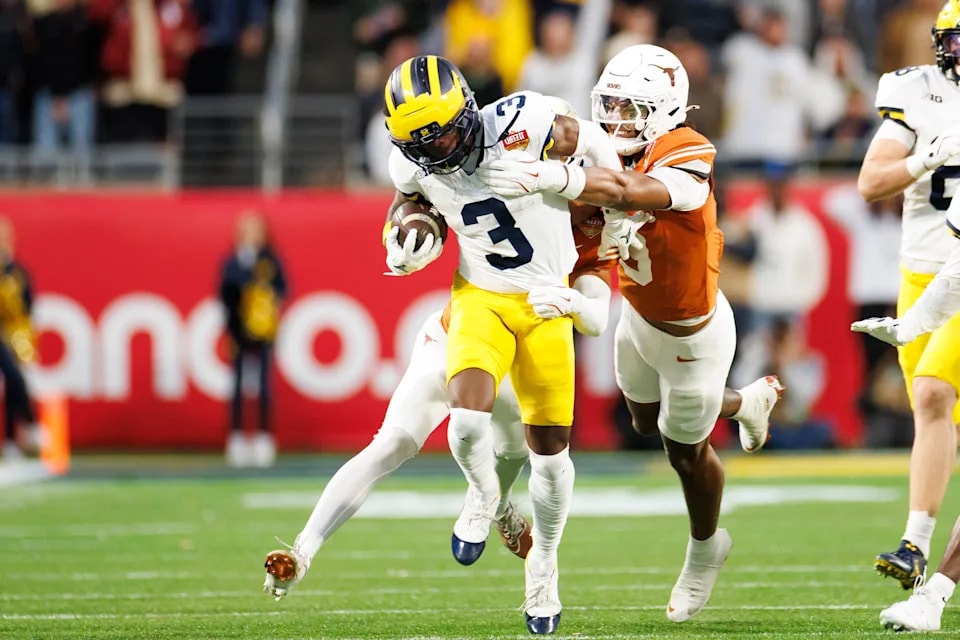
Michigan is indicating that it will not treat the kickoff and punt return game as a place for second-string reps and wishful development. In comments attributed to coach Kyle Whittingham, the program described a special-teams philosophy that is comfortable using its best players in return situations, even as fall camp has largely gone well overall. The underlying message is straightforward: if the team believes a player can change field position, that player’s role should matter, regardless of the week-to-week juggling that comes with training camp.
According to the report, Michigan’s health during fall camp has been “mostly healthy,” though not without interruptions. The coach acknowledged “a few setbacks with guys here and there,” a reminder that even a well-run camp can produce day-to-day limitations. Importantly for the return game, returning is one of the higher-contact, higher-variance phases of football, because it combines speed, decision-making, and traffic at full speed. The decision to keep stars involved suggests Michigan expects to manage those risks with disciplined practice habits and clear roles once the season is closer.
The same set of comments also frames Michigan’s special-teams identity as more than a byproduct of roster talent. The report characterizes Whittingham’s outlook on special teams earlier this fall, pointing toward a return-game plan built around maximizing “impact players,” rather than defaulting to safe, conservative options. That is a meaningful distinction for a team that values execution and momentum. In modern college football, special teams can swing field position and, by extension, red-zone opportunities, late-game possession math, and overall game tempo.
From a coaching perspective, leaning on key athletes in returns is a bet on preparation and trust. Return units work only if timing, blocking assignments, and coverage reads are consistent, because one wrong step can turn a planned opportunity into a muffed play or a tackle that ends the return early. By emphasizing the use of its stars in the return game, Michigan is effectively telling its players and staff that the program’s best practice work will show up on the field, not stay buried behind depth-chart logic.
At the same time, the acknowledgement of “a few setbacks” means Michigan’s plan may not look identical every week. Return-game roles can shift quickly when a player misses time, even briefly, or when a coaching staff chooses to limit reps for precautionary reasons. In that environment, the practical challenge is stability. Michigan’s approach will be tested by whether it can keep the return unit consistent enough to improve decision-making and protection scheme execution while still making adjustments as camp-derived limitations surface.
What to watch next is how Michigan operationalizes this philosophy once the structure tightens around the season. The clearest indicator will be who is used on kickoff and punt returns as the program exits camp, and whether the same athletes remain involved through the final repetitions. If Michigan can consistently match its top skill and football-IQ players to the return phase while maintaining execution under physical stress, it would reinforce the idea that its special teams plan is built to compete for advantage, not simply to complete plays.
Even without public-facing return statistics in the report, the decision itself is a telling one. Teams that treat return roles as developmental placeholders often accept that field position will fluctuate. Teams that keep stars involved are often betting that the upside of game-changing plays outweighs the cost of added exposure. For Michigan, the message delivered through these camp comments is that special teams is part of the team’s core competitive identity, and the return game will reflect that belief.
Why It Matters
- If Michigan consistently fields impact players on returns, it can shape field-position swings across kickoff and punt situations.
- Using stars in returns increases the importance of practice execution, injury management, and unit consistency as the season approaches.
- Special teams decisions can influence game tempo and late-game possession dynamics, especially in close contests.
- Michigan’s ability to maintain the same return roles after minor camp setbacks could be an early barometer of depth and preparedness.
Key Facts
- The comments attributed to Michigan coach Kyle Whittingham describe a special-teams philosophy that supports using top players in return situations.
- Michigan’s fall camp has been “mostly healthy,” though the coach cited “a few setbacks with guys here and there.”
- The report frames the approach as a deliberate decision about how the return game should be staffed, not an incidental outcome of depth-chart timing.
- Michigan discussed the return-game approach in the context of camp and special teams planning earlier in the fall.