
THE APEX TIMES
Minnesota Wild Place Nico Sturm on IR After Head Injury, Recall Justin Kirkland From AHL
The Wild moved Sturm to injured reserve following a head injury after a puck strike versus Vegas, while promoting Kirkland to maintain depth at forward.
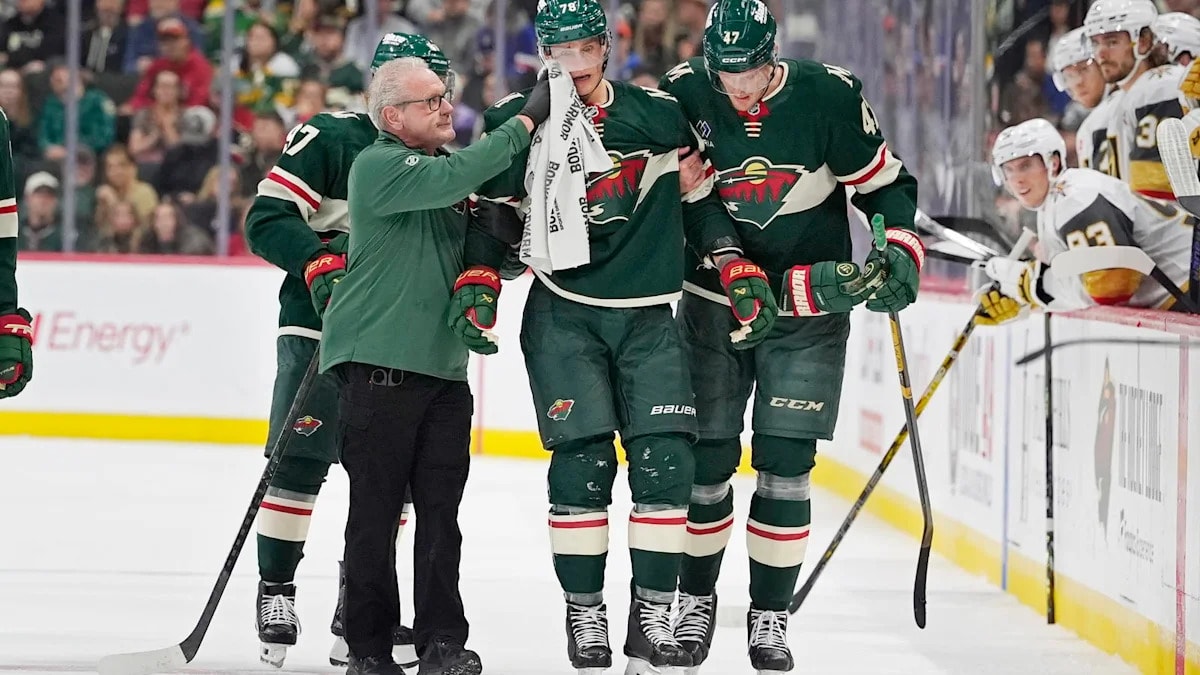
The Minnesota Wild announced a pair of roster moves on Oct. 13, placing veteran forward Nico Sturm on injured reserve after a head injury and recalling Justin Kirkland from the AHL to fill the lineup gap. The update came the day after Sturm suffered what the team described as a frightening head incident in connection with a puck strike during Minnesota’s game against Vegas.
In practical terms, injured reserve gives the Wild roster flexibility while the club manages Sturm’s recovery and evaluation period. Under the NHL’s IR framework, players who cannot immediately return do not occupy a spot on the active roster, allowing teams to bring up replacements from their development system. For Minnesota, that means ensuring it can keep lines intact and spread ice time rather than compressing usage onto fewer skaters.
Kirkland’s recall is the corresponding move to preserve depth. According to the report, Minnesota promoted him from the AHL “to bolster the lineup,” a phrase that points to an immediate need for additional forward options rather than a short-term emergency call-up without lineup considerations. The timing also suggests the Wild want to avoid waiting for Sturm’s return status to stabilize, especially early in the season when teams are still settling roles.
Sturm’s injury is the central storyline because head injuries carry a particularly cautious process in the modern NHL. Even when the play is over quickly, teams typically handle evaluation and return timelines carefully, prioritizing both medical clearance and the league’s concussion protocols. The result is often a period where roster planning matters as much as individual recovery.
For the Wild, the challenge is balancing short-term depth with long-term structure. Sturm is a veteran presence, and removing him from the lineup can change how coaches distribute responsibility along the forward group, particularly in areas such as defensive assignments and the ability to play disciplined minutes. Kirkland’s role will likely be shaped by what Minnesota needs most in the near term, whether that is extra support on even strength, penalty-killing help, or a more straightforward top-nine or bottom-six workload based on how lines are currently built.
The Vegas-related detail also matters for the broader season context. The Wild and Golden Knights are Atlantic and Pacific-side opponents who can shape scheduling narratives within their respective conference ecosystems. Regardless of standings impact, any head injury to a regular forward alters how Minnesota approaches matchups, because the club must account for both personnel and the style of play required to execute game plans.
Minnesota’s next steps will be tied to Sturm’s progress and clearance status. The Wild’s continued use of injury reserve, and how long Sturm remains out, will determine how frequently the club leans on AHL-callup depth and how it manages the forward group’s minutes distribution. For Kirkland, his immediate performance will be measured by how he adapts to NHL pace and how effectively he fits into the Wild’s planned responsibilities during this stretch.
Why It Matters
- Sturm’s absence forces Minnesota to adjust forward depth and potentially alter line roles and minutes distribution.
- Kirkland’s recall tests the organization’s AHL-to-NHL pipeline and how quickly he can provide NHL-ready depth.
- Head-injury timelines can be unpredictable, making roster planning a near-term priority for the Wild.
- The Wild’s ability to replace veteran responsibilities affects both even-strength execution and special teams balance.
Sources
Key Facts
- Minnesota placed forward Nico Sturm on injured reserve after a head injury linked to a puck strike against Vegas.
- The Wild recalled Justin Kirkland from the AHL to bolster its forward group.
- The roster changes were announced on Oct. 13, the day after the head injury report surfaced.
- NHL injured reserve usage allows teams to maintain roster spots while a player recovers.