
THE APEX TIMES
Misiorowski’s velocity stuns Cubs, Brewers’ rally survives a near-triple play
A fast start and hard-hit swings that did not quite connect left Chicago chasing answers, as Milwaukee cashed in after a pivotal defensive moment went just wide of a triple play.
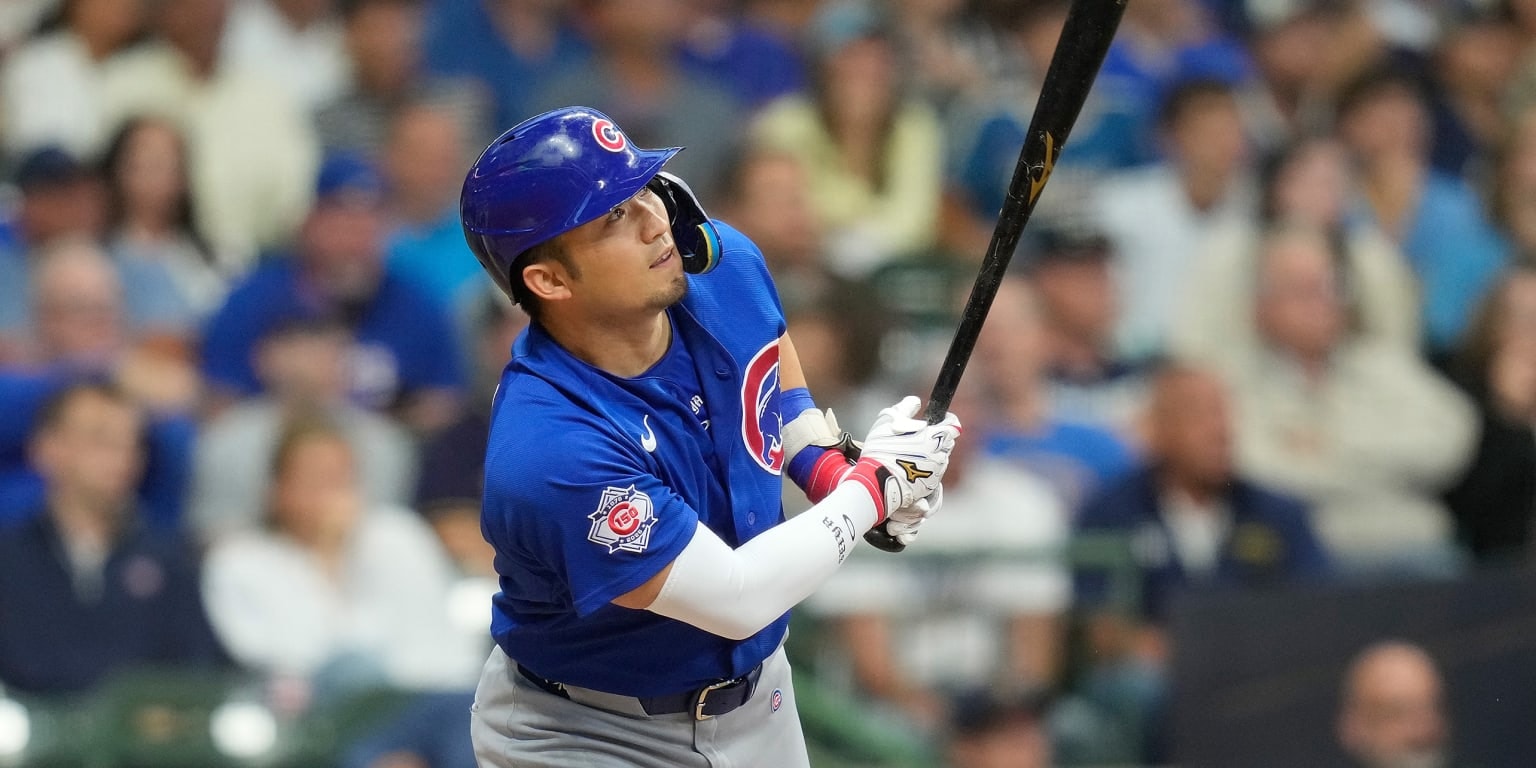
The Cubs found out early Friday night that Jacob Misiorowski was not going to ease them into the at-bat. According to MLB’s account of the game, by the time Chicago saw its third pitch from the Brewers ace, the difficulty level was already obvious, with Misiorowski’s fastball carrying a kind of velocity that forced hitters into quick decisions and constant reset. Pete Crow-Armstrong offered a clear illustration of the challenge, taking a hack at the heat and fouling it back, a small moment that also suggested a larger theme, the Cubs were seeing pitches they could not comfortably turn into clean contact.
For Chicago, the problem was not only making contact, but making contact on time and with the correct intent. MLB’s recap emphasizes that the picture Misiorowski painted was fast, and that even when hitters managed to put the bat on the ball, the contact did not translate into the kind of outcomes that swing momentum. That matters in a game where every inning carries a chance to flip the leverage, because when a starter’s pace of attack is sharp, the lineup can feel boxed in, unable to settle into longer at-bats that produce pitch counts and later-inning mistakes.
Milwaukee’s success also depended on timing and on how quickly a game can move from danger to opportunity. The defining hinge in MLB’s story was a defensive moment that came close to a triple play, only for it to turn the other way. In the account, a near-triple play did not become the inning-ending statement the Cubs needed, and instead the Brewers rally took hold, turning a moment that could have ended the threat into a stretch that favored Milwaukee.
That sequence underscores a basic baseball truth, “nearly” can still be meaningful, but it can also be devastating. A triple play is a rare outcome, yet the threat of one can change how runners take leads and how a batting team tries to convert hard contact into just enough to move on. When the Cubs were unable to turn their defensive opportunity into three outs, the emotional and strategic pressure shifted to them, and Milwaukee gained the advantage that often determines which team wins tight, momentum-driven games.
Chicago’s offense, as described by MLB, did not lack effort, and it did not lack opportunities to swing at the kind of stuff Misiorowski wanted to throw. Still, the recap frames the night as one where pitch quality and execution on the mound overwhelmed the hitters more often than the Cubs were able to counter with adjustments. Crow-Armstrong’s foul back is one example of the night’s rhythm, the at-bats were active, but the results stayed just out of reach.
In the larger context, games like this also speak to roster construction and pitching matchup logic. When a team faces a starter whose fastball velocity shows up early and consistently, the lineup has to rely more heavily on precise timing and early sequencing, rather than waiting for specific mistake pitches. That is why MLB’s recap focuses on how quickly the difficulty emerged, because it shapes the entire game plan, not just the first inning. The Brewers, meanwhile, showed they could convert key moments, even when the Cubs came close to turning a rally-ending defensive play.
What to watch next is how both teams respond to the information this game provides. For Milwaukee, Misiorowski’s performance will be a reference point for how the club can build confidence around its front-end attack when it gets hitters reacting early. For Chicago, the takeaway is more tactical, how the Cubs adjust to elite fastball velocity and how they manage high-leverage runner-and-defensive situations so that near-misses do not turn into rally fuel.
Why It Matters
- A matchup defined by early velocity can compress a lineup’s margin for error, affecting how hitters approach subsequent at-bats and innings.
- Near-triple-play sequences often decide the emotional arc of a game, and this one was portrayed as a pivot point toward Milwaukee’s rally.
- For Milwaukee, the performance reinforces the value of a front-end starter who can impose fast-ball timing pressure from the start.
- For Chicago, it highlights the need for sharper conversion when defensive opportunities arise, because “almost” may not be enough against a veteran offense.
Sources
Key Facts
- MLB reported that Misiorowski’s fastball velocity made the matchup difficult for the Cubs early in the game.
- Pete Crow-Armstrong fouled back a fastball after seeing Misiorowski’s heat.
- MLB’s recap describes a defensive moment that came close to a triple play for Chicago.
- Instead of ending the inning, the near-triple play turned into a Brewers rally momentum swing.
- The game was ultimately framed as Milwaukee’s ability to capitalize on key moments while keeping Chicago off-balance with pitch speed.