
THE APEX TIMES
Missouri’s 2026 roster “DNA” focuses on where players come from, and how experience stacks up
A preseason look at the 2026 Missouri Tigers emphasizes the composition of the team beyond depth charts, highlighting hometown patterns and a balance-of-experience lens as the program aims to translate recruiting into on-field production.
Missouri’s 2026 football campaign comes with an unusual kind of pregame reading, a demographic “DNA” breakdown that looks at who is on the roster and, just as importantly, where those players are from. The piece, published by Yahoo Sports, frames the annual exercise as a way to check the makeup of the Tigers while the staff’s recruiting work turns into a full team identity for the coming season.
In that “DNA” approach, the central theme is composition. The article connects the excitement around the on-field product to process variables that fans can usually ignore until a season is underway: the experience balance and the distribution of high-impact talent, described in the story as “blue-chip ratios.” It is less about projecting outcomes through X’s and O’s and more about understanding the roster’s building blocks before games begin.
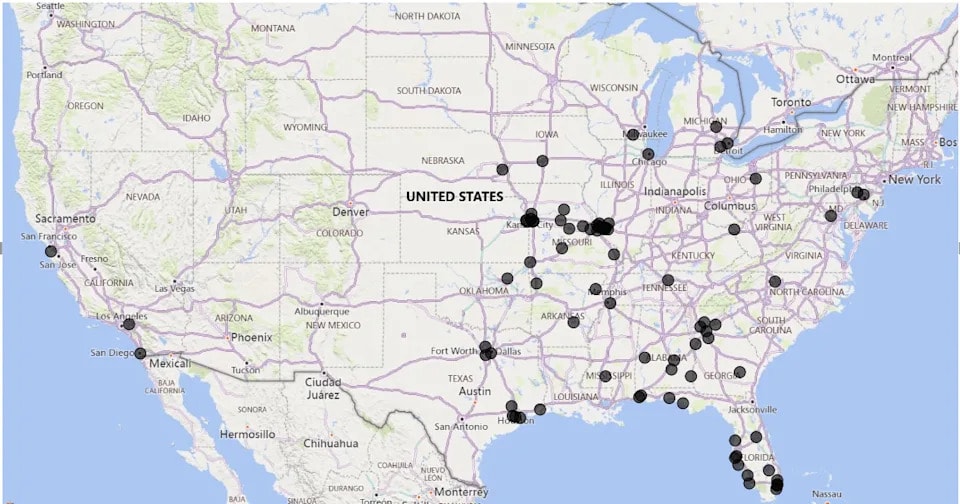
The report also includes a visual element, described as a map of the 2026 players’ hometowns, using those origins to show patterns in where the talent comes from. That kind of mapping is often used in recruiting coverage to contextualize how a program’s recruiting pipeline is changing over time, whether that means pulling from new regions or reinforcing familiar recruiting territories.
Missouri’s roster-building stakes are particularly high in college football because roster turnover can be steep, and the “experience” variable is not just a talking point. Teams that skew young often pay a speed and timing price early, while teams with more veteran continuity can compress learning curves. The Yahoo framing of the 2026 roster as a blend to watch indicates that Missouri’s staff will likely be judged not only on talent acquisition, but also on how quickly players integrate.
The “blue-chip” language in the article points to another recruiting benchmark fans track closely. While Missouri, like other programs, recruits with a mix of immediate and developmental goals, the presence of higher-ceiling prospects tends to be most visible in how quickly teams can create big-play margins. By focusing on the roster’s distribution of top-tier talent, the story suggests the Tigers believe their recruiting base can translate to more than just depth.
There is, however, an important caveat to this kind of demographic journalism: roster “DNA” does not automatically convert into wins. Without pairing hometown and composition metrics with on-field performance, the exercise is best treated as context rather than a prediction tool. Still, preseason demographic breakdowns can be useful for understanding whether a team’s upcoming season is positioned for an early leap or whether it is more likely to depend on development.
For Missouri fans, the practical question after reading a roster makeup story like this is what to watch once the season starts: how quickly the experience portion of the roster shows up in game management and execution, whether the high-end recruits are visibly affecting field position and explosive-play opportunities, and whether the player origins that the map highlights line up with a recruiting strategy that can keep the pipeline strong beyond 2026.
Why It Matters
- Roster makeup influences early-season performance, particularly the speed at which new players learn schemes and roles.
- Tracking “blue-chip” presence helps gauge whether a program’s recruiting pipeline is built for immediate impact.
- Hometown and recruiting-area patterns provide context for how a program’s recruiting strategy may be evolving.
- Demographic composition can indicate whether a team is positioned for continuity or faces a larger integration curve in 2026.
Key Facts
- Yahoo Sports published an annual preseason demographic “DNA” look at the 2026 Missouri Tigers roster.
- The article emphasizes roster composition variables, including experience balance and “blue-chip” ratios.
- It includes a map identifying the hometowns of players on Missouri’s 2026 roster.
- The framing ties recruiting and roster makeup to excitement about what the team can produce on the field.
- The piece is designed as a preseason context check rather than a game-by-game prediction.