
THE APEX TIMES
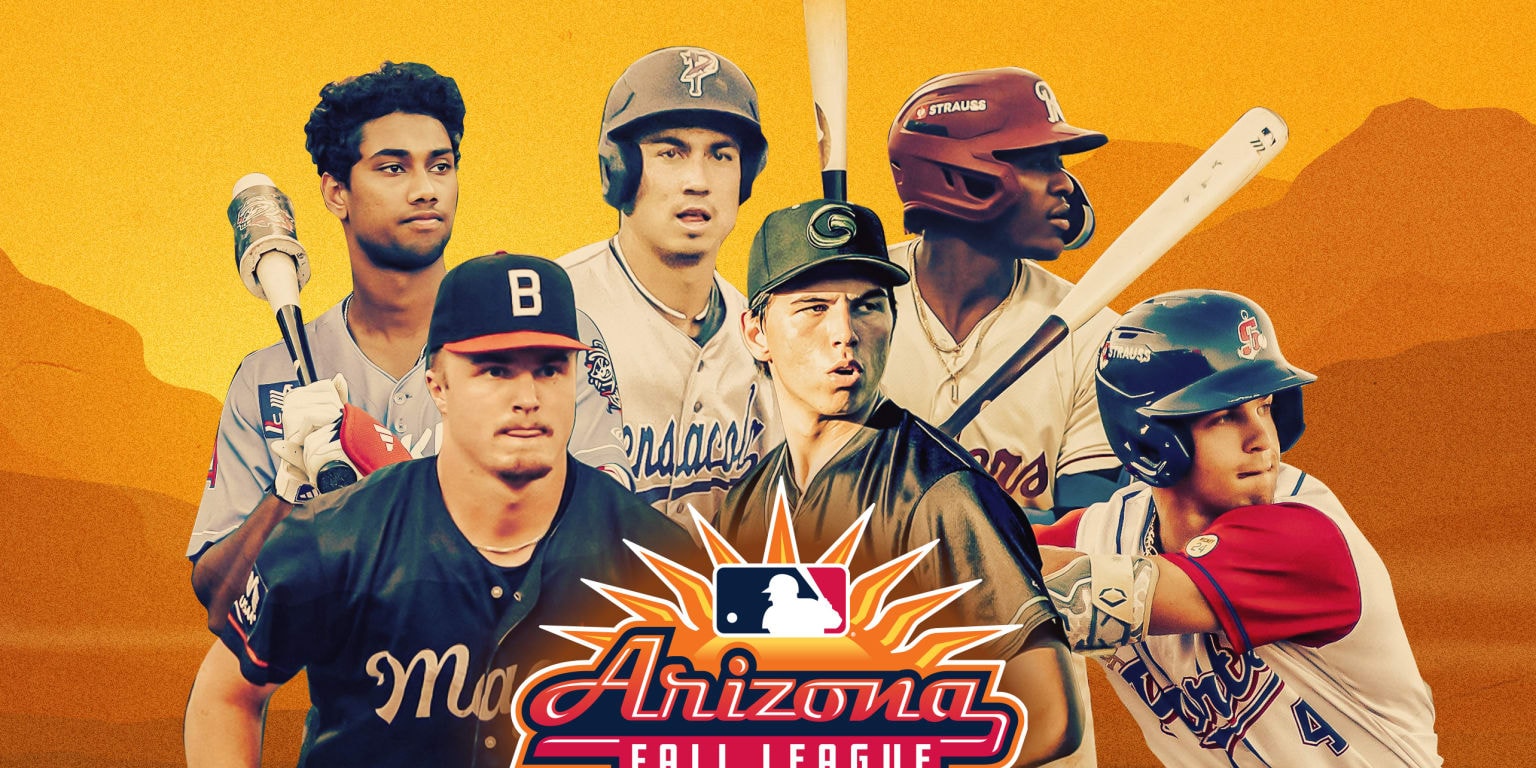
MLB highlights nine top prospects the league wants to see in the Arizona Fall League
With Arizona Fall League rosters serving as baseball’s “finishing school,” MLB points to a group of prospects it expects to benefit most from extra reps, higher-level competition, and a short, high-intensity fall showcase.
MLB’s latest list spotlights nine prospects it would like fans to track during the Arizona Fall League, an off-season competition built for player development and refinement. The premise is simple: the Arizona Fall League is designed as a place to get additional high-quality at-bats and pitching outings after the regular season, when prospects can focus on specific improvements rather than long-run workloads. For prospects, the goal is not just to add volume, but to compress learning into a short window while facing players who are also near the next rung of the sport.
MLB’s release frames the Arizona Fall League as a “finishing school,” emphasizing that it functions as a developmental bridge for rising players. That context matters because the fall league has a reputation for featuring many of the organizations’ most near-ready prospects, often with a blend of advanced tools and work-in-progress areas that are best addressed against strong, evenly stacked competition.
The list arrives as another reminder of how quickly the fall league can connect to the sport’s next headline moment. MLB noted that in the 2026 All-Star Game, 10 of the 18 hitters in the starting lineups came from the Arizona Fall League. That detail underscores the league’s argument that the competition is not only a teaching environment, but also a pipeline that has historically produced major-league-ready offensive performers.
While MLB’s story highlights nine prospects to watch, it also speaks to what the Arizona Fall League is trying to replicate on a smaller timeline. Because the league concentrates top prospects from multiple organizations, players tend to see unfamiliar opposition and are forced to adjust quickly. In practical terms, that means hitters can test improvements in pitch selection, timing, and batted-ball routes against advanced arms, while pitchers can refine command and sequencing without the ramp-up that sometimes accompanies spring training.
MLB’s developmental angle is also about repetition with intent. The fall league gives prospects a compact setting to work through mechanical cues, new pitch applications, or timing changes they may not have fully mastered during the season. That is part of why the “climb to The Show” language matters. It is not a guarantee of arrival, but it is a structured chance to move one step closer while talent evaluators are still actively looking for evidence that the next adjustment has “stuck.”
For fans, the most meaningful way to watch is to pay attention to process markers rather than only outcomes. MLB’s framing suggests the evaluation focus will include whether a prospect can carry improved decision-making through multiple at-bats, whether a hitter’s approach looks consistent late in games, and whether a prospect’s skills translate against other top developmental players rather than against a single familiar system.
Looking ahead, MLB’s list sets up what to monitor during the Arizona Fall League’s run: which prospects show that their strengths scale against better pitching and which players appear to have made measurable gains in the areas they were targeting. In a league built for refinement, the “finishing school” label is less about instant stardom and more about whether the next version of a prospect shows up, then holds up, as the fall competition goes on.
Why It Matters
- The Arizona Fall League is a recognized development pipeline, and MLB’s spotlight helps set expectations for which prospects are nearing major-league readiness.
- Extra reps in a concentrated prospect environment can accelerate specific skill refinements that may take longer in a full season.
- The connection MLB highlighted to All-Star starting lineups reinforces the league’s historical relevance to top-level performance.
- For teams and evaluators, the fall league offers a focused window to confirm whether mid-season improvements have translated into repeatable production.
Key Facts
- MLB published a feature highlighting nine top prospects it would like fans to see in the Arizona Fall League.
- MLB describes the Arizona Fall League as baseball’s “finishing school,” emphasizing development through extra reps.
- MLB noted that in the 2026 All-Star Game, 10 of the 18 hitters in the starting lineups came from the Arizona Fall League.
- The Arizona Fall League is positioned as a bridge for prospects climbing to the major leagues.
- The MLB release frames the fall league as a compact, high-intensity development environment for young players.