
THE APEX TIMES
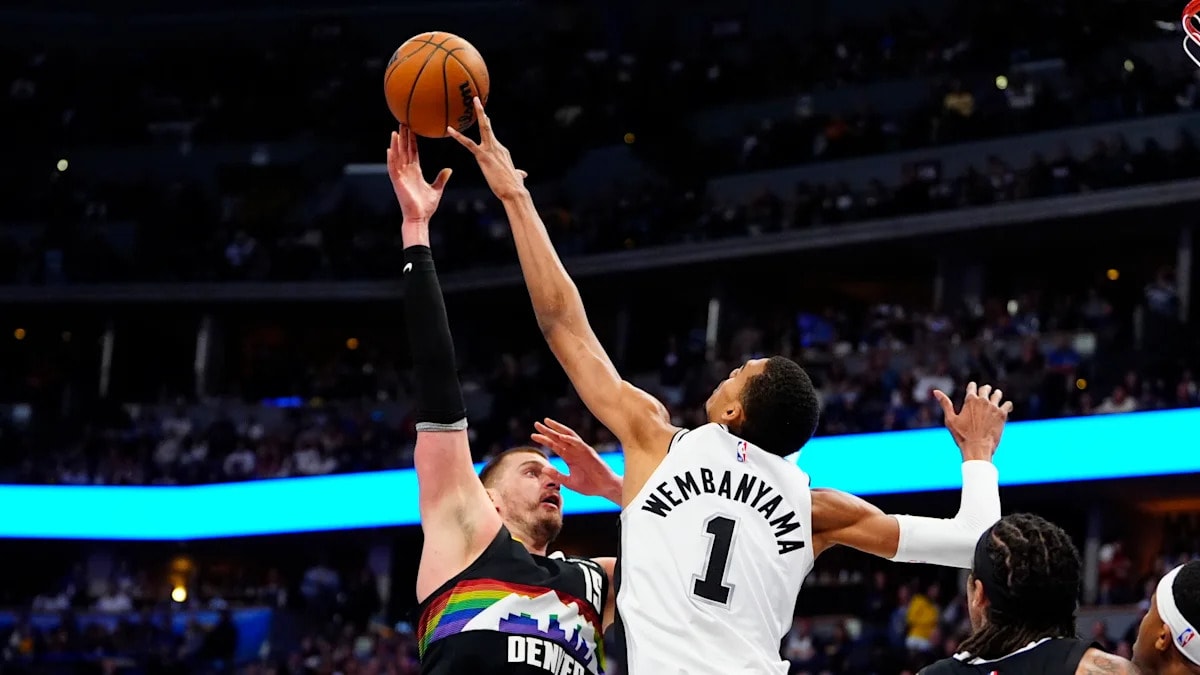
Mock draft debates No. 1 pick in 2026-27 fantasy basketball, with Victor Wembanyama or Nikola Jokic atop the board
In a 12-team, nine-category head-to-head mock, NBC Sports fantasy writers weighed the central question of early draft season: who should go first, Wembanyama or Jokic, after the offseason’s free-agent reshaping and as Yahoo opens new 2026-27 fantasy leagues.
Fantasy basketball mock drafts are often less about predicting the future and more about testing philosophies, and a new 12-team, nine-category head-to-head industry exercise turned that into a direct wager on the No. 1 pick. Raphielle Johnson, an NBC Sports Rotoworld basketball writer, sat in the first selection spot for the draft, and the framing was immediate: should the top pick go to Victor Wembanyama or Nikola Jokic as the season’s fantasy foundation?
The mock, which was organized for a fantasy podcast setting by Steve St-Pierre of Menace Podmen, followed a typical format for serious rotisserie-style managers. It was a 14-round build with a stated twist in the order mechanics: the first two picks were held consecutively, and there was no third-round reversal. The league itself was set as 12 teams competing in nine statistical categories head-to-head, a setup that usually rewards players who can contribute across multiple areas instead of simply maximizing one specialty.
Johnson and fellow NBC Sports fantasy writer Noah Rubin participated as part of a broader “mock draft season” narrative. Yahoo Sports also noted that it had opened fantasy basketball leagues for the 2026-27 campaign, which has historically accelerated mock drafting as managers calibrate what they want to optimize: category edges, positional scarcity, weekly schedule flexibility, and the distribution of upside versus stability.
At the core of the debate is the contrast between two types of fantasy profiles. Jokic’s case in this kind of format typically rests on his ability to generate repeatable value through the central statistical pathways of fantasy production, especially across categories that reward creation and playmaking. Wembanyama’s case, by contrast, is usually tied to the idea of positional dominance paired with high-end contributions that can translate into outsized swings in category standings, particularly when managers are searching for separator-level output in a nine-category league.
Johnson’s decision-making as described in the mock’s concept centers on how managers should treat the first pick in a category-heavy head-to-head format. The guiding question is not only “who is best,” but “who changes the shape of your roster.” A No. 1 option can influence everything from how aggressive a manager is about filling early positional needs to how much risk they can take later, because category standings are cumulative and head-to-head matchups place a premium on consistent weekly performance rather than a purely peak-or-bust ceiling.
The larger context is that mock drafts are running after the offseason’s major personnel movements, with managers trying to translate real-world team roles into fantasy category expectations. When the offseason “dust” settles, fantasy teams often recalibrate around which players are projected to be focal points, how usage might re-balance, and whether a roster built for categories can still be balanced well enough to avoid a weekly collapse in one or two categories.
For readers using the mock as a checklist, the immediate takeaway is that the first overall pick in a nine-category league is less about agreeing with a single player ranking and more about identifying what your draft plan assumes. If you lean Wembanyama, you may be betting on a roster built to win categories with positional scarcity and high-impact two-way style contributions. If you lean Jokic, the bet becomes about maximizing stable, multi-category production that can anchor more conservative category coverage.
What to watch next is how quickly these early draft-board debates harden into consensus. Even when two managers choose different first overall players in mocks, the real test comes when fantasy managers see actual category performance in drafts, especially in the middle rounds where league winners are often separated from “good enough” teams.
Why It Matters
- In nine-category head-to-head formats, the first pick sets the roster-building strategy for category coverage and risk tolerance.
- Debates between Wembanyama and Jokic reflect a broader fork in fantasy drafting: separator upside versus repeatable multi-path production.
- How managers interpret “anchor” players affects the value of later picks, especially in middle rounds where category gaps often open.
- With Yahoo having opened fantasy basketball leagues for 2026-27, mock outcomes can shape early draft behavior well before the season establishes category baselines.
Sources
Key Facts
- A 12-team, nine-category head-to-head fantasy basketball mock draft was conducted for 2026-27.
- Raphielle Johnson selected first overall in the mock.
- Nikola Jokic and Victor Wembanyama were explicitly positioned as options in the discussion for the No. 1 pick.
- The draft was organized in a Menace Podmen podcast setting by Steve St-Pierre.
- The draft used a 14-round structure with a noted rule that the first two picks were held in order and there was no third-round reversal.
- No other players beyond Wembanyama and Jokic were identified in the provided material.