
THE APEX TIMES
Model debate revisits Indiana’s 2025 run by comparing it to LSU’s 2019 title season
A new statistical argument has revived a recurring college football conversation: how would the best recent teams stack up in an alternate matchup across eras? In this case, 2025 Indiana is being weighed against 2019 LSU.
A lingering offseason debate has returned to college football’s most addictive question: could one dominant championship team from a more recent season beat another from a different era? A new Yahoo Sports piece frames the discussion around 2025 Indiana’s unbeaten national title season and a theoretical matchup against 2019 LSU, asking what “the numbers” suggest when the teams are placed head-to-head on paper.
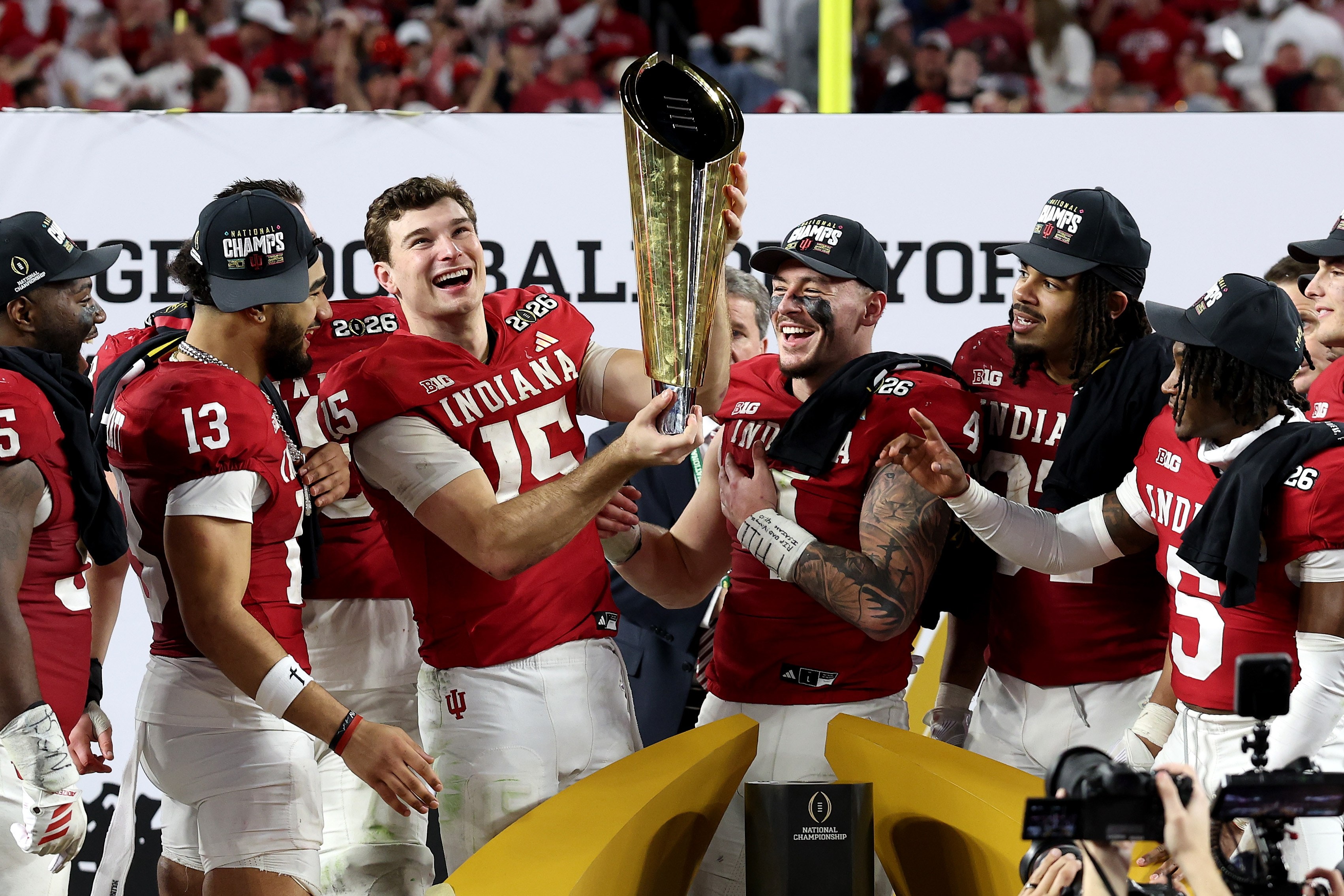
The setup matters because both programs represent contrasting kinds of dominance. Indiana’s 2025 season, as described in the report, ended at 16-0 and culminated in the program’s first national championship. LSU’s 2019 team, the comparison point, is a benchmark because that squad won the national championship in its own right. The comparison is less about any single game story and more about projecting team strength using analytics rather than era-specific context.
What the Yahoo Sports article highlights is not a claim that these teams actually played, but an attempt to quantify whether Indiana’s performance profile could translate into enough advantage against LSU’s 2019 level of play. In other words, it’s a model-based cross-era comparison, the type of exercise that tends to surface whenever fans revisit the “best team” argument for recent champions.
While exact mechanics from the article are not included in the material provided here, the premise of these models generally leans on factors such as offensive and defensive efficiency, game control indicators, opponent-adjusted production, and margin translated into probability rather than nostalgia. The value of that approach is that it tries to reduce the influence of schedule quirks and single-game variance, even though it cannot fully erase differences in coaching staffs, personnel, conference styles, and era-to-era rule and personnel trends.
Still, there are important caveats when the comparison jumps from one season to another. A team’s résumé over one year can be shaped by the specific opponents it faced, injuries or availability that change week to week, and the way an opponent game plans for a particular style. Even when a model says one team has the edge, the result is still an estimate, not a replay. The debate, at its core, is about interpretation: whether Indiana’s 2025 dominance is “repeatable” enough in a neutral setting to overcome LSU’s 2019 championship form.
For Indiana, the storylines around 2025 will likely continue to draw attention because the program reached a milestone that rarely happens quickly. Winning the first national title in program history tends to lock a team into the national conversation, and it also amplifies the “process vs. outcome” discussion among analysts and fans who want to understand whether the season was simply remarkable or structurally unstoppable.
For LSU, the appeal of the matchup is that 2019 has remained a reference point for how complete and resilient elite teams can be during a title run. That makes LSU a natural comparison partner for any recent champion looking to prove that its dominance is not just a product of its own year’s circumstances.
The next watch item is whether the debate stays confined to modeling exercises or spills into broader consensus rankings and analyst discourse throughout the offseason. If more data-driven comparisons emerge between recent champions and historical title teams, it could shape how fans measure team quality beyond final records, and it will likely keep Indiana and LSU anchored in the same argument for another cycle.
Why It Matters
- Cross-era comparisons are one of college football’s most persistent offseason debates, because they offer a way to rank “best” teams without relying only on recency.
- Indiana’s first national title gives its 2025 team extra weight in these discussions, since fans and analysts look for whether dominance reflects sustainable team quality.
- LSU’s 2019 title run remains a benchmark, so any argument that challenges its “best-team” status is likely to generate sustained attention.
- If models continue to influence how teams are perceived, they can shift conversations from traditional narratives to measurable indicators of team strength.
- Even when the result is hypothetical, the debate encourages fans to think harder about schedule context, opponent strength, and how dominance should be measured.
Key Facts
- A Yahoo Sports piece revisits a hypothetical matchup between 2025 Indiana and 2019 LSU.
- The article frames the question as a “model” comparison rather than a real head-to-head result.
- The report describes 2025 Indiana as finishing 16-0 and winning the program’s first national championship.
- The comparison point for LSU is its 2019 national championship season.
- The central premise is that statistical evaluation can estimate which team would have the edge in an alternate matchup.