
THE APEX TIMES
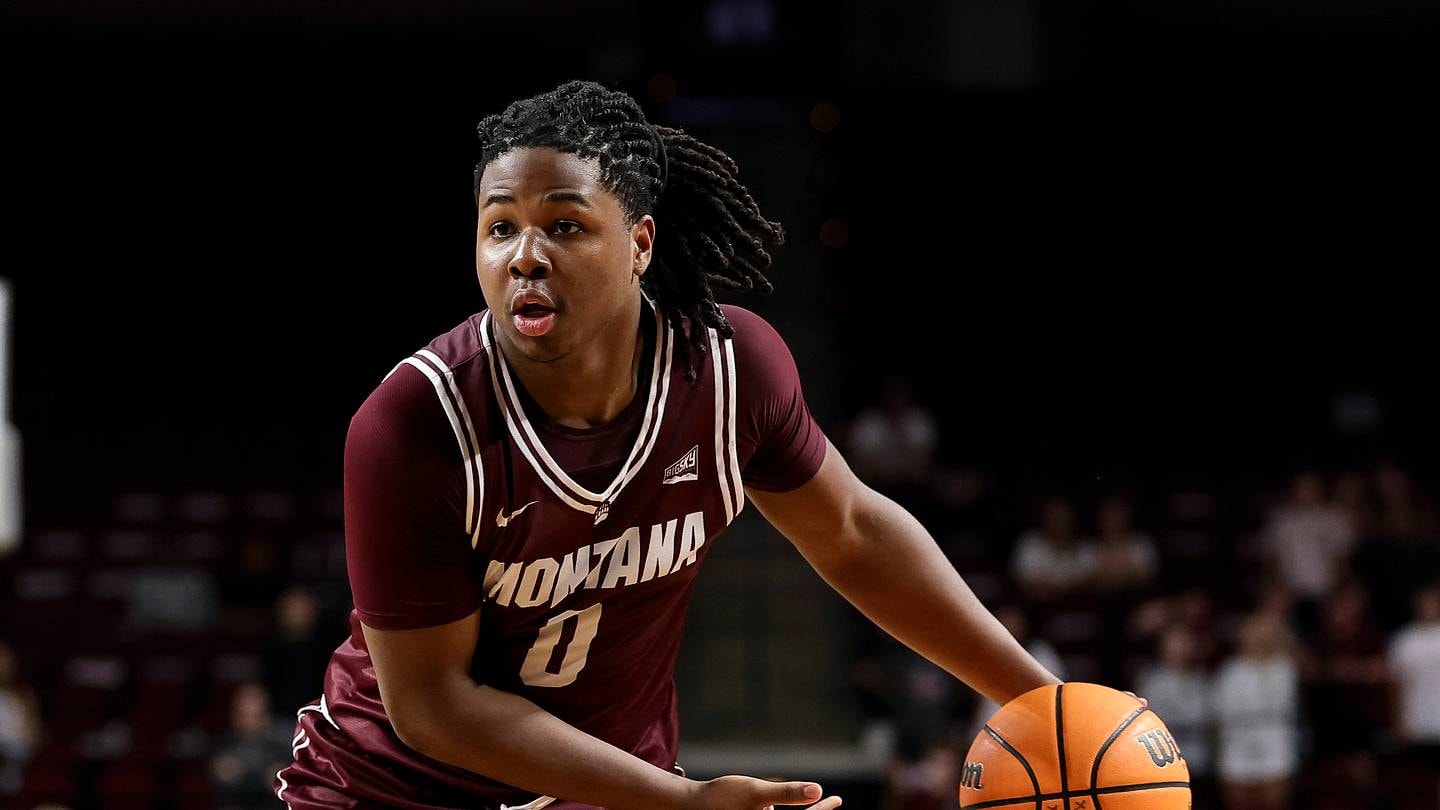
Money Williams looms large as Boston College begins its next chapter under Luke Murray
With Boston College coming off another postseason miss and a new head coach at the helm, Money Williams is viewed as the transfer piece most likely to accelerate the Eagles’ turnaround for 2026-27.
Boston College’s offseason focus is not simply on adding depth, it is on changing the team’s competitive floor. The Eagles will open the 2026-27 season in a new coaching era under Luke Murray, and within Boston College’s influx of transfer talent, Money Williams is being framed as the most important piece to make that shift real on the court.
Murray’s hiring represents the kind of reset programs pursue when results stall, especially in the Atlantic Coast Conference where every stretch run is unforgiving. The backdrop matters. Boston College is coming off an 11-20 season that tied the Eagles for 16th place in the ACC, and the team again missed the postseason. That combination, underlined by both league standing and postseason absence, sets a clear standard for what has to improve immediately rather than gradually.
For Murray, the task is larger than finding incremental minutes. He previously worked as an assistant for Dan Hurley at UConn, an experience that carries its own expectations about culture, preparation, and intensity. Those are all coaching traits that can shape a roster quickly, but the practical question remains: will the players arrive ready to execute at the level an ACC schedule demands? In that context, the argument behind elevating Williams is straightforward. If the Eagles want to stop losing close games and start separating in key possessions, the transfer class needs at least one player who can impact games without an extended ramp-up period.
Busting Brackets’ assessment places Williams at the center of that need. The piece characterizes Boston College as having “quite a task ahead” and suggests that, among the many new faces, Williams stands out as the most consequential for the Eagles’ first real test of Murray’s system. That framing is less about star power and more about fit and timing: a new coach still has to build identity, but identity has to show up in execution against conference opponents who already know how to pressure, trap, and compress half-court reads.
There is also a roster construction implication. In most rebuilding seasons, transfer additions function in tiers: some create options, some stabilize rotations, and a smaller subset changes a team’s ability to score consistently or handle late-game possessions. When a publication calls one incoming player the “most important” transfer, it typically indicates that the player’s role is closer to the stabilizer tier than the depth tier. For Boston College, that matters because the team’s 2025-26 record, tied ACC placement, and postseason miss collectively suggest the margin for error was thin across the entire season.
What to watch next is how the Eagles translate the offseason into basketball that looks organized, not just improved. With Murray leading the transition, the early nonconference and the first ACC stretches should reveal whether Williams can be a reliable engine within Murray’s structure, and whether Boston College’s transfer group collectively becomes more than a collection of new names. If Williams is indeed the most important piece, his on-court responsibilities early in 2026-27 should provide the clearest clue to how quickly the program’s new identity can take hold.
The evidence in the current reporting is limited to the broader storyline of Murray’s move to Boston College and the identification of Williams as the top transfer priority. Specifics about Williams’ role, statistical profile, or the precise competitive gap he is expected to close were not included in the material available here. As a result, this should be treated as an early assessment of significance rather than a definitive preview of outcomes. Even so, with Boston College coming off an 11-20 season and an 16th-place ACC tie, the stakes for immediate impact are already established. The key question for 2026-27 is whether Williams can help turn that urgency into consistent results.
Why It Matters
- A new head coach can shift a program’s habits quickly, but the players must be ready to execute immediately in ACC play.
- When a team ties for the bottom half of the conference and misses the postseason, the difference between “better” and “competitive” becomes most important in the first conference stretch.
- Identifying one transfer as most consequential suggests a higher likelihood that the player is expected to carry major on-court responsibilities early.
- If Williams provides early stability, it could change how Boston College manages rotations and close-game decision-making under Murray.
- The team’s ability to avoid another postseason miss likely hinges on whether key transfer contributions translate into repeatable performance rather than isolated spurts.
Sources
Key Facts
- Boston College will begin the 2026-27 season under new head coach Luke Murray.
- Murray previously worked as an assistant for Dan Hurley at UConn.
- Boston College finished the prior season with an 11-20 record.
- The Eagles tied for 16th place in the ACC in that same season.
- Boston College missed the postseason again after that 2025-26 campaign.
- Busting Brackets argues Money Williams is the most important Boston College transfer for 2026-27 among the team’s new additions.