
THE APEX TIMES
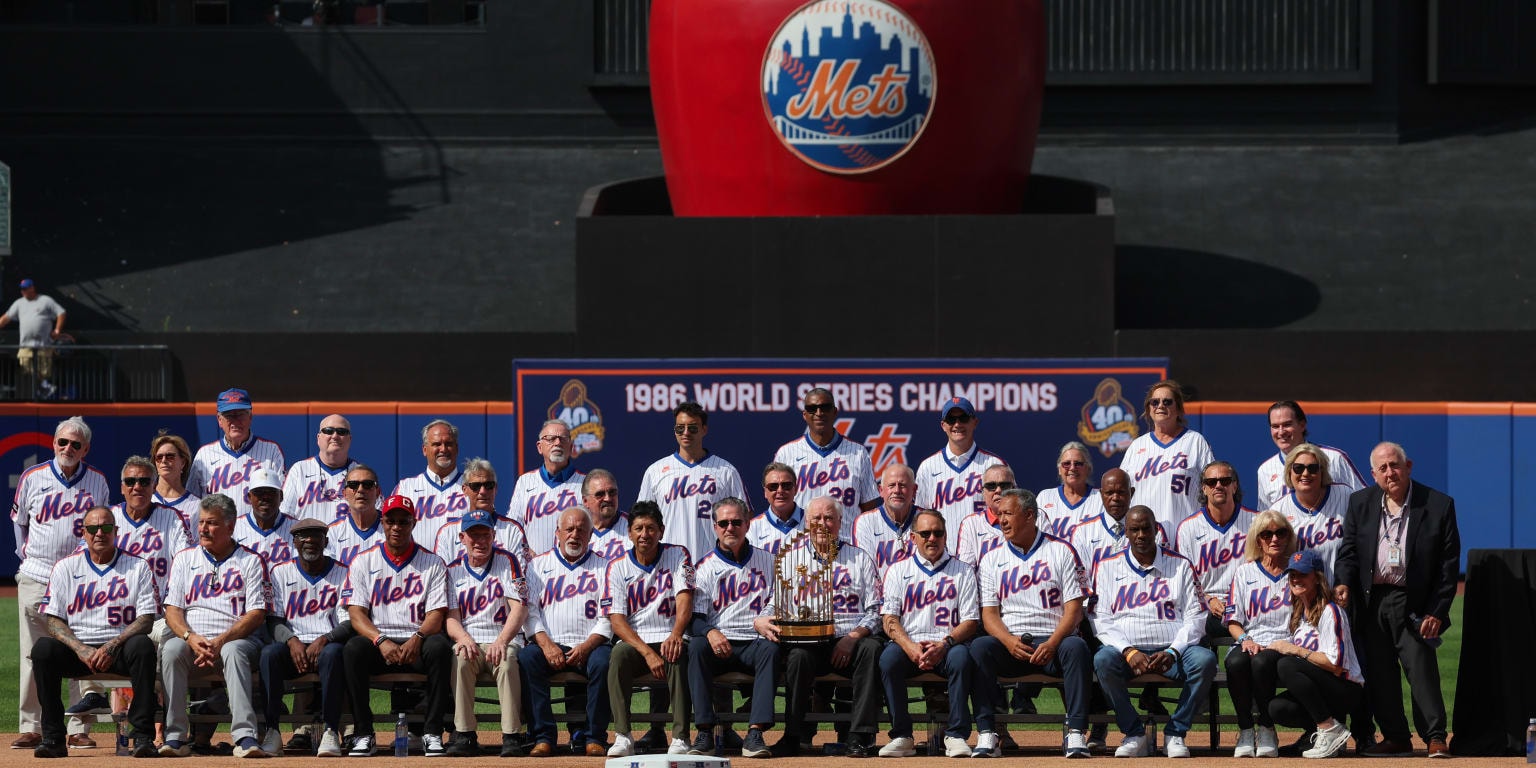
More than a team: 1986 Mets reunite memories of World Series grit 40 years later
Roger McDowell recalls the football helmets, the clubhouse details, and the pressure of pitching late in Game 6 as the Mets marked the 40th anniversary of their 1986 championship team.
Forty years after the New York Mets won the World Series, the title still lives in the small, practical moments that surround a championship run. In a celebration tied to the 40th anniversary of the 1986 team, former pitcher Roger McDowell looked back on one sequence in Game 6 that defined both the risk and the focus of postseason baseball.
McDowell, who was brought into the late innings during that World Series, said he still remembers the football helmets he saw inside the Mets equipment area. The detail stands out because his baseball day was not finished with the emotion of a lead or an outcome. He described pitching the seventh and eighth innings of Game 6, allowing the go-ahead run during his appearance, and then stepping away from the field after his work was done.
After the innings, McDowell recalled retiring to equipment manager Charlie Samuels’ office, a place that held the kind of items that do not show up in box scores but do show up in team culture. In this telling, the helmets became more than memorabilia. They were part of the everyday environment in which players and staff prepared, recovered, and returned to routine, even when the stakes were as high as they get in October.
The Mets’ 1986 championship remains one of the most closely remembered eras in franchise history, and the anniversary celebration underscores a theme that often gets overlooked as championships age: titles are built not only by star performances, but also by the bullpen work, the timing, and the way a club responds when a single run can swing momentum.
McDowell’s Game 6 description matters in the context of how teams handle late-inning pressure. A pitcher can be responsible for damage and still be part of the larger outcome, because postseason baseball is cumulative. Even when a go-ahead run is allowed, the final results depend on what happens after, and on whether the team can recover, tighten the margins, and convert the next chances.
By focusing on the equipment room and on the sensory memory of championship routines, the Mets’ 40th anniversary celebration also frames a different kind of legacy. Championships are not just a line in a record book. They become a shared set of references that players, coaches, and staff carry for decades, from the field into the office and back again.
For fans looking forward, the most compelling part of these anniversary moments is how they remind the present-day Mets of the human mechanics behind postseason calm. If the 1986 team’s story is a blueprint, it is less about perfect execution and more about resilience under strain, and the willingness to keep moving through the process when late innings do not go cleanly.
Why It Matters
- Late-inning bullpen usage is often decisive in October, and McDowell’s Game 6 role highlights how small moments can shape the game’s rhythm.
- Anniversary storytelling preserves team culture details that help explain how championship clubs operate under stress.
- The focus on routine, recovery, and staff space reinforces that a title is built by an entire organization, not only by on-field stars.
Key Facts
- The Mets marked the 40th anniversary of their 1986 World Series team with an MLB-reported celebration.
- Roger McDowell pitched the seventh and eighth innings in 1986 World Series Game 6.
- McDowell’s appearance included allowing the go-ahead run.
- McDowell described going to equipment manager Charlie Samuels’ office after his pitching work was done.
- McDowell recalled remembering football helmets in that equipment-area setting.