
THE APEX TIMES
Munetaka Murakami leaves a mark in Home Run Derby after 1st-round exit
Even with a quick departure from the contest’s first round, the White Sox rookie All-Star made enough contact and damage to earn a quick, direct compliment from Royals slugger Jac Caglianone.
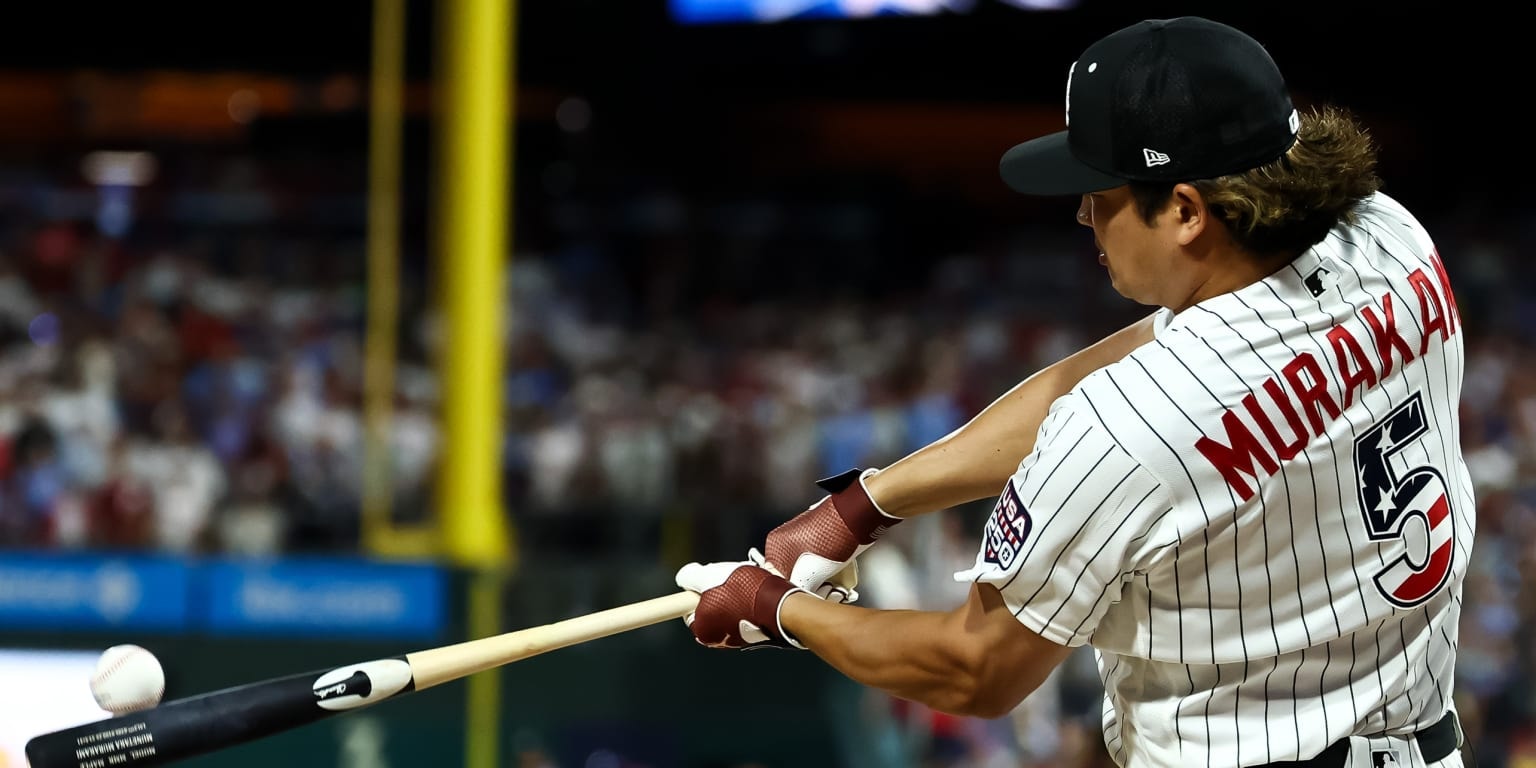
PHILADELPHIA, July 13, 2026: Munetaka Murakami’s Home Run Derby did not last into the deeper rounds, but it still registered. In the first round of the event, the White Sox rookie All-Star was eliminated, yet observers around the competition left with an impression that his swing mechanics were built for the format.
Royals slugger Jac Caglianone captured the feeling in one line after seeing Murakami work. Caglianone described Murakami’s home run approach as having a “perfect home run swing,” pointing to the consistency of the motion rather than any one specific result. The comment mattered in the Derby context because the league’s power specialists are not just trying to hit hard, they are trying to hit in a repeatable way during a short, high-volume window.
The Derby is where timing, bat path, and patience with pitch selection all get compressed. A hitter can look smooth for one swing, but the difference between an early-round exit and a long run often comes down to whether a hitter’s best swings show up quickly and frequently when the distance matters most. Murakami’s presence created that contrast, as the event still showcased a bat that looked prepared for the round from the opening attempts.
For the White Sox, Murakami’s participation also carried significance beyond the scoreboard. As a rookie, he has drawn attention for the way his skills translate to big-league game situations, and the Derby provided another stage to view that translation. The All-Star designation itself reflects that his profile has stood out among his peers, and the Derby appearance added a different lens, one focused entirely on power production and repetition.
The Royals, meanwhile, were represented by Caglianone as part of the wider talent conversation that surrounds any Home Run Derby. When an established slugger points to “perfect” mechanics, it underscores a common baseball idea: that a swing can be evaluated even when the tournament outcome is not. In other words, a first-round elimination does not erase how a hitter’s form can influence what scouts, coaches, and other players notice in real time.
It is also worth noting that a Derby is inherently volatile. Format rules, pacing, and the specific sequence of pitches can produce different results than what a hitter might experience in a regular game. So while Murakami’s exit ended his chance at the title picture, the mechanics-first impression that other players took from his swings provides the kind of lasting takeaway that outlives a single night.
What to watch next is how Murakami’s Derby style maps back onto day-to-day at-bats. If his bat path and timing continue to show up in games, the compliment from Caglianone becomes more than a quick quote, it becomes an early report that the rookie’s power may be durable even beyond the circus environment of a single event.
Why It Matters
- A first-round exit ends a Derby run, but the swing mechanics that stood out can shape how hitters and coaches evaluate Murakami’s power profile.
- High-visibility events like the Home Run Derby influence league-wide reputation, especially for rookies making the transition to star expectations.
- Caglianone’s assessment highlights how peers interpret elite power, emphasizing repeatable mechanics over one-off results.
- The next practical question is whether Murakami’s Derby timing and bat path carry into regular-season at-bats.
Key Facts
- Munetaka Murakami competed in the Home Run Derby as a White Sox rookie All-Star.
- Murakami was eliminated in the first round.
- Royals slugger Jac Caglianone said Murakami has a “perfect home run swing.”
- The event’s impact was framed around the repeatability of Murakami’s home run swing rather than just the final result.