
THE APEX TIMES
NBA’s points of emphasis on off-arm push-offs raise questions for Lakers, Austin Reaves and JJ Redick weigh in
The league’s 2026-27 officiating emphasis on off-arm push-offs is already sparking debate about how driving lanes, contact, and spacing will be policed. For the Lakers, the discussion matters most in half-court play, where timing and body positioning frequently live at the edge of legal contact.
The NBA has entered the 2026-27 season with a fresh focus from officials: off-arm push-offs by offensive players. In a preseason release of Points of Emphasis, the league spotlighted a category of contact that often shows up during drives, when an attacker uses a forearm or hand to create separation and maintain balance against a defender’s momentum. The decision has quickly become a talking point around the league, and in Los Angeles it has turned into a practical question for both how opponents will defend the Lakers and how the Lakers’ own shot creation will be officiated.
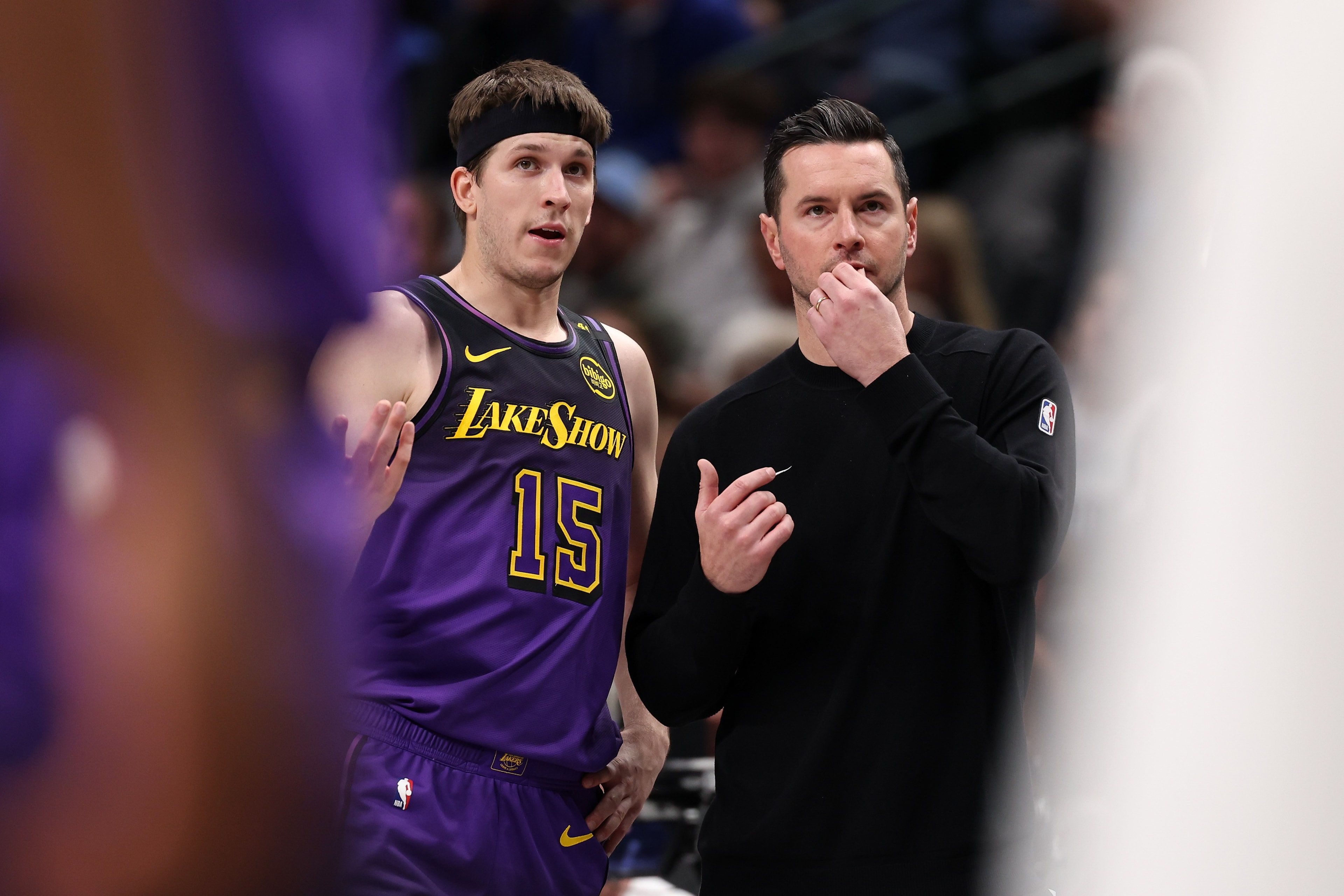
According to Yahoo Sports, the topic has been discussed in Lakers circles, including by JJ Redick and Austin Reaves. While the NBA’s emphasis is not a rule change by itself, Points of Emphasis function as a report to referees about what to look for, and they can influence game flow the way enforcement trends do. If offensive push-offs are called more consistently, teams that rely on prolonged contact while moving to the paint may need to adjust, especially when they are trying to finish through traffic where defenders are forced to ride body position.
For the Lakers, the potential ripple is tied to their offensive structure. Los Angeles has frequently used guard and wing penetrations to collapse help defenders, creating kick-out opportunities and direct interior looks. The off-arm push-off emphasis targets the exact mechanics that can occur in that sequence, such as an attacker’s arm extending to prevent a defender from staying attached or to keep the attacker’s path. That means the emphasis is less about any one player and more about the repeatable physical habits that show up across a team’s offensive play-calling.
Austin Reaves, specifically, is the kind of player whose offensive value can live in the space between contact and control. In the Yahoo report, Reaves is part of the discussion about what a “crackdown” could mean, a reflection of how the league’s language lands on players who operate in close quarters. Reaves is often asked to find angles for pull-ups and short-range shots after navigating bumps and leverage shifts, situations where arm positioning can be interpreted differently depending on how officials view intent and separation.
JJ Redick’s involvement also underscores why this matters beyond the highlight reel. As a coach leading a team’s approach to offense and spacing, Redick’s job includes translating officiating emphasis into actionable habits, from screening and driving technique to how teammates position themselves during help and recovery. If off-arm push-offs are enforced more tightly, coaches typically respond by encouraging cleaner contact, earlier ball movement, and clearer spacing cues that reduce the need for body-based “hand-fighting” while attacking.
The broader caution is that Points of Emphasis do not guarantee a uniform crackdown. Calls depend on the consistency of game management, the speed of play, and the tolerance for contact in a given matchup. It is also possible that officials focus on the most blatant examples, leaving many routine contact situations intact. Still, even a modest tightening can alter decision-making, because players often must choose whether to risk contact, adjust their finish, or re-route to a different shot option.
For Lakers fans and front-office watchers, the early season trend to watch is how often drives end with enforcement outcomes versus how often the league allows contact that creates separation. Look for whether Los Angeles changes how it attacks the lane late in possessions, whether certain drives produce fewer “extended contact” finishes, and how quickly the Lakers and their opponents adapt once teams see what referees reward and what they penalize. If the emphasis holds, the Lakers’ offensive rhythm and the micro-timing of hand placement could become recurring storylines throughout the first stretch of the schedule.
The bottom line is that the NBA has put officials and players on notice about off-arm push-offs in 2026-27. For the Lakers, the discussion involving Austin Reaves and JJ Redick reflects a team reality: when enforcement changes, offense has to evolve, sometimes within days. The next games will reveal whether the emphasis is mostly a refinement that cleans up the most obvious actions, or a broader shift that forces teams to reconsider how they create separation when defenders press through contact.
Why It Matters
- Officiating emphasis can change spacing and shot selection, especially on drives where arm position affects separation.
- If calls increase, teams that rely on contact-driven creation may need to adjust timing and ball movement to sustain efficiency.
- Because the Lakers’ half-court offense often depends on penetration and collapse, tighter enforcement could influence how possessions end.
- The enforcement trend early in the season will shape coaching strategy and player habits as the Lakers calibrate to referees’ interpretations.
Key Facts
- The NBA released Points of Emphasis for the 2026-27 season that highlighted off-arm push-offs by offensive players.
- The emphasis has become a widely discussed officiating theme in the preseason.
- Yahoo Sports reported that JJ Redick and Austin Reaves discussed what the focus could mean for the Lakers.
- The impact is primarily expected through offensive mechanics during drives and close-range scoring situations.
- Points of Emphasis are meant to guide officiating attention, even if the underlying rules do not change outright.