
THE APEX TIMES
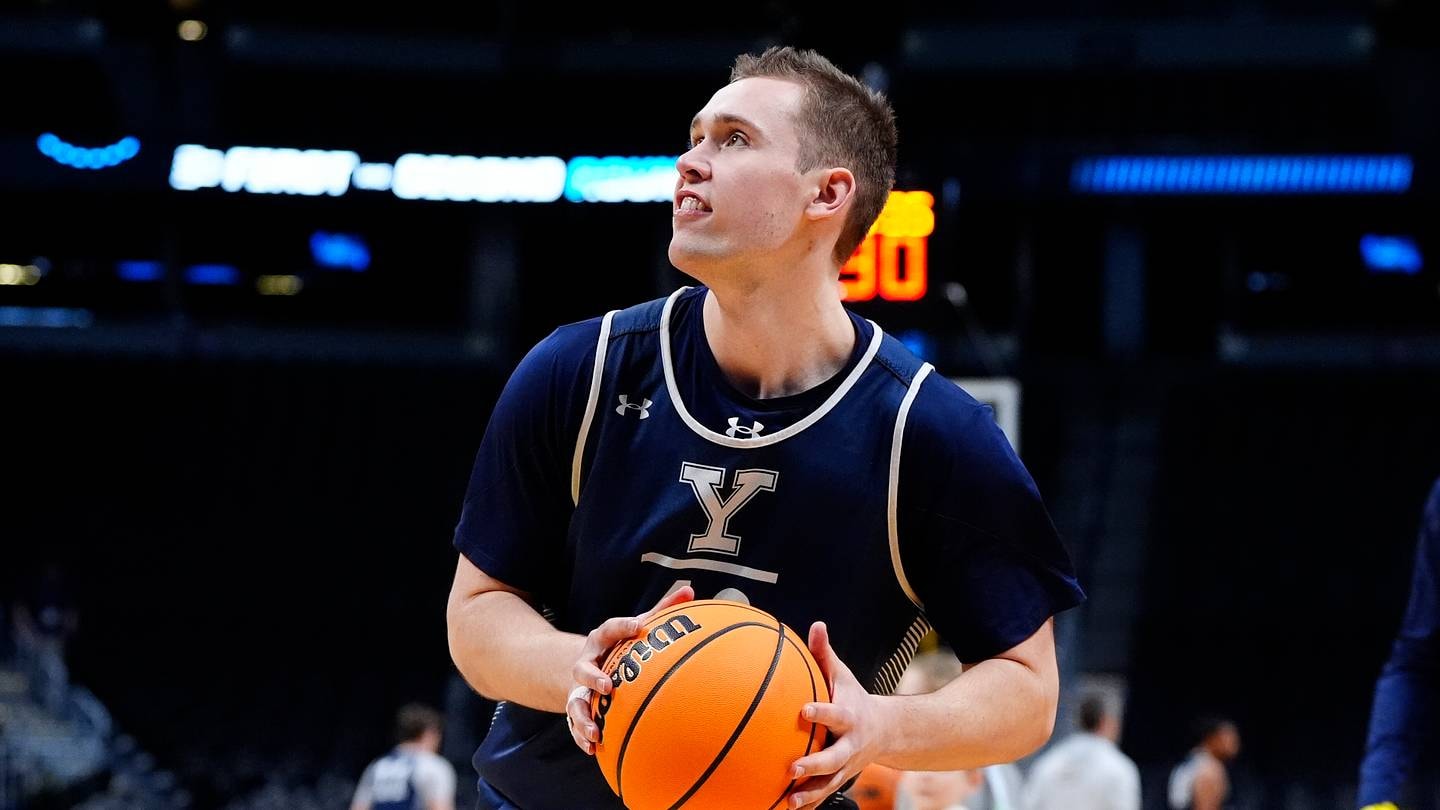
Nick Townsend, Ivy League Player of the Year, set to lead Stanford in 2026-27
A former Ivy League standout, Nick Townsend is expected to give Stanford Basketball a major lift as the program rebuilds after losing significant scoring from its prior season.
Stanford Basketball is preparing for 2026-27 with a notable answer to its biggest offseason question, scoring, according to Busting Brackets. The publication reports that Nick Townsend, the previous season’s Ivy League Player of the Year, is set to take on a leading role for the Cardinal in his fifth year. For Stanford, the appeal is straightforward: Townsend’s production at the Ivy level has translated into the kind of primary offensive responsibility that can stabilize a team after major turnover.
The timing matters because Stanford’s prior season ended with momentum, but the offseason that followed has been characterized as difficult. Busting Brackets notes that Stanford won 20 games and then, in the ACC, had what it described as a quiet offseason, at least in terms of replacement-level additions. At the same time, the Cardinal lost a large share of its offensive output, specifically its top five scorers.
Among the departures highlighted in the report is Ebuka Okorie, described as a star freshman who averaged 23.2 points per game and 3.6 assists per game last season. Busting Brackets says Okorie made a last-minute decision to stay in the NBA Draft, a choice the publication frames as a “massive blow” to Stanford’s immediate roster outlook. Losing a freshman who both scored at a high rate and created for teammates tends to leave teams searching for both shot-making and playmaking, not just one of those categories.
Townsend’s reported arrival is positioned as the type of offensive engine Stanford needs. As the Ivy League Player of the Year, he arrives with a track record of being the team’s most reliable option, and the report emphasizes that he is now expected to lead Stanford in his fifth-year season. If Townsend can translate that role and usage to the ACC, it would address a common challenge for programs moving on from a season defined by a handful of primary scorers.
Still, the practical impact for 2026-27 will depend on how Stanford blends Townsend into its offensive structure. The Cardinal’s ability to replace both volume scorers and secondary creators is often more complex than simply adding a high-usage player, especially in the ACC where defensive schemes can be more aggressive and scouting more detailed. Townsend’s leadership also will be measured by consistency across tough matchups, not just production in the games where Stanford’s offense is already functioning smoothly.
Beyond the court, Townsend’s presence could affect Stanford’s internal development priorities. When a program expects one player to set the tone offensively, it can change how teammates spend possessions, whether they take more or fewer shots, and how quickly the offense transitions from set plays to downhill drives. For Stanford, the report suggests the recruiting and offseason emphasis is now about integrating a proven scorer rather than waiting for incremental growth from role players.
Looking ahead, the most important thing to watch is whether Townsend’s scoring translates into reliable team offense after the departures of players like Okorie. If the Cardinal’s possessions begin to generate the same kind of threat that powered last season’s wins, Stanford’s 2026-27 ceiling will rise quickly. If not, the gap left by its top scorers may take longer to bridge, and the “quiet offseason” label could become a bigger story as ACC play gets underway.
Why It Matters
- A single high-end offensive leader can determine whether a team can reload quickly in the ACC after losing multiple primary scorers.
- Replacing both scoring and creation is central to Stanford’s 2026-27 ceiling, especially after the departure of a freshman who averaged 23.2 points and 3.6 assists.
- Townsend’s role will shape how Stanford’s offense allocates possessions, potentially changing the development path for surrounding players.
- Stanford’s early ACC competitiveness could hinge on whether Townsend’s production scales to a higher level of defensive pressure.
- If Stanford cannot generate offense consistently, its offseason turnover could continue to show up in conference results.
Sources
Key Facts
- Busting Brackets reports that Nick Townsend, the prior Ivy League Player of the Year, is set to lead Stanford Basketball in 2026-27 in his fifth year.
- The publication describes Stanford’s previous season as ending with 20 wins.
- Busting Brackets says Stanford lost its top five scorers heading into the 2026-27 offseason.
- Ebuka Okorie is cited as a star freshman who averaged 23.2 points per game and 3.6 assists per game.
- Busting Brackets reports that Okorie stayed in the NBA Draft after a last-minute decision, which the report calls a major blow to Stanford.
- The report characterizes Stanford’s offseason in the ACC as unusually quiet, at least in terms of replacement-level activity.