
THE APEX TIMES
OG Anunoby tip-in late, but Spurs were unraveling before it mattered
After a late-game finish that technically decided the game, San Antonio’s deeper collapse around it left Victor Wembanyama and the Spurs searching for answers as the Finals picture tightened.
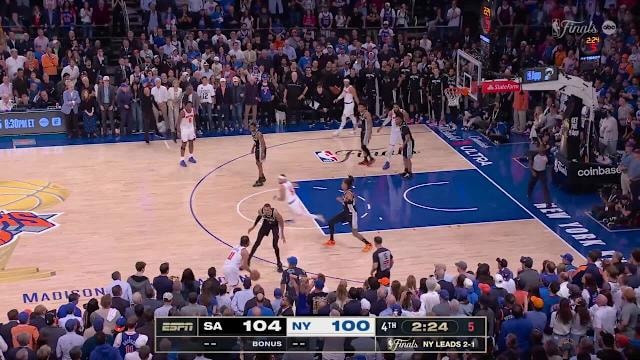
In the NBA Finals, a late OG Anunoby tip-in with 1.2 seconds left in regulation was credited as the game-winning moment, but the sequence that defined San Antonio’s night began well before the last inbound. The Spurs’ late-game execution may have put a bow on the outcome, yet the sense from San Antonio was that the game had slipped away earlier, in repeated possessions and momentum swings that never quite stabilized.
For Victor Wembanyama, the stakes were clear in a way that stat sheets do not capture. He is the Spurs’ central identity on both ends, and when a team’s rhythm collapses, a franchise player becomes the lens through which every late-game question is interpreted. The report framing of the loss focused on Wembanyama’s perspective and the broader idea that San Antonio is trying to understand what broke, not just how one play ended.
The emotional through-line in the account was not resignation in the final seconds, but frustration with what came before them. San Antonio “accepted defeat long before” the 1.2-second finish, according to the piece, and that distinction matters. Finals games are often decided by small margins, but unraveling is rarely singular. It typically shows up in spacing problems, defensive communication, and the inability to control pace when opponents start stringing together purposeful runs.
The article’s most direct message was about an unfolding problem, described with a quote that emphasizes pain and frustration during a difficult process. In other words, the Spurs’ challenge is not only to convert in critical moments, but to sustain structure for entire stretches. That is the kind of gap teams feel hardest in championship series, because opponents do not need to outplay you for 48 minutes. They need to find the period when you stop looking like yourself, then keep pressing until it ends the way this one did.
San Antonio’s search for answers also reflects the reality of how teams evolve in the postseason. A late-game tip-in can look like a single decisive moment, but it often arrives after earlier decisions have narrowed options. If a team cannot keep possessions from turning into urgency basketball, the final minutes become less about execution and more about reaction. The Spurs, at least in this telling, were reacting before they had a chance to impose their will.
What to watch next is whether the Spurs treat this as a coaching and process problem or as a personnel and tactical match-up issue. The Finals raise the bar on defensive footwork, outlet choices, and shot selection, and the team will have to answer whether its breakdowns were system-level or situational. For Wembanyama, the immediate question will be how the Spurs surround his strengths so late-game possessions look planned, not improvised.
San Antonio is still in the early stages of figuring out how to convert Finals pressure into repeatable control. A single late-game play does not define a series, but it can crystallize what already went wrong. If the Spurs are truly “searching for answers,” as the report indicates, the next step is showing, game after game, that they can prevent the unraveling before the last seconds arrive.
Why It Matters
- In a Finals setting, early stretches of disorder become decisive, and this loss is framed as having begun well before the last-second finish.
- For the Spurs, the central challenge is maintaining structure and identity under postseason pressure, not just making one big play late.
- Wembanyama’s role increases as the team’s stability issues become visible, shaping how opponents defend and how San Antonio responds.
- The Spurs will need to clarify whether the unraveling is tactical, communication-based, or systemic so it does not repeat in future elimination moments.
Sources
Key Facts
- OG Anunoby recorded a tip-in with 1.2 seconds left in regulation that was treated as the game-winning play.
- The report’s central point is that San Antonio’s collapse began before the final seconds.
- Victor Wembanyama is highlighted as part of the search for answers following the Spurs’ unraveling in the Finals context.
- The framing emphasizes frustration with what broke in the flow of the game, not only the final possession.