
THE APEX TIMES
Oklahoma eyes a sharper ground-game in 2026 after last season’s rushing slump
Ahead of the 2026 season, analyst Gabe Ikard expects the Sooners to increase their rushing touchdown output after Oklahoma scored 18 rushing touchdowns on the way to a No. 113 rushing offense ranking.
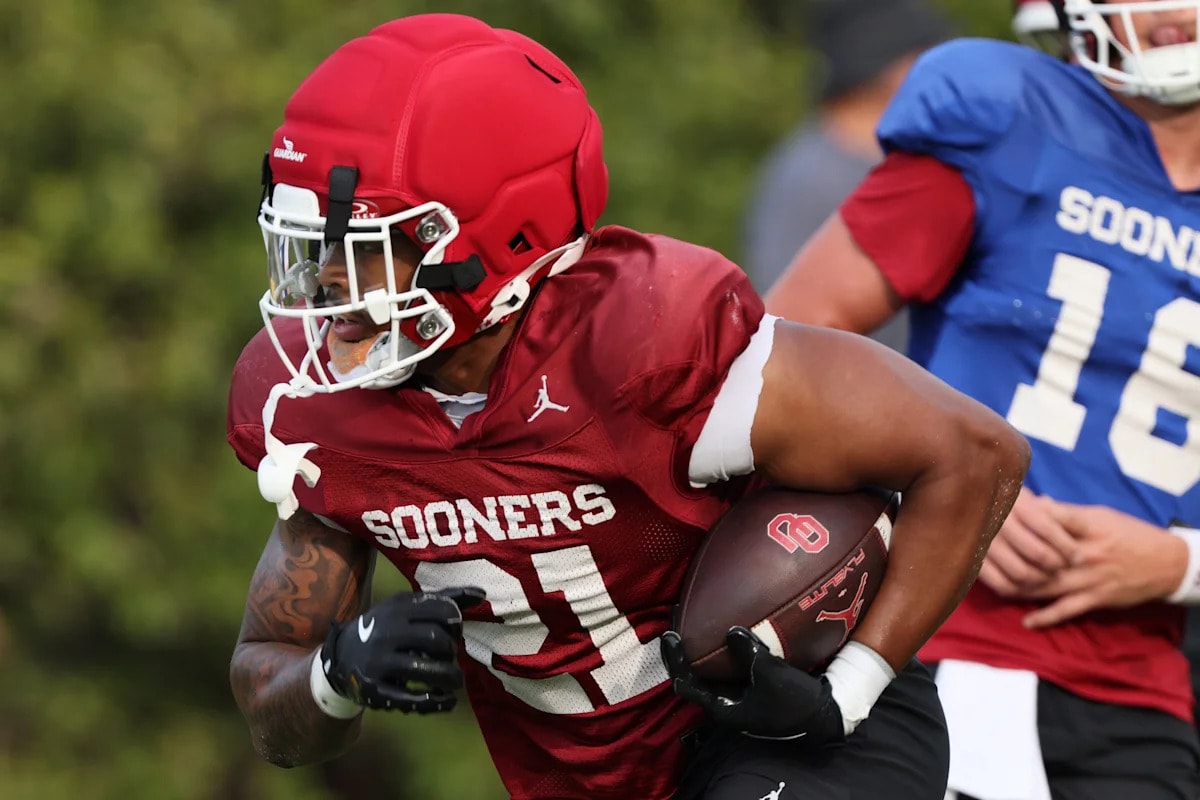
Oklahoma enters the 2026 season with a clear priority: improve production from the run, especially in the end zone. In a preview ahead of the season, Gabe Ikard projected that the Sooners will double their rushing touchdowns in 2026, pointing to the struggles of the previous year and the emphasis the program has placed on correcting its rushing offense.
The baseline, as framed in the preview, was stark. Oklahoma scored 18 rushing touchdowns last season, and its rushing offense ranked No. 113 in the country, producing 118.5 rushing yards per game. That combination matters because it suggests Oklahoma’s run game was not merely inefficient, but also unable to consistently convert carries into sustained drives and finishing runs.
Ikard’s expectation is tied to an offseason focus on the ground game, with the idea that work done over the summer can translate into more touchdowns once the season begins. The forecast is not presented as a guarantee, but as a hope that changes made between seasons can show up quickly in how Oklahoma runs the ball and reaches the goal line.
For context, the “rushing touchdowns” measure is often a proxy for how frequently a team is able to reach red-zone territory and then finish with run concepts. A team can be decent at moving the ball but still struggle to score with rushing plays if opponents bend late and force field-goal situations. Likewise, a team might record yards without frequently converting carries into short-yardage success. Oklahoma’s 2025 touchdown total, as cited in the preview, is what drives the argument that improvement could be dramatic if the coaching plan lands.
There is also a structural reason Oklahoma’s end-zone efficiency could become a swing factor in 2026. When rushing production rises from its baseline, it can affect play-calling across the entire offensive plan. Running more effectively can change defensive behavior on third downs, keep opposing units from sitting on passing downs, and create more manageable situations for quarterbacks and receivers. In other words, doubling rushing touchdowns would not only reflect a better run game, it would likely reshape how Oklahoma controls tempo and leverage in games.
Still, the projection should be treated carefully. A shift from 18 rushing touchdowns to roughly double that output implies a large improvement in multiple dimensions at once, including rushing efficiency, red-zone conversion, and consistency over the full schedule. Without additional primary details on personnel, schematics, or specific offseason personnel changes, the prediction remains a forward-looking assessment rather than a verified outcome.
What to watch next is how Oklahoma’s run game looks once 2026 is underway, particularly in situations that historically separate explosive running teams from merely functional ones. Early indicators include how often Oklahoma reaches the red zone, whether it gains yards on first and second down, and, most importantly, how frequently its rushing plays produce touchdowns rather than stalled drives.
Why It Matters
- Rushing touchdowns can be a barometer for how effectively a team converts drives into scoring, especially in the red zone.
- A stronger run game can improve play-calling flexibility, which often affects third-down success and overall offensive efficiency.
- If Oklahoma’s ground output rises materially, it can change game scripts and matchup dynamics for opponents.
Key Facts
- Gabe Ikard expects Oklahoma to double its rushing touchdowns in 2026.
- Oklahoma scored 18 rushing touchdowns last season.
- Oklahoma ranked No. 113 in rushing offense last year, averaging 118.5 rushing yards per game.
- The projection is tied to the Sooners hoping offseason work to improve the running game comes to fruition.