
THE APEX TIMES
Oklahoma State isn’t treating special teams like an afterthought under Eric Morris
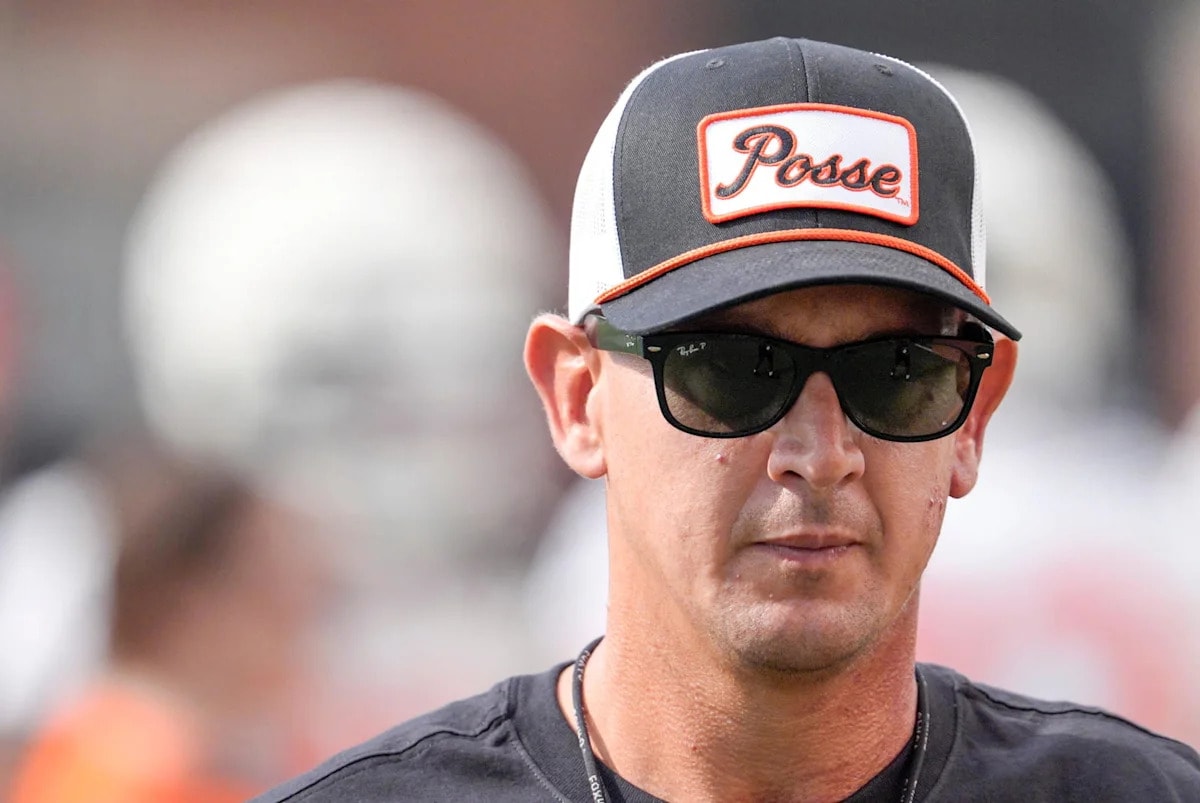
Special teams coordinator Eric Morris is pushing an aggressive identity for the Cowboys, with Drew Svoboda emphasizing blocked punts, explosive returns, and field-flipping plays.
Oklahoma State is laying out a special teams blueprint that is meant to change games, not simply fill roster minutes. In a look at the Cowboys’ approach under special teams coordinator Eric Morris, receiver-returner Drew Svoboda described a unit that is expected to create disruption rather than wait for opportunities. The emphasis is on making big swings on punt and return plays, including blocked punts, explosive returns, and plays that can swing field position quickly enough to affect how the offense and defense operate for the next series.
The core theme is aggressive execution across phases. Morris is widely associated with an offensive-minded football culture, and the takeaway from this special teams framing is that the same intensity is meant to carry over to every snap, including the “micro-moments” that often decide who gains momentum. In special teams, that typically means being precise in alignment and timing, then applying pressure at the right point in the play so the coverage team can force a mistake or so the return game can turn a routine kick into a chunk of yardage.
For Svoboda, the mission is clear: no one is too important to be part of a special teams plan that tries to take away the opponent’s comfort. When teams treat special teams as secondary, the result is usually conservative play, slower reactions, and less commitment to high-risk, high-reward actions like punt blocks. The Oklahoma State vision described here instead frames special teams as a live part of the game plan, with defined expectations for how players contribute even if they are not carrying the ball or throwing the ball on offense or defense.
That matters in college football because special teams plays can dictate tempo and strategy. A punt block can erase distance, pin an opponent in difficult territory, or create a sudden scoring chance without requiring an offense to march the full length of the field. Similarly, an explosive return can shorten the field so that an offense’s efficiency matters more, and it can also affect defensive play-calling because a unit that expects to start deep will behave differently than one that expects to start near midfield.
Oklahoma State is also operating in a conference environment where Big 12 games can hinge on field position and sudden momentum. In that setting, coaches often stress that special teams is not just about avoiding mistakes, it is about manufacturing advantages. The reported focus on blocked punts and field-flipping plays suggests the Cowboys want their special teams to do more than “hold serve,” especially in close games where each possession can carry unusual weight.
The immediate practical question for Oklahoma State will be how consistently that aggression shows up in actual game situations. Even when a unit has the right intentions, punt and return plays involve timing that can be disrupted by coverage angles, snap quality, and how opponents decide to neutralize your threats. If the Cowboys can translate the stated goals into repeatable execution, their special teams identity could become a structural advantage, forcing opponents to manage risk differently and giving Oklahoma State more controllable starting points for both its offense and defense.
Looking ahead, fans and opponents will be watching whether Svoboda’s “no afterthought” framing turns into a measurable on-field pattern, particularly in punt protection and return creation. If Oklahoma State’s special teams is truly treated as a full-phase priority under Morris, it should influence how frequently they challenge the return game and how often they look to create pressure on punts, because those are the kinds of plays that can change the rhythm of a season’s worth of Saturdays.
Why It Matters
- Aggressive punt and return goals can turn special teams into a possession-creating factor, not just a field-position baseline.
- If the Cowboys can consistently pressure opponents on punts, it can force different opponent game plans and change how tightly opponents defend returns.
- A field-flipping identity can benefit Oklahoma State’s offense by shortening the field and changing when defensive coordinators expect to prevent explosives.
- Special teams execution often becomes a separator in close games, which is significant in Big 12 matchups where margins tend to matter.
- The unit’s aggression under Morris sets expectations for how Oklahoma State will try to win the hidden moments of games.
Sources
Key Facts
- Oklahoma State’s special teams approach is described as aggressive rather than passive under special teams coordinator Eric Morris.
- Drew Svoboda emphasized blocked punts, explosive returns, and field-flipping plays as key objectives for the Cowboys.
- The reported intent is that special teams contributions are expected from the full group, not only players viewed as secondary options.
- The Cowboys’ stated special teams identity connects to the broader theme of carrying a high-effort mentality across all three phases of play.
- The focus on punt-related disruption suggests an emphasis on timing, blocking schemes, and coverage impact rather than only return yardage.
- The broader competitive value is that special teams can quickly alter field position and momentum, which can be decisive in college football.
- Because the report is primarily conceptual, the next indicator will be how well Oklahoma State executes the plan in live game situations.