
THE APEX TIMES
Oregon linebacker Devon Jackson calls for a “do or die” standard as he turns patient development into production
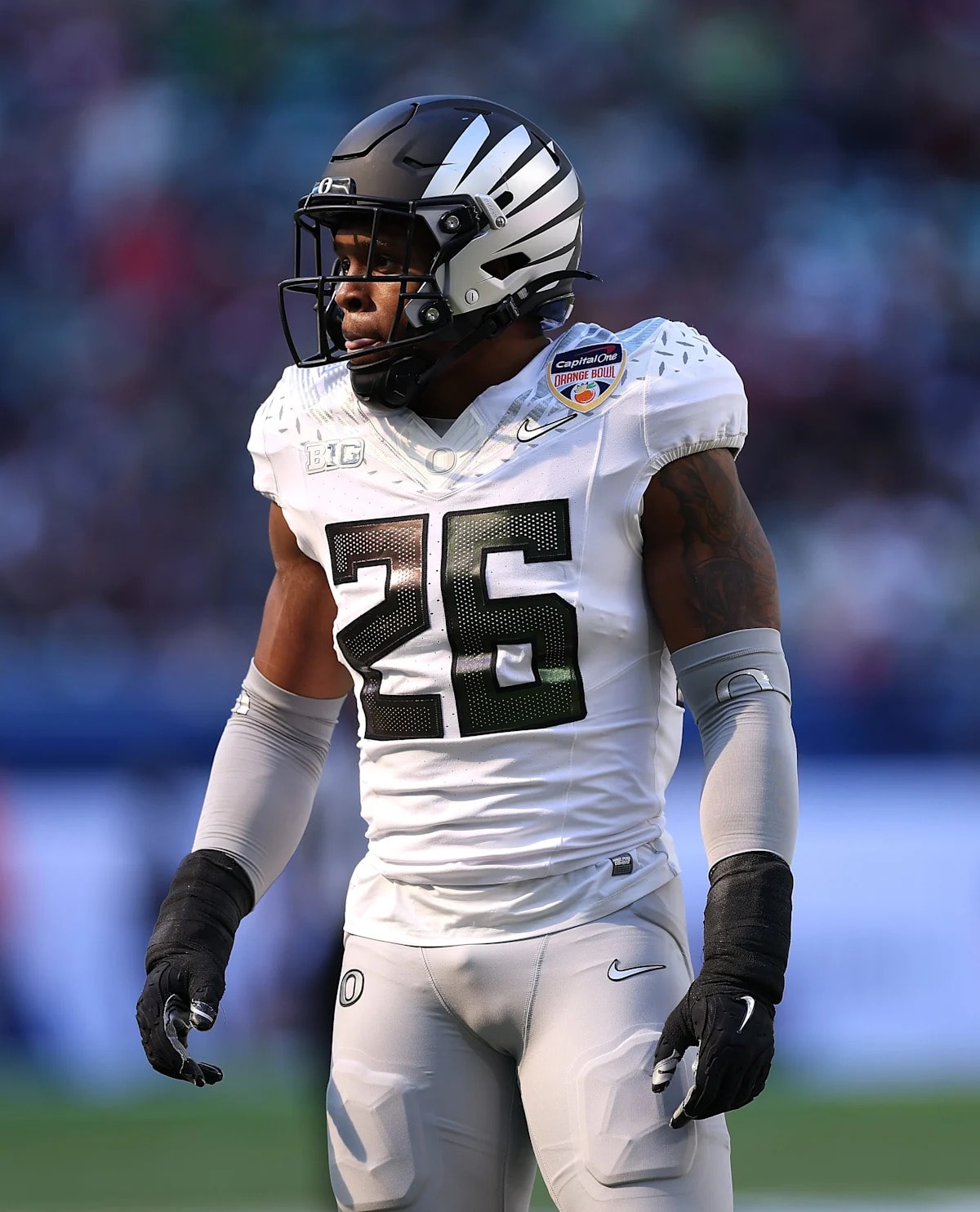
Jackson, a linebacker at Oregon, says the moment is here for him to take what he has learned and help drive a season defined by urgency rather than patience.
Oregon linebacker Devon Jackson is framing his upcoming season with a blunt message: it is time to make it count. In a recent interview, Jackson described a “do or die” approach to the work ahead, shifting from waiting and learning to demonstrating his skills on the field. The tone matters because at a program like Oregon, linebacker play is expected to be a stabilizing force in every defensive alignment, from opening series responsibilities to late-game adjustments.
Jackson’s comments also reflect a wider cultural shift in college football. He suggested that “the new age” of the sport has made transferring elsewhere feel normal rather than exceptional. In that environment, Jackson’s personal timeline stands out: he pointed to staying in the same program for five years, including a redshirt season, as something that is becoming increasingly rare.
What Jackson is indicating is not simply confidence, but a specific kind of commitment. Redshirting typically buys a player time to adjust to the speed and complexity of the college game, refine technique, and earn trust in defensive calls. By emphasizing his patience, Jackson implies that he believes the learning curve is complete and that he is now ready to translate development into impact.
The phrase “do or die” is common in sports, but Jackson ties it to the current realities of roster building and player movement. When more players choose to switch programs rather than wait through a multi-year arc, coaches and fans can come to expect faster outcomes. Jackson’s stance suggests he is ready to meet that expectation directly, using his own path as a contrast to the movement-heavy model.
For Oregon, the practical question is what his urgency turns into once the team is forced to solve game situations. Linebackers often serve as the connective tissue between the front and the secondary, responsible for reading formations, communicating coverage cues, and fitting the run with discipline. If Jackson’s confidence matches his preparation, Oregon can benefit from a linebacker who is not only physically capable but also mentally decisive, especially when offenses start dictating tempo and leverage.
Still, Jackson’s “do or die” forecast is a personal standard rather than a measurable guarantee. The college season will determine whether that mindset shows up as consistent tackles, clean run fits, and timely decision-making. The next test for Jackson will come in the early moments of competition, when preparation is most clearly exposed and when coaches typically identify who is processing the game quickly enough to carry the defense’s workload.
Why It Matters
- Jackson’s comments suggest Oregon could be looking for faster, more immediate returns from a linebacker whose timeline is longer than the current transfer-heavy norm.
- Linebacker impact is central to run defense and communication, making his readiness a potential stabilizing factor for the Ducks’ defensive identity.
- If Jackson’s mindset translates to performance, it can influence how the staff manages defensive calls and responsibility across the front seven.
- More broadly, Jackson’s approach reflects the tension in college football between player movement and the value of staying through development.
Key Facts
- Oregon linebacker Devon Jackson said he is ready for a “do or die” season.
- Jackson characterized his coming year as a shift from patient development toward showing his skills.
- He contrasted his own five-year stay at Oregon, including a redshirt season, with the growing trend of athletes transferring.
- Jackson described transferring elsewhere as increasingly normal in the current era of college sports.