
THE APEX TIMES
Oregon State’s passing surge crushes San Diego State 66-14 at Reser Stadium
The Beavers unleashed a quarterback-driven attack that pushed San Diego State to its heaviest defensive blow in more than a decade, turning a weather-tinged week into a rout.
Oregon State overwhelmed San Diego State on Saturday evening at Reser Stadium, posting a 66-14 victory in a contest that quickly stopped looking competitive. With much of San Diego bracing for a tropical storm, the Aztecs arrived in a difficult mindset, but the matchup against the Beavers’ aerial attack became the decisive factor early and never loosened its grip.
According to the game account, Oregon State’s passing game carried the day in a way the Aztecs could not adjust to, leading to a lopsided scoreline and a defensive output that reportedly marked the most points San Diego State has allowed since 2008. SDSU came into the game at 2-4 overall and 1-1 in Pac-12 play, while Oregon State entered at 4-2 overall and 2-0 in the conference, setting up a clash between a program trying to stabilize and one rolling through its early league slate.
The Beavers’ offense, as described in the report, functioned like a system rather than a sequence of isolated plays. The “gale-force” characterization of Oregon State’s passing attack captured how consistently it moved the ball, stressing San Diego State’s secondary and forcing repeated defensive stops without the offense returning enough possessions to change the tempo. Once that rhythm was established, the game turned into a test of whether SDSU could slow down the passing game enough to keep contact, and it never quite did.
While the Aztecs’ overall record reflects an uneven season, the score also underlined the gap between where they are and what the Beavers can execute. San Diego State’s offense struggled to keep pace, and the report frames what began as a nightmare matchup as something that “came to life” for Oregon State. The final margin left SDSU facing a long reset, not just from the scoreboard, but from what the defense likely must address after conceding points at a rate not seen in years.
Oregon State’s success in the passing game carried additional weight because of the opponent. Pac-12 play tends to reward disciplined preparation and efficient offensive tempo, and a quarterback-led attack that works repeatedly against conference defenses can reshape how the rest of the year looks for a team’s title picture. For San Diego State, the loss also changes the calculus for remaining conference games, turning each subsequent week into an opportunity to avoid falling further behind the teams separating themselves in the standings.
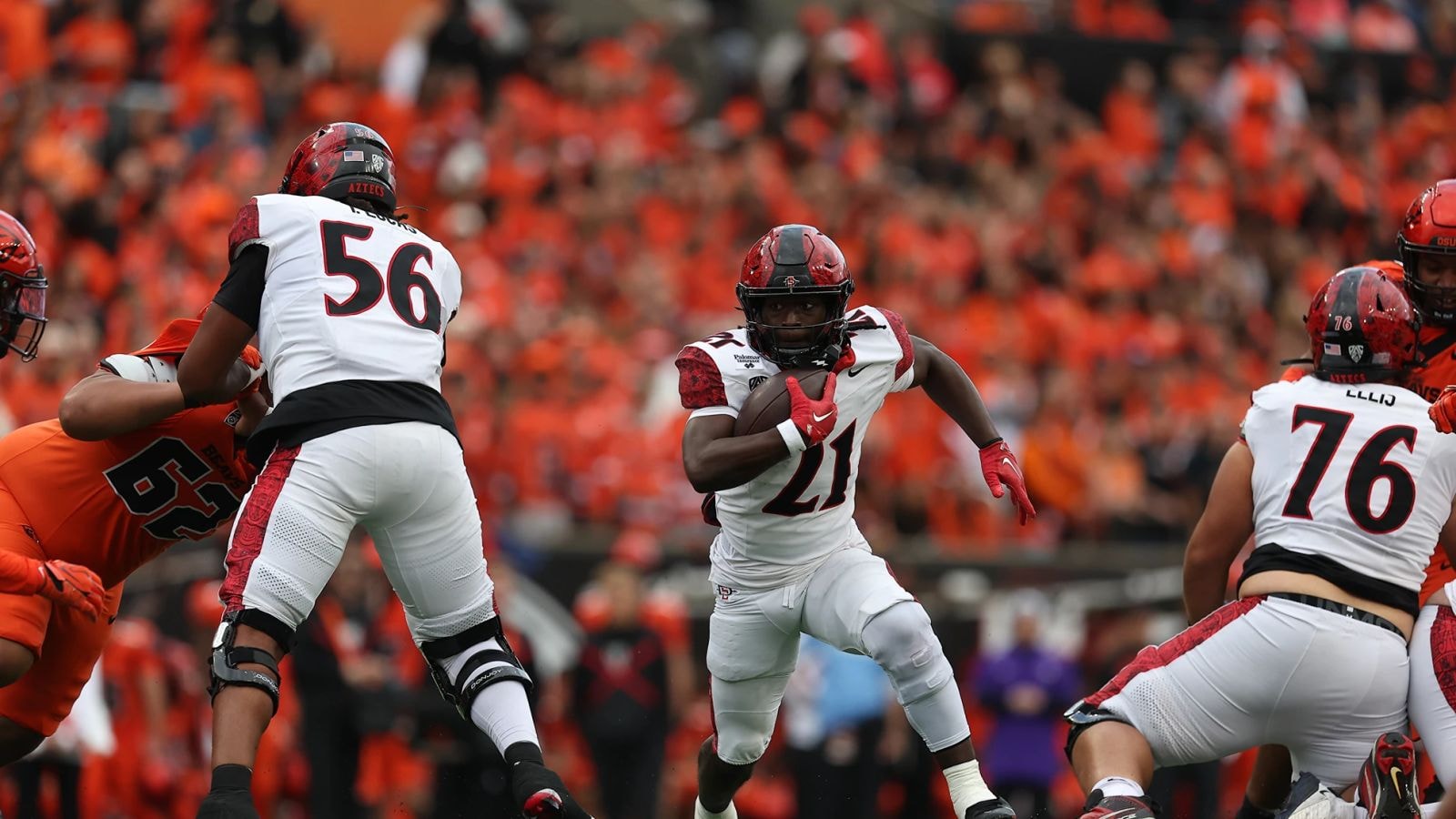
One visible detail from the game coverage was the presence of SDSU running back Javion Kinnard, shown in team-issued imagery carrying the ball against Oregon State. In games like this, the supporting cast often gets evaluated not just by production, but by whether it can give the offense enough balance to protect the passing game and shorten third-down situations. Even without specific statistical breakdowns here, the game’s context suggests SDSU needed to create more manageable offensive scenarios than it was able to sustain.
Why It Matters
- The 66-point output highlights how quickly a mismatch in quarterback efficiency and passing execution can decide a Pac-12 game.
- For San Diego State, allowing the most points since 2008 raises immediate questions about defensive structure and adjustments.
- For Oregon State, the win reinforces momentum in conference play and adds clarity to what kind of offensive plan can travel against elite Pac-12 competition.
- The lopsided result likely tightens the margin for San Diego State in future conference weeks, where early-season inconsistency becomes harder to overcome.
Key Facts
- Oregon State defeated San Diego State 66-14 at Reser Stadium on Saturday evening.
- The report says San Diego State allowed the most points since 2008.
- San Diego State entered at 2-4 overall and 1-1 in Pac-12 play.
- Oregon State entered at 4-2 overall and 2-0 in Pac-12 play.
- The game coverage emphasized Oregon State’s quarterback-led passing attack as the core difference.