
THE APEX TIMES
Orioles’ Jackson Holliday turns every home run into $500 for pet therapy at a Baltimore hospital
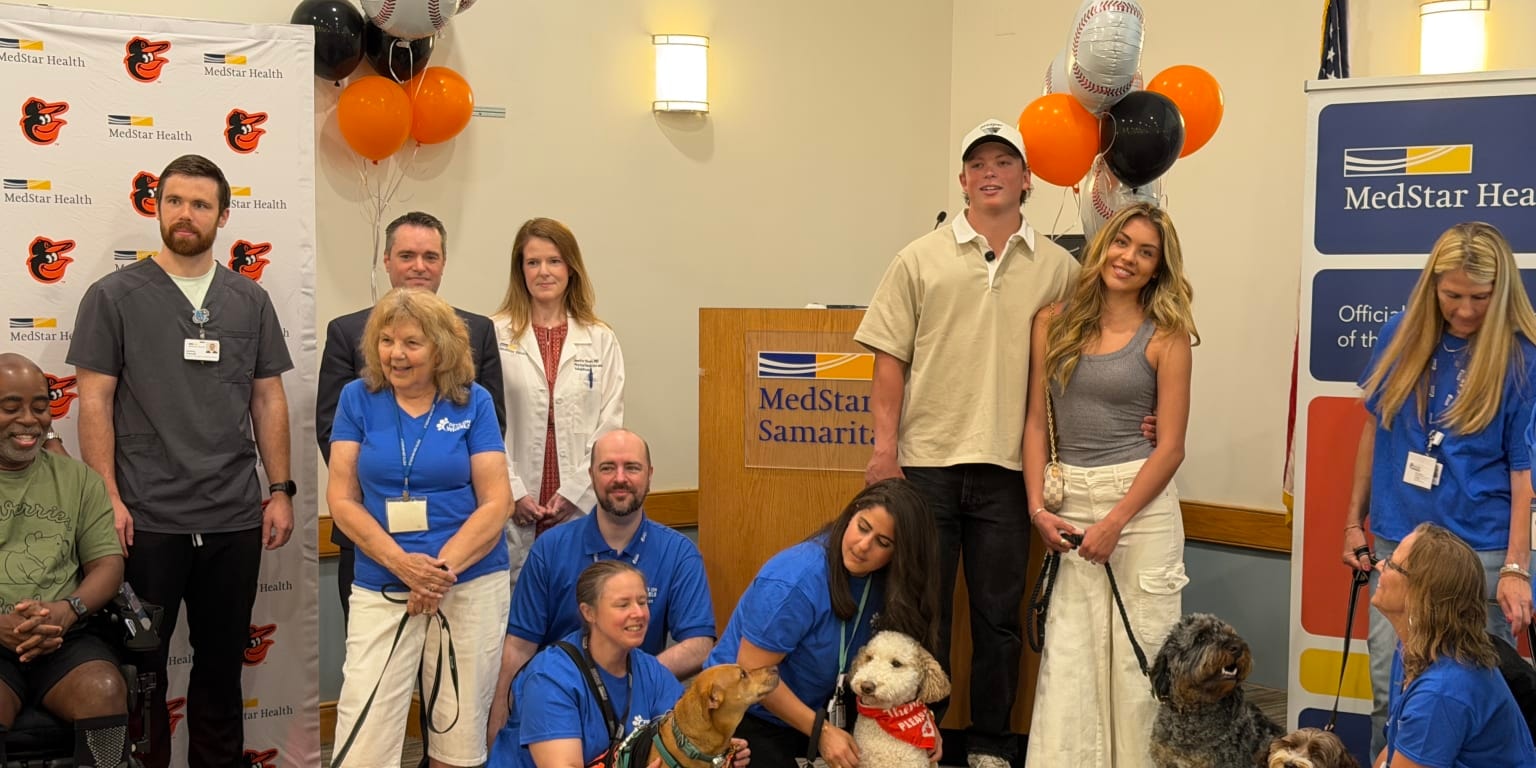
In a city where baseball is entertainment and escape, Jackson Holliday is pairing his power moments with something more personal for local families. For each Orioles home run, the 22-year-old infielder has committed $500 to a pet therapy program at a Baltimore hospital.
Jackson Holliday’s home run streak is measured the way many fans keep track of a season, but his latest Orioles contribution is counted differently. According to MLB, the 22-year-old Baltimore infielder has agreed to donate $500 to a Baltimore hospital’s pet therapy program for every home run hit by the Orioles, a community effort that ties game-day excitement to services that reach beyond the ballpark.
The partnership reflects the way Holliday has spent time in Baltimore since his major-league arrival. MLB noted that over the past three years, he has made a point to connect with children, including being on the field during batting practice to sign autographs when he can. That habit, the team’s home-run donation, and the presence of pet therapy in the mission statement all connect to the same theme: using public attention as a conduit for support in the neighborhoods that follow the Orioles most closely.
Under the structure described by MLB, the donation is triggered by the Orioles’ offense, not by Holliday personally. That matters because it shifts the focus from individual achievement to collective output. A single swing can become a direct financial boost for a program centered on animal-assisted visits and comfort, with each Orioles home run carrying a fixed amount forward into the hospital effort.
MLB’s report also situates Holliday’s role as more than a prospective star’s branding. Autograph sessions are a recurring element of his day-to-day presence at the ballpark, but the donation program turns that visibility into a measurable commitment. It is, at minimum, a steady stream of impact that scales with a team’s own production, so when the Orioles’ power game shows up, so does extra support for the program.
There is no cure-all in any single cause, and a donation policy does not replace the broader work that healthcare systems rely on. Still, in sports cities, consistency is its own kind of credibility. When a player ties his name to a repeatable mechanism, it becomes easier for fans to understand what their support means beyond the standings.
For Holliday and the Orioles, the next watch is simple: whether the program continues to run smoothly through the season and how often the Orioles provide the trigger. The practicality is clear, too. Each home run is both a game moment and a delivery point for the donation promise. If Baltimore’s offense continues to generate extra bases, the hospital’s pet therapy program can count on a higher baseline of support linked to results at Camden Yards.
The larger takeaway is that community involvement is increasingly becoming part of how organizations present leadership, not just charity done occasionally. Holliday’s approach, as described by MLB, blends accessibility to fans with a direct, home-run-linked contribution that gives the Orioles’ best offensive outcomes a second purpose.
Why It Matters
- It adds a measurable community impact that scales with the Orioles’ offensive production.
- It strengthens Holliday’s public role as more than an on-field figure, emphasizing engagement with local families.
- It gives fans a tangible reason to connect home runs with something that happens off the field.
- It highlights how team culture can translate game moments into support for health and wellness programs.
Sources
Key Facts
- Jackson Holliday, a 22-year-old Orioles infielder, is participating in a donation program tied to Orioles home runs.
- MLB reports that $500 is donated to a Baltimore hospital’s pet therapy program for every Orioles home run.
- MLB described Holliday as making time for children during batting practice, including frequent autograph signings.
- The program and Holliday’s community presence are noted as part of his work in Baltimore over the past three years.