
THE APEX TIMES
Packers’ running back rotation still a work in progress after another mixed week
Green Bay has leaned on a three-man backfield committee featuring MarShawn Lloyd, Kaleb Johnson and Chris Brooks, but consistency and ball security remain issues even after a win over Tampa Bay.
The Green Bay Packers’ backfield is still operating like a committee rather than a clear-cut feature group, and the running backs’ performance has not yet produced the kind of steady handoff, run scheme continuity and overall efficiency coaches usually want week to week.
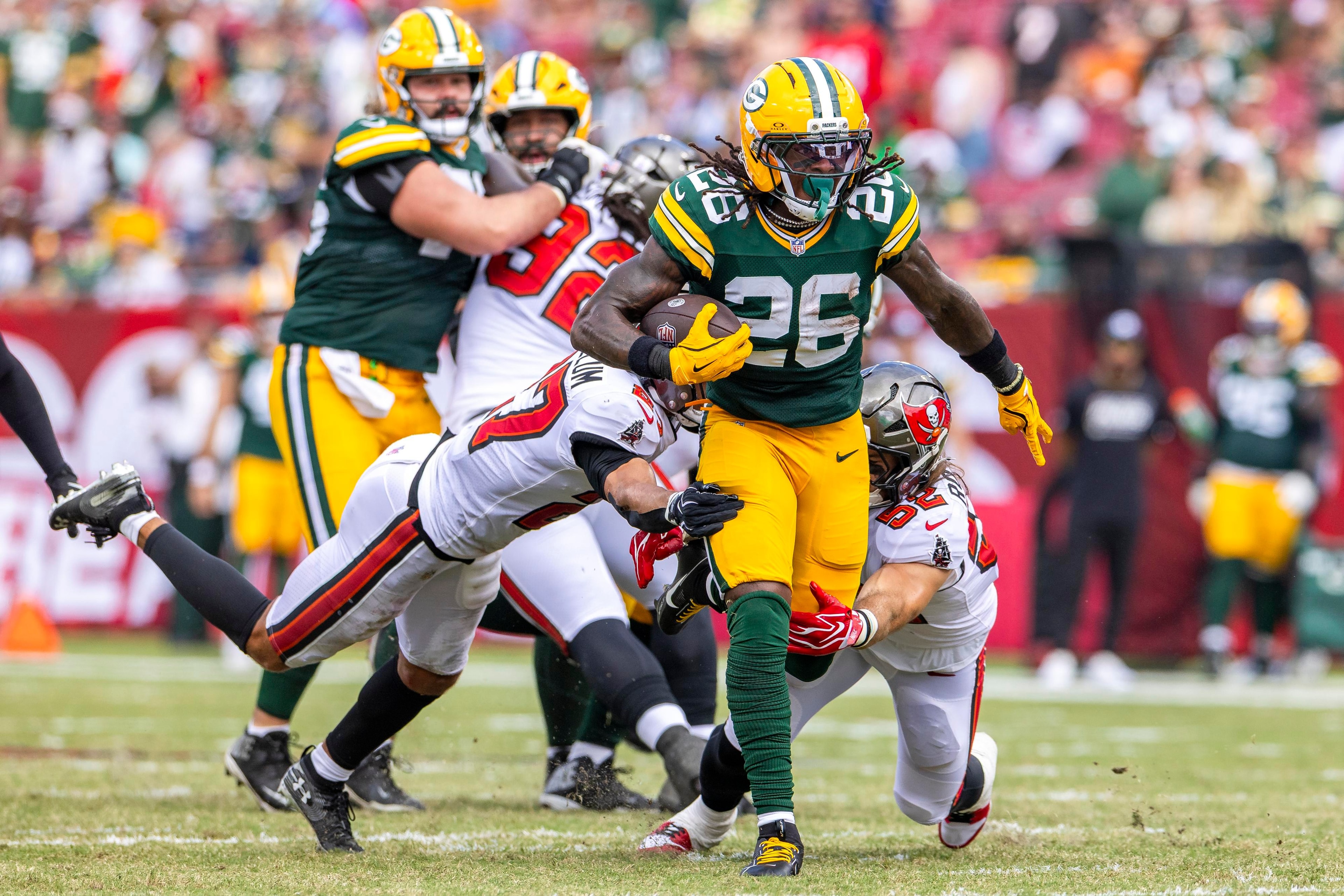
In a recent game against the Tampa Bay Buccaneers, the Packers got a win, but the ground-game picture did not become any easier to read. MarShawn Lloyd, Kaleb Johnson and Chris Brooks each had stretches that mattered, yet mistakes were present across the group, leaving the rotation unsettled for the next set of offensive decisions.
For a team, the practical problem with an RB committee is not just who touches the ball. It is whether the unit can hold onto the football, whether assignments stay crisp, and whether the offense can build a rhythm that matches the run game’s tempo. When the production and execution swing between players, defenses often get quicker reads on tendencies, and play-calling can become more conservative as the week goes on.
Lloyd, Johnson and Brooks represent different pathways into the same role: providing power, maintaining downhill momentum, and catching the ball enough to keep defenses honest. But based on how the rotation has looked so far, the challenge is translating that talent into consistent results that carry from one series to the next.
The clearest takeaway from the Packers’ early-season approach is that the team has not fully solved the “which back can own the job” question. Even in a win, the rotation can be judged as incomplete if the same concerns keep showing up, especially those tied to turnovers and clean execution.
What to watch next is whether Green Bay’s coaching staff can narrow the distribution without losing explosive plays. If one back starts to separate from the others in ball security and conversion rates, the committee can gradually tighten. If not, the Packers may continue to prioritize matchups and fresh legs, even if it keeps the run game from developing a consistent identity.
Why It Matters
- An unsettled backfield can affect the offense’s rhythm, from play-action timing to third-down sequencing.
- If ball-security issues persist, coaches may adjust in-game priorities and tighten risky runs.
- A clear lead back often helps the offensive line set a stable run-game cadence and identity.
- With the rotation still in flux, matchups may determine carries rather than a defined role, making weekly planning harder for the defense and offense alike.
Key Facts
- Green Bay’s running back workload has been shared primarily among MarShawn Lloyd, Kaleb Johnson and Chris Brooks.
- The group has struggled with consistency so far this season, according to the report.
- The running backs had some positive moments in Green Bay’s recent win over Tampa Bay.
- The same report describes mistakes as a continuing issue for the rotation.
- Because production and execution have varied, the Packers have not yet established a dependable lead back.