
THE APEX TIMES
Packers safety tandem Xavier McKinney and Evan Williams say their Year 3 chemistry is peaking
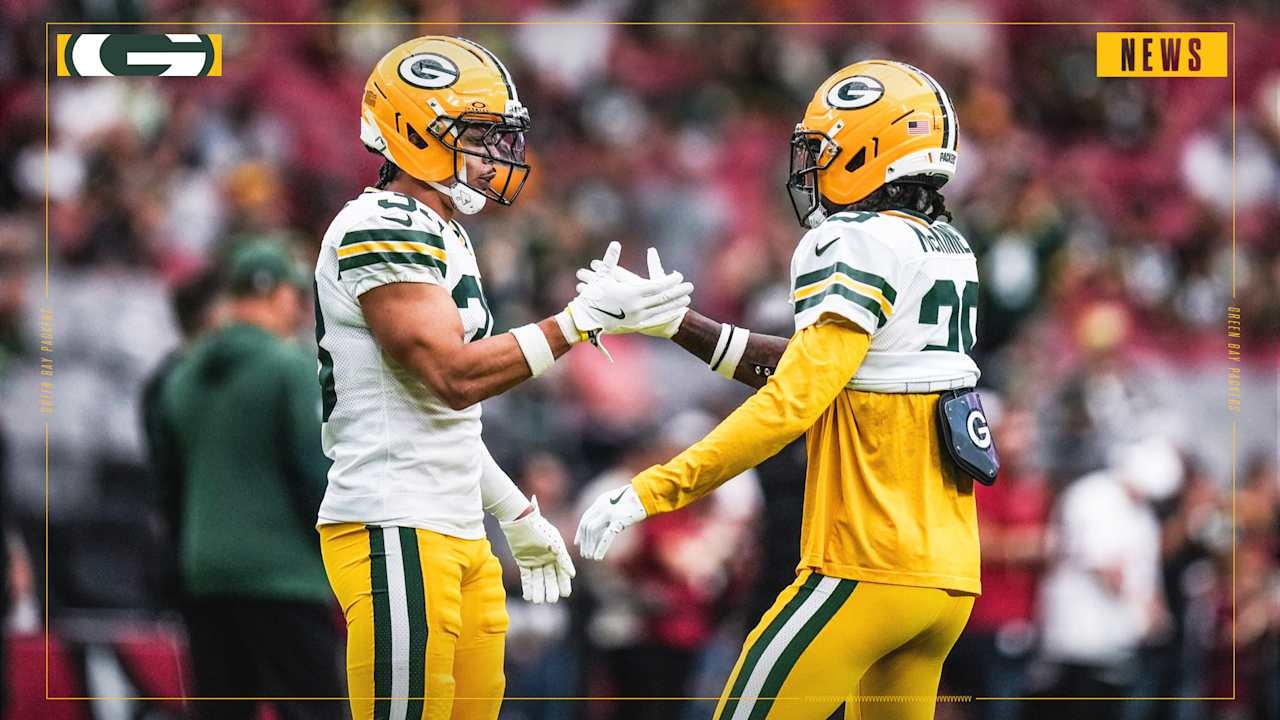
Green Bay’s defensive backfield has leaned on a growing partnership, with McKinney and Williams framing their current communication and trust as the most comfortable it has been since joining forces.
When the Packers talk about defensive backfield continuity, the conversation often starts with the safety group and how well its leaders play off one another. In a season-building update published by the team on June 22, Xavier McKinney and Evan Williams described their shared work as reaching what they consider its peak point heading into the next phase of their partnership. They are now aligned as a tandem in their Year 3 together, and both have credited an increase in comfort, timing, and understanding for the way they are operating day to day.
The season storyline has a longer arc than just the last few practices. The team noted that in 2024, McKinney and Williams arrived in Green Bay about six weeks apart, a gap that can matter for defensive schemes where assignments, checks, and coverage concepts have to become automatic. By that account, their initial overlap was limited in the early weeks, making the process of building a shared baseline part of their work rather than a given. Over time, that foundation has expanded, and the current message from the duo is that the partnership has moved beyond learning each other’s tendencies and into anticipating them.
From a football perspective, the safety position is a coordination job as much as it is a pure coverage job. Safeties are asked to manage route structure, identify pre-snap leverage, communicate to the back end, and coordinate with linebackers and cornerbacks so the defense matches the picture presented by the offense. For a tandem to feel “at its peak,” the practical meaning is usually fewer misunderstandings, cleaner pre-snap calls, and smoother transitions when the offense shifts or forces the defense into a different coverage posture. McKinney and Williams framed their current alignment in exactly those terms: the more time they have spent together, the easier it becomes to execute their roles in sync.
The Packers’ focus on that kind of cohesiveness is amplified by the way Green Bay prepares its defense for different offensive looks. NFL defenses rarely face one “standard” offense, and the safety group is often tasked with adjusting mid-practice and mid-game. When a tandem is still in its early stages, communication can be slower and decisions can be more conservative as players learn the timing of one another’s reactions. The team’s June update suggests that McKinney and Williams believe that hesitation has largely faded and that their instincts are better matched, especially as they have continued to spend time working together rather than treating the pairing as something that has to be assembled from scratch.
There is also a leadership component to the way veteran-to-veteran chemistry tends to mature. By Year 3, each player has a clearer sense of the other’s communication style, preferred routes to watch, and the situations where one safety will take ownership of a coverage or adjustment while the other will support. Even without publishing specific coverage diagrams, the core idea is that the partnership can run on instinct because the players have already done the repetition, not only the planning. That is what makes an “excited” tone from the tandem more than a feel-good story, particularly in the high-detail environment of the NFL where small communication differences can affect outcomes.
What to watch next is how that chemistry shows up when the Packers face their toughest rep challenges. In practices, the most revealing moments are often the ones that require quick correction, such as when the offense changes coverage leverage or when the defense has to reassign responsibility on the move. If McKinney and Williams are truly at their peak, their partnership should look more consistent in those tests, with tighter communication and faster alignment across the back end. For Green Bay, that matters because a secondary can look complete on paper, but it is the safety tandem’s ability to coordinate that often determines how stable the coverage picture stays from snap to snap.
Why It Matters
- Safety tandem cohesion can affect how quickly a defense adjusts to pre-snap looks and in-game shifts.
- Year-over-year familiarity tends to reduce communication errors in complex coverage and route-structure situations.
- A stable back end can make it easier for the Packers to trust their secondary responsibilities late in games.
Sources
Key Facts
- The Packers published a June 22, 2026 update highlighting the chemistry between safety Xavier McKinney and safety Evan Williams.
- McKinney and Williams described their partnership as being at its peak in their Year 3 together.
- The team noted that in 2024, the two arrived in Green Bay about six weeks apart.
- Their shared focus centers on improved communication, comfort, and timing as they continue building the tandem.