
THE APEX TIMES
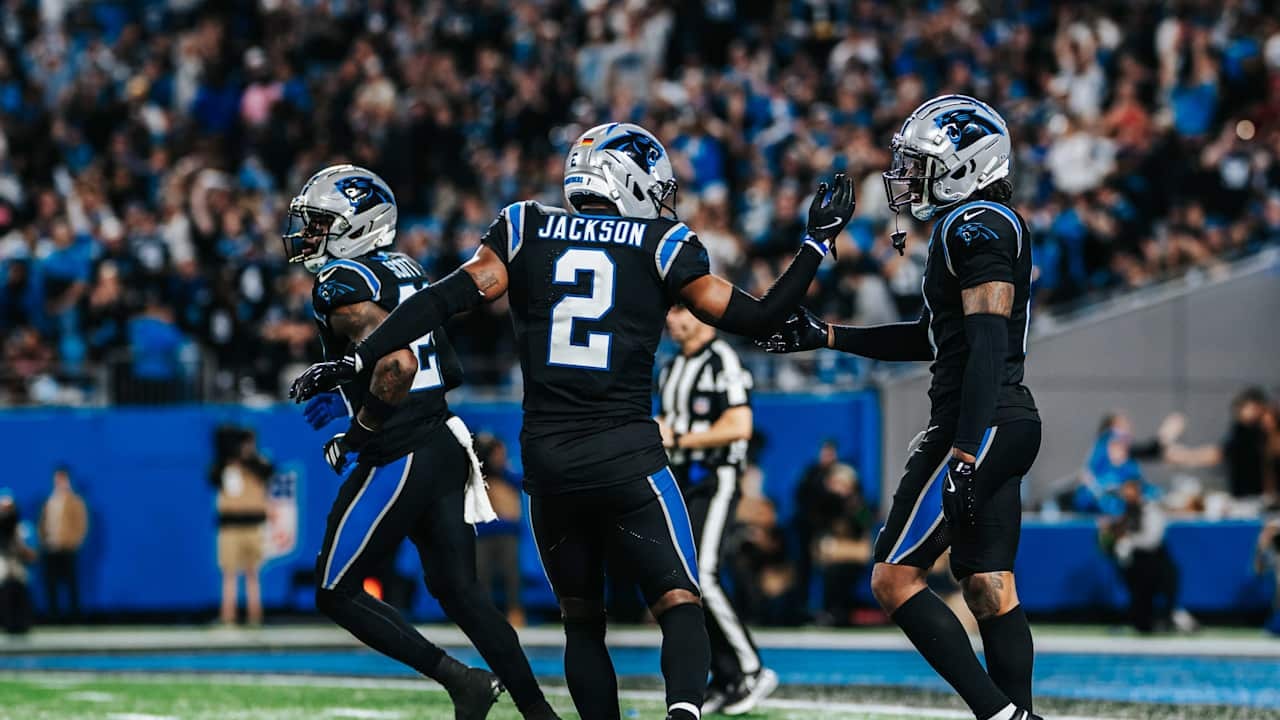
Panthers break down their defensive “triangle” concept, with Jaycee Horn, Nick Scott and Mike Jackson at the center
Charlotte’s secondary is being explained as a set of coordinated functions, where each coverage and communication job fits inside one perimeter designed to limit big plays.
The Carolina Panthers are rolling out a new look at how they want their pass defense to operate, framing the unit as a coordinated “triangle” of responsibility. The idea, introduced through a team feature, is that multiple moving parts can still be contained if they stay within clearly defined roles and spacing. In this approach, the secondary is not treated as one uniform group, but as a collection of assignments that must work together as a system.
At the center of the concept are the players the Panthers highlight in the release: Jaycee Horn, Nick Scott and Mike Jackson. The team describes the triangle as a perimeter that opponents must work through, with “steady points” that help establish containment. The message is less about any single person being the entire answer and more about how the group maintains structure while responding to route combinations and quarterback reads.
The feature emphasizes that every point has a job, a role and a purpose when the defense is on the field. Carolina’s description underscores a theme common to modern defensive design, where communication and alignment are as important as individual technique. In this framework, the players’ responsibilities are shaped to keep the secondary’s leverage and reaction organized, so the unit can prevent routes from turning into unchallenged windows.
Carolina also stresses balance within the triangle, indicating that the defenders’ tasks are connected rather than interchangeable. The release portrays the eleven-point framework as a set of coordinated functions, and it positions the secondary’s triangle as a way to keep those functions from drifting into chaos. The practical goal is to limit opponents to plays that take longer to develop and are easier to tackle once the ball is in the air.
While the team does not lay out a single formation or a specific opponent in the portion of the release provided, the underlying football premise is clear. Coverage matchups often require speed and discipline, but a “containment” perimeter can force the offense into lower-percentage throws or longer reads. By describing the secondary as a managed perimeter, the Panthers are effectively telling fans what to watch for: spacing discipline, role clarity, and transitions that keep defenders from collapsing out of position.
Horn, Scott and Jackson figure prominently in the Panthers’ explanation, with the release using their perspectives to illustrate how the triangle is supposed to function in-game. That matters because the secondary’s coordination can be tested quickly by motion, shift protection and route tempo. If the unit’s communication and spacing stay consistent, Carolina can turn what looks like a complex defense into something predictable in execution, even as offenses try to stress the edges.
What to watch next is whether the Panthers’ defensive teaching translates into consistent reads and stable positioning. In a system built around a perimeter concept, breakdowns tend to show up as late reactions, seams opening where they should be closed, or defenders drifting outside their assigned zones. If Carolina’s secondary can keep plays contained to the “triangle” the team describes, the Panthers will have a clearer path to turning coverage stops into more disciplined, repeatable defensive drives.
Why It Matters
- A containment-focused secondary can reduce the number of explosive passes by managing spacing and leverage, which is especially important against route-combination offenses.
- When defenders stay within defined roles, the unit can communicate and rotate more efficiently, helping prevent coverage breakdowns that come from drifting or misreading matchups.
- The Panthers’ emphasis on a “triangle” provides a clear lens for evaluating defensive execution, particularly on third downs and in situations that test man-versus-zone transitions.
Key Facts
- Carolina released a feature explaining its secondary defense as a coordinated “triangle” concept built around containment.
- The team describes the triangle as a perimeter, with different parts able to move while staying within defined roles.
- The release highlights Jaycee Horn, Nick Scott and Mike Jackson as central figures in how the concept is taught and played.
- Carolina characterizes each defensive point as having a specific job, role and purpose, and frames the secondary as a system rather than a collection of isolated matchups.