
THE APEX TIMES
Panthers’ first-unit struggles resurface in preseason loss to Bills, 29-14
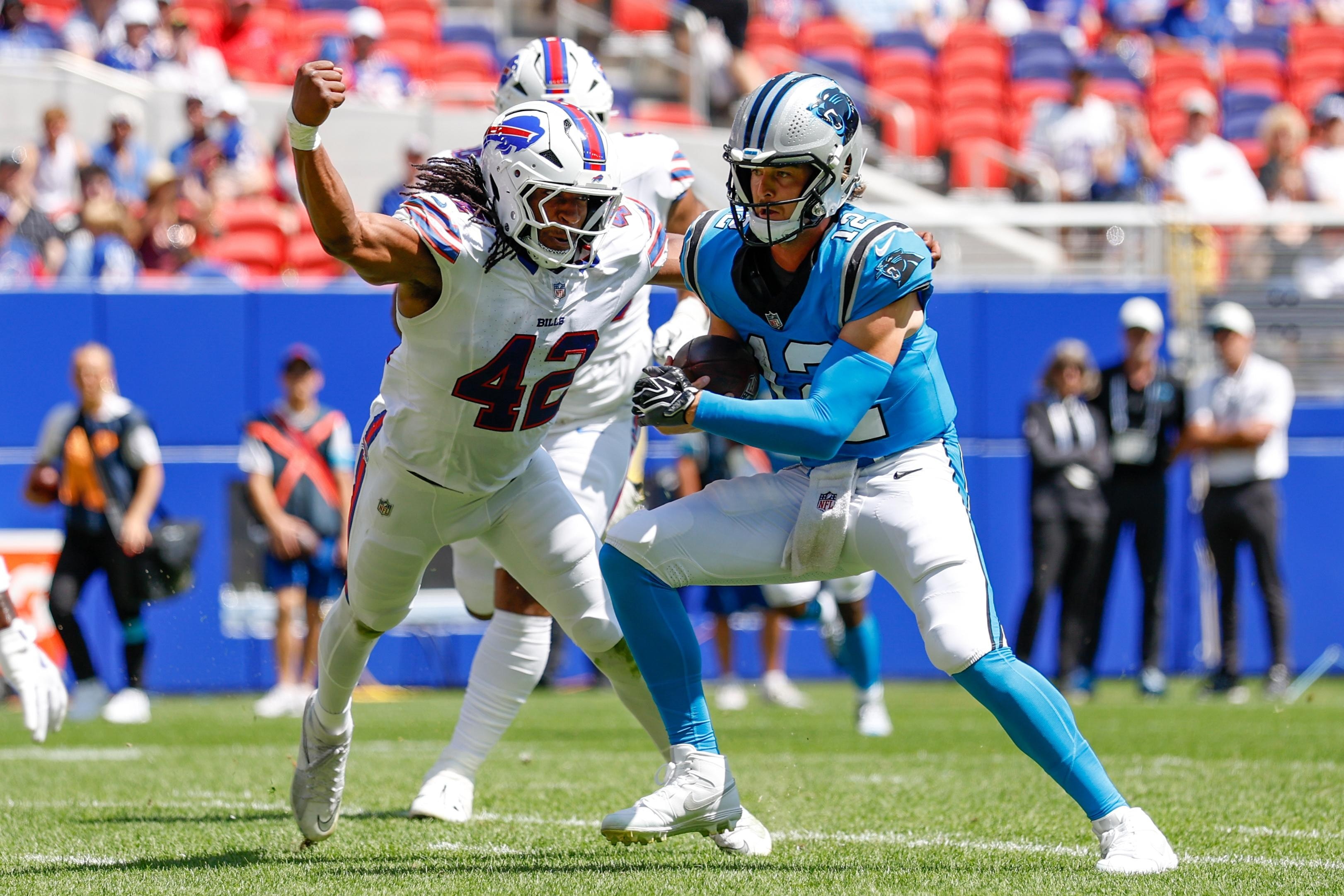
Carolina’s opening look with its starting offense and defense was difficult to watch as the Panthers fell 29-14 to Buffalo in their second preseason game.
The Panthers ran their first-team offense and defense for a longer look than earlier weeks, and the result was an uneven, error-prone stretch that Buffalo capitalized on. In the Panthers’ 29-14 preseason loss to the Bills, the clearest storyline was what the Yahoo Sports recap described as an “ugly day” for Carolina’s starting group, a reminder of how much preseason games are about rhythm rather than highlight reels.
Carolina’s challenge in this one was not only the scoreboard. The game also functioned as a live evaluation, with the Panthers trying to establish timing, protection, and assignment soundness with their opening units. When a starting offense cannot find consistency early, the downstream effects show up quickly in play selection, tempo, and third-down execution, even in a preseason setting where coaches are balancing development with execution.
Buffalo’s side, meanwhile, looked prepared to take advantage of those openings. The Bills’ ability to make plays and sustain momentum during Carolina’s first-team snaps helped separate the teams. For a defense, a good day in the preseason is often measured by whether it holds up against the other team’s “true” looks, and this contest gave the Bills that opportunity.
The scoreline, 29-14, also matters because it frames the level of improvement the Panthers need before the preseason winds down. Preseason results do not determine regular-season standings, but they do influence coaches’ next reps and the urgency around who gets which matchups. If Carolina’s starting offense continues to struggle to convert drives into points against quality run and pass fronts, the margin for error will shrink quickly as roster battles tighten.
For the Panthers, the most pressing takeaway is what this performance suggests about the stability of the first-unit identity. A “first team offense” showing problems can carry over into practice if the underlying causes are not corrected, such as protection clarity, route timing, and red-zone decision-making. With the regular season approaching, those are the areas that need to be addressed before the Panthers move from experimentation to sharper execution.
What to watch next is how Carolina responds: whether the offensive starters show improved continuity in the next preseason appearance, and whether the coaching staff adjusts personnel or play-calling patterns to eliminate repeat problems. If Carolina can turn this one into a short learning cycle, the Panthers will have used a difficult night for a constructive purpose.
For the Bills, the benefit is twofold. Buffalo can point to positive production against another team’s opening units, while also identifying which defensive and offensive behaviors translate when the opposition is not rotating heavily. Both teams will treat the next preseason stretch as a continuation of that sorting process, not a final verdict on what their regular season will look like.
Why It Matters
- Preseason games provide the clearest window into how a team’s first-unit offense handles live, game-speed situations.
- A difficult performance from a starting offense can affect practice emphasis and the urgency of correcting timing or protection issues.
- For both teams, the next preseason appearance becomes a key marker for whether coaching adjustments improve execution against similar opponents.
- Even without playoff implications, momentum and clarity in preseason rotations can influence roster decisions and matchup planning into the final weeks.
Key Facts
- The Panthers played the Bills in their second preseason game.
- The final score was Buffalo 29, Carolina 14.
- The game featured the Panthers’ starting (first-team) offense and defense for a notable look.
- The Yahoo Sports recap characterized the Panthers’ starting offense as having an “ugly” day.