
THE APEX TIMES
Pat Fitzgerald rips officiating after Michigan State’s controversial-late sequence in loss to Illinois
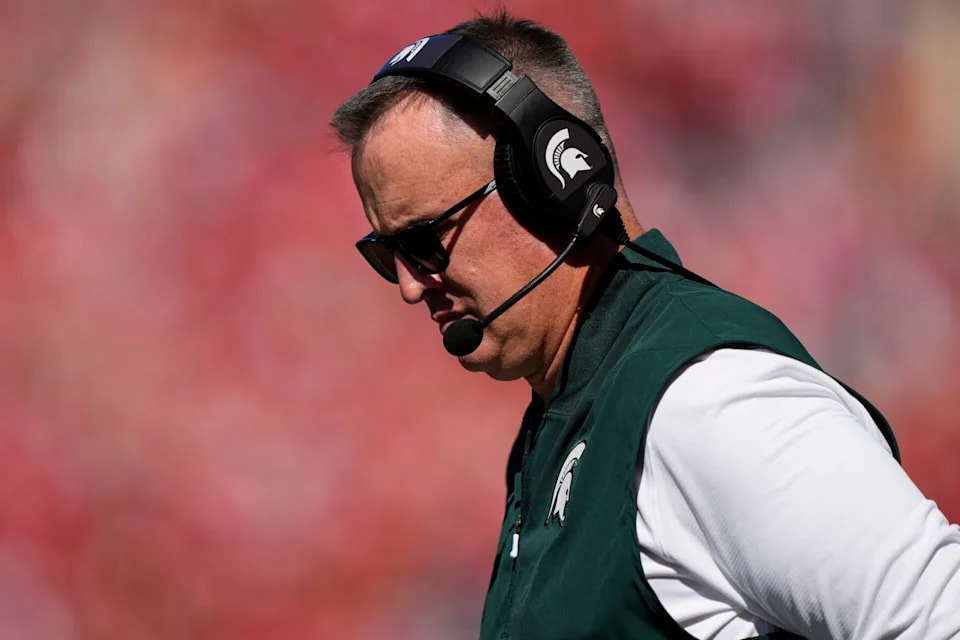
Michigan State coach Pat Fitzgerald criticized the officiating after a controversial onside-kick penalty played a central role in a 38-37 overtime defeat to Illinois, calling the sequence among the most confusing he has seen.
Michigan State fell to Illinois 38-37 in overtime on Saturday, but the loudest reactions after the game came from the sideline. Spartans head coach Pat Fitzgerald said the officials’ handling of a late onside-kick sequence was among the most confusing moments he has seen, and he made clear that the frustration started before Michigan State’s late-game results were sealed.
According to Fitzgerald’s postgame assessment as reported by Yahoo Sports, the key flashpoint involved a penalty surrounding an onside-kick attempt that created confusion during a crucial stretch. That controversy arrived in a game that already carried high stakes as the Spartans battled late to keep the contest alive and force overtime.
Fitzgerald’s comments also reflected the broader flow of the ending. Michigan State’s final margin was ultimately determined by the Spartans’ inability to convert when they still had a path to a win. The two-point conversion that followed the overtime play attempt failed, and the Spartans’ rally ended with Illinois holding on for the one-point victory.
For Michigan State, the sequence matters beyond the final score because it touches the sport’s most punishing moments. Late-game penalties and onside-kick rulings can swing momentum quickly, and even when teams are not disputing a result they can still argue about whether the officiating process clarified the play in a way players and coaches could reasonably anticipate.
Illinois, meanwhile, will likely point to the fact that the game still followed the rules as enforced on the field. When a penalty is assessed, it becomes the controlling event for subsequent plays, and the final outcome depends on whether teams execute once the situation is set. In this case, Illinois benefited from the Spartans being forced into decisions after a sequence Fitzgerald felt was handled in a confusing manner.
The biggest question heading into Michigan State’s next preparations is not simply how the Spartans lost, but how they will respond operationally to the kind of late-game uncertainty that frustrates coaching staffs and players alike. When a head coach publicly calls out an officiating sequence, it can report that a team’s internal review will focus on communication, quick decision-making, and special-teams process so that the next close game does not hinge on confusion around rulings.
What to watch next is whether the conference or officials address the complaint and whether the Spartans’ staff uses the incident as a teaching moment for special teams and end-of-game execution. In the meantime, Fitzgerald’s remarks add to a familiar storyline in college football, where the late stages of games often turn into a referendum on officiating as much as they do on execution. If Michigan State keeps drawing tight overtime games, the operational lessons from this one may quickly become central to its weekly identity.
Why It Matters
- In close games, late special-teams rulings can decide outcomes, and the controversy can carry over into how teams prepare for similar situations.
- Public coaching criticism can heighten scrutiny of officiating in future high-leverage moments for both teams and their conference.
- For Michigan State, the loss changes the emotional tone of its season and increases the urgency of end-game execution.
- For Illinois, benefiting from the officiated sequence and finishing through overtime strengthens its ability to close tightly contested games.
Sources
Key Facts
- Michigan State lost to Illinois 38-37 in overtime.
- Pat Fitzgerald, Michigan State’s head coach, criticized the officiating after a controversial onside-kick penalty sequence.
- Fitzgerald described the sequence as among the most confusing he has seen.
- Michigan State’s failed two-point conversion in the closing moments ultimately sealed the game’s outcome.
- The comments were made in the immediate aftermath of the loss as reported by Yahoo Sports.