
THE APEX TIMES
Pat Fitzgerald’s Return to the Big Ten Highlights Michigan State’s Coaching Overhaul
Michigan State is rebuilding its football program with a reworked coaching staff and a focus on restoring day-to-day consistency, grit, and identity in East Lansing.
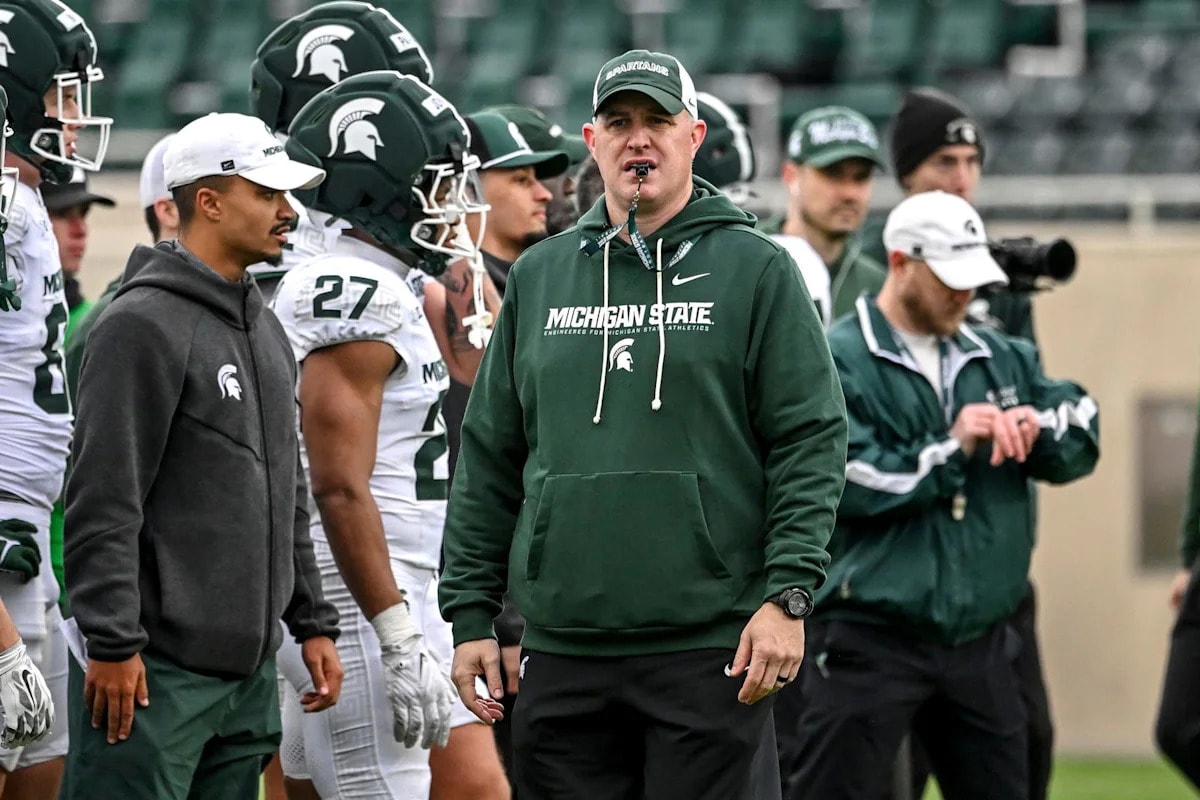
Michigan State’s sideline is set for a new look after the Spartans completed a sweeping coaching-staff transformation during the offseason, with Pat Fitzgerald returning to the Big Ten as a central figure in the process. The emphasis, according to the report, is on stabilizing the program’s execution and culture after a stretch that left questions about reliability and the team’s ability to play with consistent toughness.
Fitzgerald’s presence matters in a league where preparation and detail are often the difference between a close win and a close loss. In the Big Ten, veteran coordinators and position coaches are frequently judged less by one-time improvements and more by whether systems hold up when opponents adjust, and whether the staff can keep players buying into the same standard week after week.
The overhaul is framed as both a strategic and personnel reset. Michigan State is not simply changing titles, it is attempting to recalibrate how the program approaches practice, in-game decision-making, and fundamentals, all while building around returning talent. The report characterizes the staff as a group of veteran tacticians brought in to anchor the program, with the goal of making performances look more predictable and harder to break.
East Lansing’s “turnaround” pitch, as described, centers on grit. That is not a slogan Michigan State can rely on without translating toughness into controllable football traits like disciplined coverage, assignment soundness, ball security, and fewer self-inflicted errors. A revamped staff can help, but the transition typically shows up first in the weekly baseline, how the Spartans handle early-down execution, third-down efficiency, and avoiding breakdowns in critical moments.
The Spartans’ coaching changes also reflect a broader reality of college football staffing, where turnover is common and continuity can be as valuable as raw talent. For players, a coaching-staff reset can mean new install routines, different coaching language, and a refreshed set of expectations for both practice habits and in-game roles. The report’s mention of returning talent suggests Michigan State is trying to align its established personnel with an updated plan rather than starting over from scratch at every position.
Still, an offseason overhaul is only the first step. The next proving ground will be how quickly the staff’s message becomes routine across the full season arc, especially once opponents film and counter. Teams that look sharper early can fade if the adjustments do not stick, and teams that look rough early can grow if coaching points consistently translate into improved fundamentals.
For Michigan State fans, the practical question is what changes on the field when the Spartans are under pressure. The staff’s stated intent, as summarized by the report, is to produce consistency and toughness, and that is most visible in late-game behavior: can the Spartans control tempo when they have a lead, can they respond without penalties or confusion after a momentum swing, and can they finish drives the way their coaches expect.
The story line to watch next is whether Fitzgerald’s leadership style and the rest of the veteran-heavy staff can convert the offseason plan into repeatable performance against Big Ten opponents. If the Spartans’ practices and preparation carry over into Saturdays, the coaching overhaul can become more than a headline and start shaping a more stable team identity. If not, Michigan State’s turnaround will still be in the early chapters, and patience will be tested quickly.
Why It Matters
- Coaching continuity and preparation standards often decide how quickly a Big Ten team can stabilize its week-to-week performance.
- A veteran-staff approach can change how Michigan State handles in-game adjustments after opponents respond.
- The emphasis on consistency and grit speaks directly to the traits that show up in third downs, turnovers, and late-game execution.
- The next phase will reveal whether Michigan State’s offseason message becomes repeatable football as the season progresses.
Key Facts
- Michigan State underwent a major coaching-staff transformation during the offseason.
- Pat Fitzgerald is returning to the Big Ten as part of the revamped sideline.
- The staff changes are described as bringing veteran tacticians to anchor the program.
- The report frames the effort as focused on restoring consistency and grit in East Lansing.
- The transformation is paired with returning talent, suggesting an alignment rather than a total roster reset.