
THE APEX TIMES
Patriots Trench Report highlights early focus points from the first two padded practices
Boston’s coaching staff has reached the padded-work phase of training camp, publishing a 12-takeaway look at what the early offensive and defensive-line sessions are revealing.
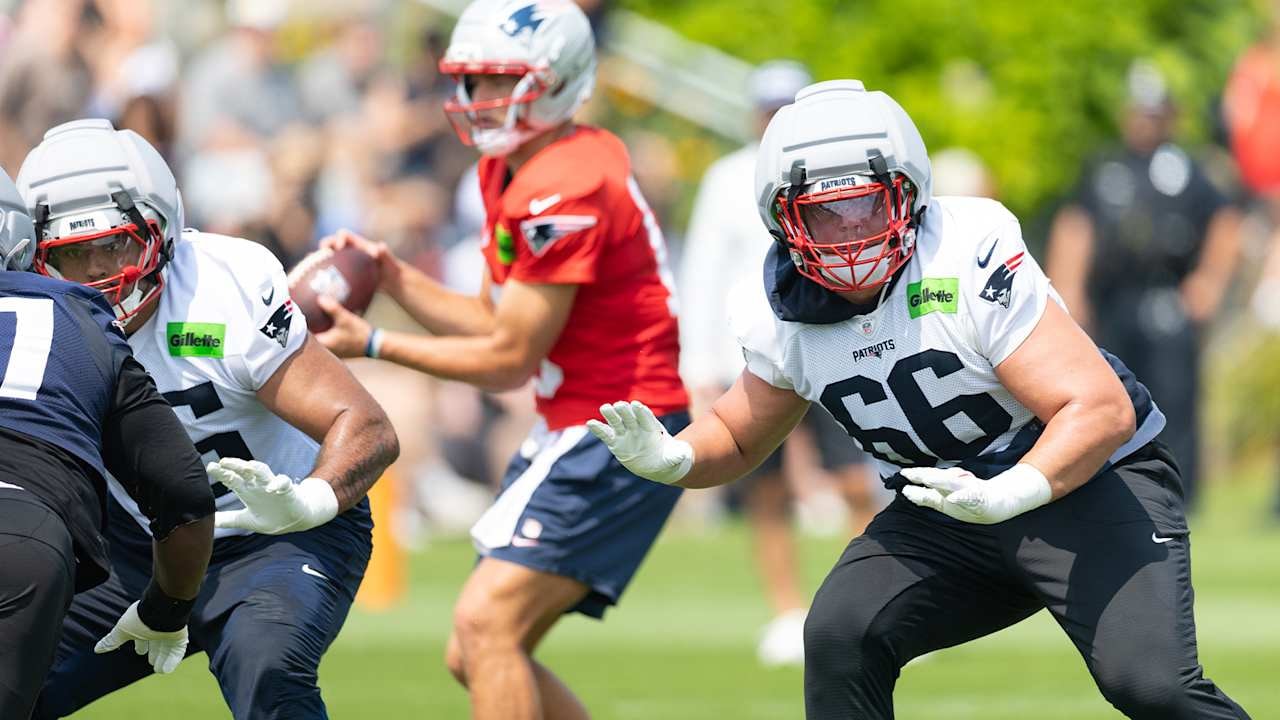
The New England Patriots have moved into the padded portion of training camp, and they used the first two padded practices to set an early tone for how they want their trenches to look and play. In a team-published Trench Report, the organization broke down 12 takeaways from those initial offensive and defensive line sessions, treating the first week with pads as the first real measuring stick for fundamentals like run fits, protection execution, and hand-fighting detail.
The timing matters in training camp because unpadded work can teach timing, spacing, and route or assignment concepts, but pads force choices that show up quickly in the trenches. With contact now part of the routine, the Patriots are able to evaluate whether technique translates under pressure, especially for players tasked with winning at the line of scrimmage or holding the point of attack long enough for the rest of the defense and offense to operate.
The team’s report is framed around both sides of the ball, emphasizing that the early camp evaluation is not just about one unit. Offensive-line play and defensive-line play are linked in practice outcomes, since a defense’s ability to penetrate changes how an offense sets protections, and an offense’s ability to create movement affects how defenders are positioned to control angles and leverage.
As of the publication of the Trench Report on July 31, the Patriots were specifically addressing the first two padded practices. That means the takeaways represent early patterns rather than a settled depth chart, with practices still in flux as players learn adjustments, coaches refine reps, and the staff continues to install or reinforce structural habits that will be tested again in later camp work.
For fans tracking the preseason arc, trench play is often the most consistent indicator of what a team wants to prioritize. If the report’s themes lean heavily toward physicality at the point of attack or clean protection footwork, that can foreshadow how the Patriots want to run their offense and how aggressively they plan to press at the line. Even without knowing specific named takeaways, the decision to spotlight both offensive and defensive lines underscores that the staff views camp development through a matchup and technique lens.
The next practical step is to watch whether later camp sessions build on these early points. In general, once pads are in, the storyline tends to shift from “teaching” to “execution,” and teams typically reveal more about rotations, individual role clarity, and how practice plans address weaknesses. With the Patriots already publishing a trench-focused review after two padded days, the continuation of these themes in subsequent reports will indicate what the coaching staff believes is most urgent to fix or most promising to build upon.
Why It Matters
- Padded practices are the first stage where line technique is tested in live contact, making it an early indicator of how well fundamentals translate under pressure.
- Both offensive and defensive trench play are interdependent, so evaluating them together can report what the coaching staff values most about how matchups should play out.
- Early camp emphasis on the trenches often correlates with how a team plans to generate run-game stability and defensive disruption as the preseason approaches.
Sources
Key Facts
- The New England Patriots published a Trench Report covering 12 takeaways from the team’s first two padded practices of training camp.
- The report focuses on both the offensive and defensive lines.
- The Trench Report was published on July 31, 2026.