
THE APEX TIMES
Paul Finebaum questions whether Dae’Quan Wright will ever play for LSU as his transfer plan draws attention
The college football offseason has produced an unexpected name, with Dae’Quan Wright set to transfer to LSU after time as a Cleveland Browns tight end. An analyst says the Tigers should weigh the gamble carefully.
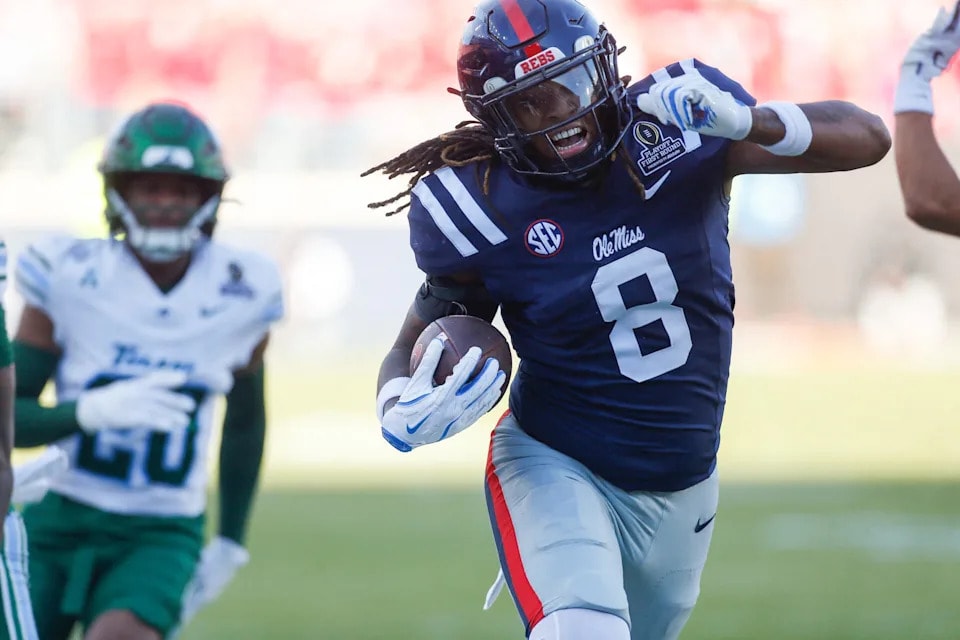
An already unusual college football storyline has picked up fresh scrutiny: Dae’Quan Wright, after appearing in the NFL system with the Cleveland Browns as a tight end, is set to return to the college game by transferring to LSU this season. The move, framed as an offseason development worth watching, has also triggered public doubt from at least one prominent voice in the sport.
On Aug. 29, Yahoo Sports highlighted criticism around LSU’s decision, pointing to ESPN radio and TV analyst Paul Finebaum raising questions about whether Wright will ever take the field for the Tigers. Finebaum’s skepticism centers on the practical reality of turning a recent pro experience and a turbulent path back into consistent college playing time, not on any specific on-field incident.
The LSU angle matters because tight ends are not just “depth” positions in modern Southeastern Conference offenses. They are frequent targets in the passing game, integral to run-game structure, and often used as match-up tools against both zone and man coverage. When a program brings in a player with a nontraditional route, the coaching staff must believe the timing and readiness line up, and that a roster spot will translate into snaps rather than linger on the periphery.
Wright’s presence in the national conversation has come quickly, with the Yahoo Sports item describing the transfer as one of the more bizarre developments of the offseason. The core of the discussion for LSU is whether the player’s path back to college will be smooth enough, and fast enough, to justify the roster attention and practice reps that come with integrating an arrival from the pro ranks.
For LSU fans, the immediate question is not only whether Wright is eligible and ready, but whether his role will be defined early or slowly. When programs invest in a transfer who may be perceived as a high-uncertainty bet, preseason and early-season usage becomes the clearest indicator of the staff’s confidence. If he is not getting meaningful work as the season unfolds, that would lend weight to the sort of concerns Finebaum has aired.
There is also a bigger, roster-management layer to this story. LSU is operating in the transfer-portal era where teams routinely pursue experienced options, but they do so with a constant balancing act: add talent without disrupting the development of existing players, preserve scholarships, and maintain continuity in the offense and special teams. The Tigers’ response to questions like Finebaum’s will show how they value the upside versus the risk of in-season scarcity at the position.
What to watch next is straightforward. First, whether LSU clarifies Wright’s role in camp and the preseason window. Second, whether Wright appears on the field in a way that suggests the staff’s confidence is higher than the public skepticism. And third, if Wright’s integration changes LSU’s personnel groupings at tight end, either in base sets or in passing-game packages.
Why It Matters
- If Wright does not earn meaningful playing time quickly, LSU’s transfer evaluation process could be tested early at a position that often drives match-ups.
- For an SEC offense, tight end usage can influence passing concepts and run-game structure, making the integration timeline important.
- The public skepticism from a major analyst can shape fan expectations and put additional pressure on LSU’s staff to translate the transfer into on-field results.
Sources
Key Facts
- Dae’Quan Wright is set to transfer to LSU this season, according to Yahoo Sports.
- Wright previously played in the professional system with the Cleveland Browns as a tight end.
- Yahoo Sports reports that ESPN analyst Paul Finebaum questioned whether Wright will ever take the field for LSU.
- The discussion is framed as an unusual and notable offseason development within college football.