
THE APEX TIMES
Penn State’s Pass-Rush Struggles Again in USC Loss, While Chase Sowell Tries to Keep Offense Afloat
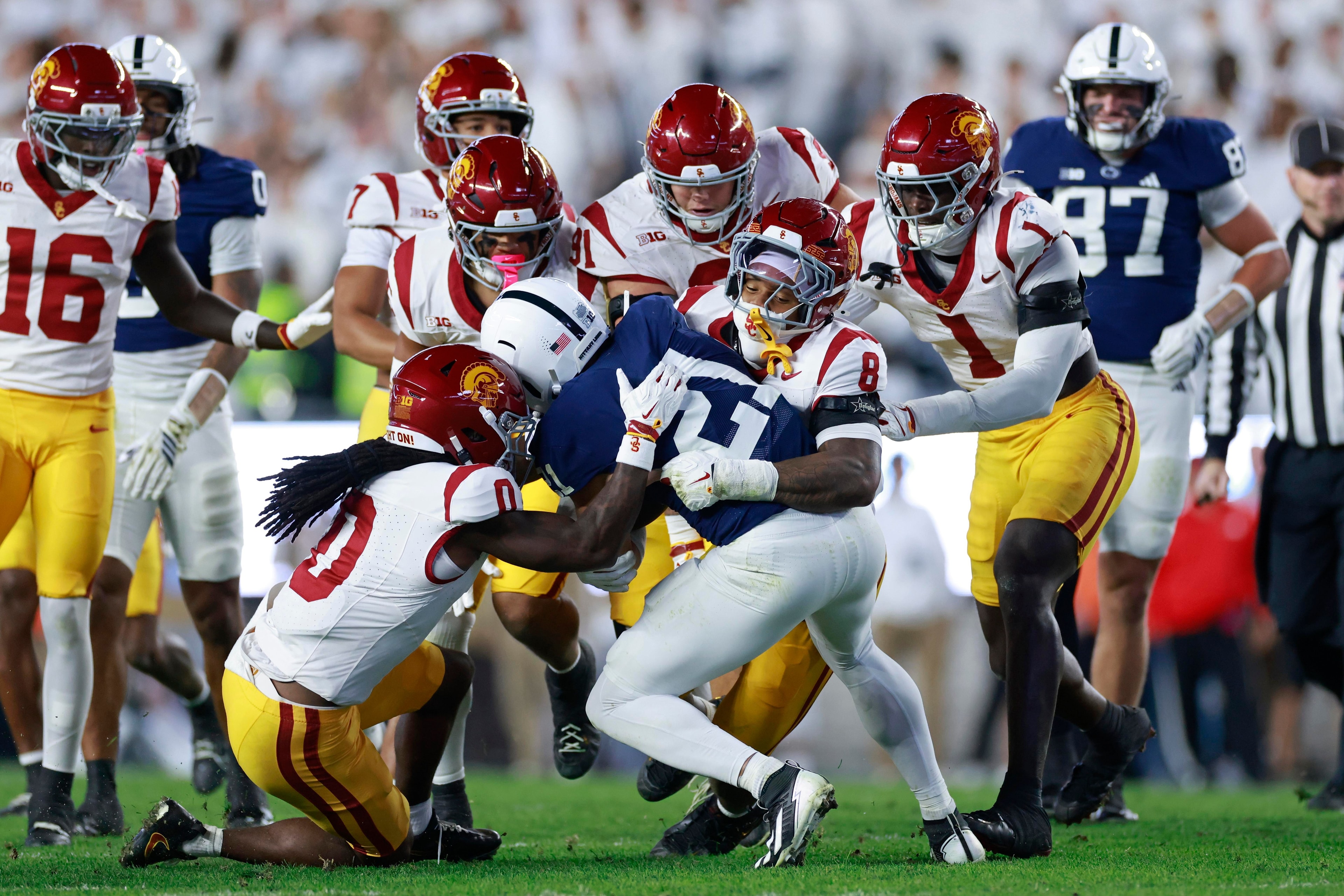
A familiar 3-3 start theme returned for Penn State, as the Nittany Lions had trouble generating consistent quarterback pressure against USC. The result put extra weight on individual offensive sparks, including Chase Sowell, even as an injury looked to complicate his night.
Penn State is still searching for the kind of defensive control that can turn close games into wins, and USC exposed that gap early and often. After another start that mirrors the start-the-season troubles the program has carried through its first games, the Nittany Lions’ inability to consistently pressure the quarterback became a central story of the matchup.
In the game as it was described in the post-game wrap, Penn State’s defense could not keep up with USC’s passing attack, allowing a big performance from Jordan Maivia. The concern was not just whether the quarterback got completions, but whether Penn State could repeatedly disrupt the rhythm with pressure, forcing USC to make hurried decisions instead of comfortable throws.
For Penn State fans, the bigger implication is what happens when the pass rush does not arrive on schedule. When edge pressure is limited, linebackers and secondary defenders can be asked to hold coverage longer, which increases the margin for error. That dynamic tends to widen the gap between a defense that is “contained” and a defense that can actually dictate play calls, and the write-up suggests USC spent time attacking that vulnerability.
On offense, Penn State still had moments to build from. Chase Sowell provided a spark that helped keep the offense moving when the defensive side was dealing with mounting pressure. But the evening also carried a complication, as the report indicated that an injury appeared to disrupt his playing time or effectiveness during the game. Even without additional detail, that kind of shift matters because it can change offensive tempo, personnel groupings, and how predictable the play-calling becomes.
Coaching context adds another layer. Matt Campbell’s teams are typically built around tempo, preparation, and adjustments, and USC’s game plan, as characterized in the recap, seemed well matched for the specific challenge Penn State presented. When one side has a clear advantage, the next question becomes whether the trailing team can correct quickly, rather than waiting for another week to “get right.”
Penn State’s 3-3 start, highlighted in the post-game description, keeps the season on an urgent timeline. By October, teams that are still inconsistent tend to face a compounding effect: each new opponent brings a more defined scouting picture of their tendencies. The defensive pressure issue, if it is not resolved, will likely follow Penn State into subsequent matchups, because opposing offenses generally emphasize what has been working.
What to watch next is straightforward. Penn State needs a pass rush that can win with both volume and timing, and it needs offensive continuity that does not hinge on one player’s health or presence. If the defense can begin to force more off-schedule throws and shorter third downs, the offense will have a better chance to sustain drives, rather than repeatedly trying to catch up to the game script.
Why It Matters
- A recurring inability to pressure the quarterback can swing future games, because it shapes how aggressively opponents can play on passing downs.
- When offense momentum depends on a key player’s availability, injuries can force uncomfortable adjustments to personnel and play-calling.
- A 3-3 start increases the urgency for Penn State to stabilize both sides of the ball before conference play stakes rise.
Key Facts
- Penn State dropped a matchup versus USC in a game recap emphasizing defensive struggles.
- The post-game description said Penn State could not generate consistent quarterback pressure.
- The recap credited USC’s quarterback play in part to a standout performance by Jordan Maivia.
- Chase Sowell was described as providing a spark for Penn State’s offense.
- The write-up said an injury appeared to derail or disrupt Sowell’s evening.
- Penn State’s season start was characterized as another 3-3 start theme in the recap.