
THE APEX TIMES
Petzing’s “good problem” and Sewell’s leadership set the tone for Detroit Lions’ 2026 bounce-back conversation
In a spring look at the Lions’ offense, new coordinator Drew Petzing emphasized the quality of the wide receiver room, while team leadership and versatility on the offensive line, anchored by captain Penei Sewell, emerged as the clearest throughline for what Detroit wants to improve in 2026.
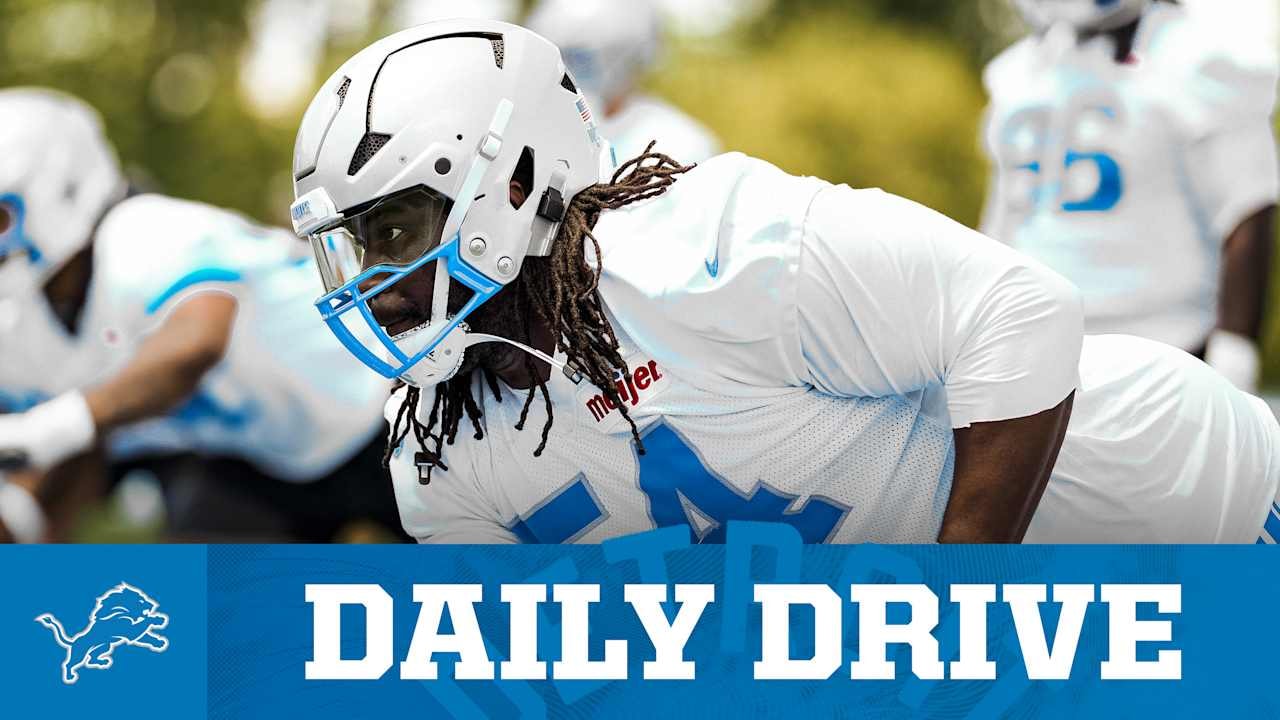
The Detroit Lions have begun the 2026 offseason with a familiar message, sharpen the details, protect the process, and let better decisions show up in September. In that context, their own internal offseason feature, THE DAILY DRIVE, posed a simple question with a high bar behind it: which Lions player is most likely to produce the biggest bounce-back season. Rather than treating “bounce-back” as a recovery from a single game, Detroit framed it as a year-over-year reset, with leadership, role clarity, and execution improvements doing the heavy lifting.
A central storyline in the piece is the arrival of new offensive coordinator Drew Petzing, who has taken over playcalling duties and is now building cohesion between the passing game and the rest of the offense. Petzing’s comments in the team’s report highlighted the wide receiver room as a “good problem to have,” an assessment that points to depth and competition rather than a shortage of options. For the Lions, that matters because the modern passing attack requires more than talent on paper, it requires timing, route precision, and players who can run multiple concepts cleanly within the same week’s game plan.
Detroit’s leadership picture is also front and center. The team specifically spotlights Penei Sewell as the “best player,” “leader,” “captain,” and “veteran,” describing him as someone taking on multiple responsibilities. That matters because a tackle who can handle more than one type of assignment becomes a stabilizing force for the entire offense, especially as coordinators adjust scheme and personnel packages. Even when the run-game and pass-game are both improving, the offense’s identity often travels through the offensive line. Sewell’s presence is portrayed not just as physical, but as organizational, setting expectations and helping younger teammates understand what “good” looks like.
The bounce-back question, then, is really about where Detroit believes the biggest gains can come from inside already-strong fundamentals. A bounce-back season does not always mean a player dramatically changes production. It can also mean that the player’s role is better defined, that the player is finally operating at full clarity within a new system, or that a unit is clicking in the same direction for longer stretches. In the Lions’ framing, Sewell’s leadership and expanded responsibilities fit that definition closely, since they report continuity and accountability at the point where the offense has to execute every snap.
Beyond one player, the broader implication is that the Lions are treating 2026 as a year where the pieces should fit together more consistently. Petzing’s emphasis on the receiver room suggests the passing game is an area built to evolve, not merely to maintain. Meanwhile, Detroit’s emphasis on Sewell as a captain who is contributing across responsibilities suggests the organization wants the line to function as a dependable engine for both protection and physicality, even as other roles shift.
What to watch next is how the Lions translate spring themes into training camp habits. If Petzing’s “good problem” remains true through OTAs and into camp, the Lions will have a clearer picture of which receivers separate in the right moments and which combinations become staples. If Sewell’s expanded responsibilities continue as described, Detroit should look more like a team that plays with a consistent baseline, where errors are fewer and fixes happen faster.
For now, the most defensible takeaway from Detroit’s own offseason feature is that leadership and role clarity are at the center of its bounce-back framing. The Lions are not describing this as a single redemption arc. They are describing a season built around system buy-in, competitive depth, and a captain who is positioned to keep the offense aligned. That is the kind of foundation that can make a “bounce-back” feel less like a slogan and more like a plan.
Why It Matters
- The bounce-back framing suggests Detroit’s improvement targets are tied to system fit, execution, and leadership continuity as much as raw statistical change.
- Petzing’s comments indicate the Lions view receiver depth and competition as a strength that could translate into a more consistent passing attack.
- Sewell’s expanded responsibilities point to the offensive line as a stabilizing unit, which can affect both protection and run-game identity.
- If the Lions’ offseason themes hold in training camp, Detroit’s title pathway in the NFC will depend on smoother offense-wide execution instead of late-season adjustments.
Sources
Key Facts
- Detroit’s offseason feature asks which Lions player will post the biggest bounce-back season in 2026.
- New offensive coordinator Drew Petzing described the Lions wide receiver room as a “good problem to have.”
- The team highlights Penei Sewell as a captain and veteran leader.
- In the Lions’ framing, Sewell is taking on multiple responsibilities on the offensive line.
- The story’s core theme is role clarity and execution improvements rather than a single-game recovery narrative.