
THE APEX TIMES
Prediction markets move into UFC Fight Night chatter, with Kalshi and Polymarket featured as tools
A new how-to guide highlights how fans use Kalshi and Polymarket to track UFC Fight Night bout-by-bout expectations, including a featured matchup between Anthony Hernandez and Gregory Rodrigues.
Prediction markets have become a secondary scoreboard for UFC Fight Night conversations, and a newly published explainer is laying out how those markets work in practice. The guide, published through Yahoo Sports and originally credited to The Sporting News, focuses on Kalshi and Polymarket as platforms where users can buy and sell contracts tied to specific fight outcomes and related events, turning public expectations into tradable prices.
At a basic level, the UFC provides a dense set of moments that markets can parcel into smaller questions, such as who will win a particular bout or how a fight might resolve. The guide points fans to use those contract listings to monitor how sentiment changes as fight week progresses, rather than treating the market as a single, static pick. In that framing, the “value” is less about predicting the sport with certainty and more about tracking what the market is collectively pricing.
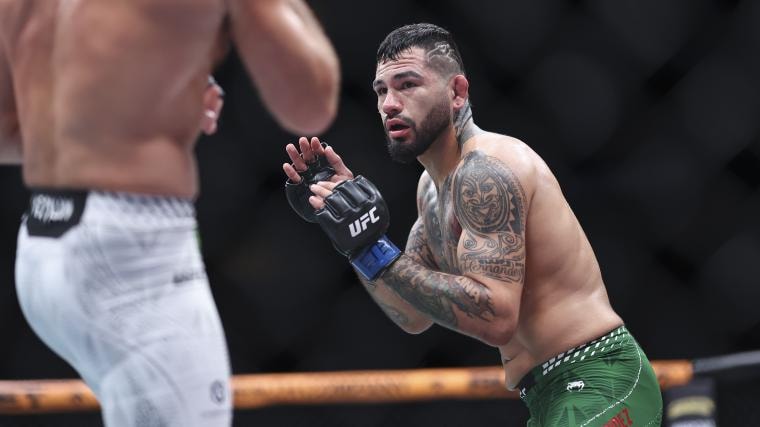
The explainer’s UFC example centers on Anthony Hernandez vs. Gregory Rodrigues as a reference point for how UFC Fight Night listings might be organized and used. It also positions the platforms as places where viewers can compare multiple contract types for the same fight, which can be useful for fans who want more granular angles than a single moneyline-style question. The write-up suggests users approach these markets with a clear understanding that prices move, and that the underlying “questions” are defined by the market itself.
Kalshi and Polymarket are not the same product, and the guide’s practical emphasis is on how to find and interpret UFC-related contracts on each service. That includes understanding what event the contract is asking about, the exact scope of the bet (for example, whether it is strictly tied to a winner or extends to other fight outcomes), and what time window the contract covers. Because fight cards can evolve with last-minute changes, the guide’s intent is to keep users anchored to the contract’s definition rather than the broader headline.
There is also a built-in informational caveat to using prediction markets in combat sports. UFC outcomes are influenced by factors that can be hard to quantify, including stylistic matchups, fight-day conditions, and how a specific game plan plays out under live conditions. Even if a market reflects a wide range of available information, it is still measuring uncertainty, not eliminating it. The guide therefore frames participation as a way to understand and engage with the uncertainty around bouts.
From a sport perspective, the rise of mainstream “how to use” coverage matters because it changes how UFC audiences can consume analysis. Instead of relying solely on fighter-by-fighter breakdowns or sportsbook lines, fans can follow a living set of probabilities that updates as new information becomes available. Whether that improves anyone’s understanding of the fights is separate from the broader point that prediction markets are becoming part of the UFC ecosystem’s conversation.
What to watch next is not a particular winner, but the contract ecosystem itself. If platforms continue expanding the menu of UFC Fight Night contracts, fans will have more ways to compare market expectations across fights and across contract types. The practical question for viewers will be whether they can keep their attention on the exact wording of each market question as prices shift closer to the cage time.
keyFacts
Why It Matters
- Prediction markets are becoming an additional layer of UFC engagement beyond traditional media and betting product lines.
- For fans, contract-based markets can translate complex analysis into specific, continuously updated questions.
- As more UFC audiences adopt these tools, how information spreads during fight week could shift.
- Whether prediction markets help or mislead depends largely on how well users understand each market’s exact wording and time window.
Sources
Key Facts
- A Yahoo Sports article highlights a guide to using prediction markets for UFC Fight Night.
- The guide specifically features how fans might use Kalshi and Polymarket as tracking tools.
- Anthony Hernandez vs. Gregory Rodrigues is used as an example matchup for the concept.
- The emphasis is on interpreting contract definitions and market pricing changes as fight week information evolves.
- The guide frames prediction markets as a way to engage with uncertainty, not as a guaranteed forecasting tool.