
THE APEX TIMES
Projecting the SEC’s Top Passers for 2026, with Arch Manning, Sam Leavitt and Marcel Reed in the early mix
As the 2026 college football season approaches, a handful of SEC quarterbacks already look positioned to stack production, driven by talent, offensive style, and volume. Arch Manning’s next step, Sam Leavitt’s opportunity under Lane Kiffin, and Marcel Reed’s proven efficiency headline the conversation.
College football fans can’t quite judge the SEC’s 2026 quarterback pecking order yet, but the early framing is clear: the quarterbacks most likely to lead the league in passing production will be those with both accuracy and a path to volume. A new look at the SEC passing landscape from Saturday Down South puts three names near the front of the list, arguing that opportunity and scheme fit matter as much as raw talent.
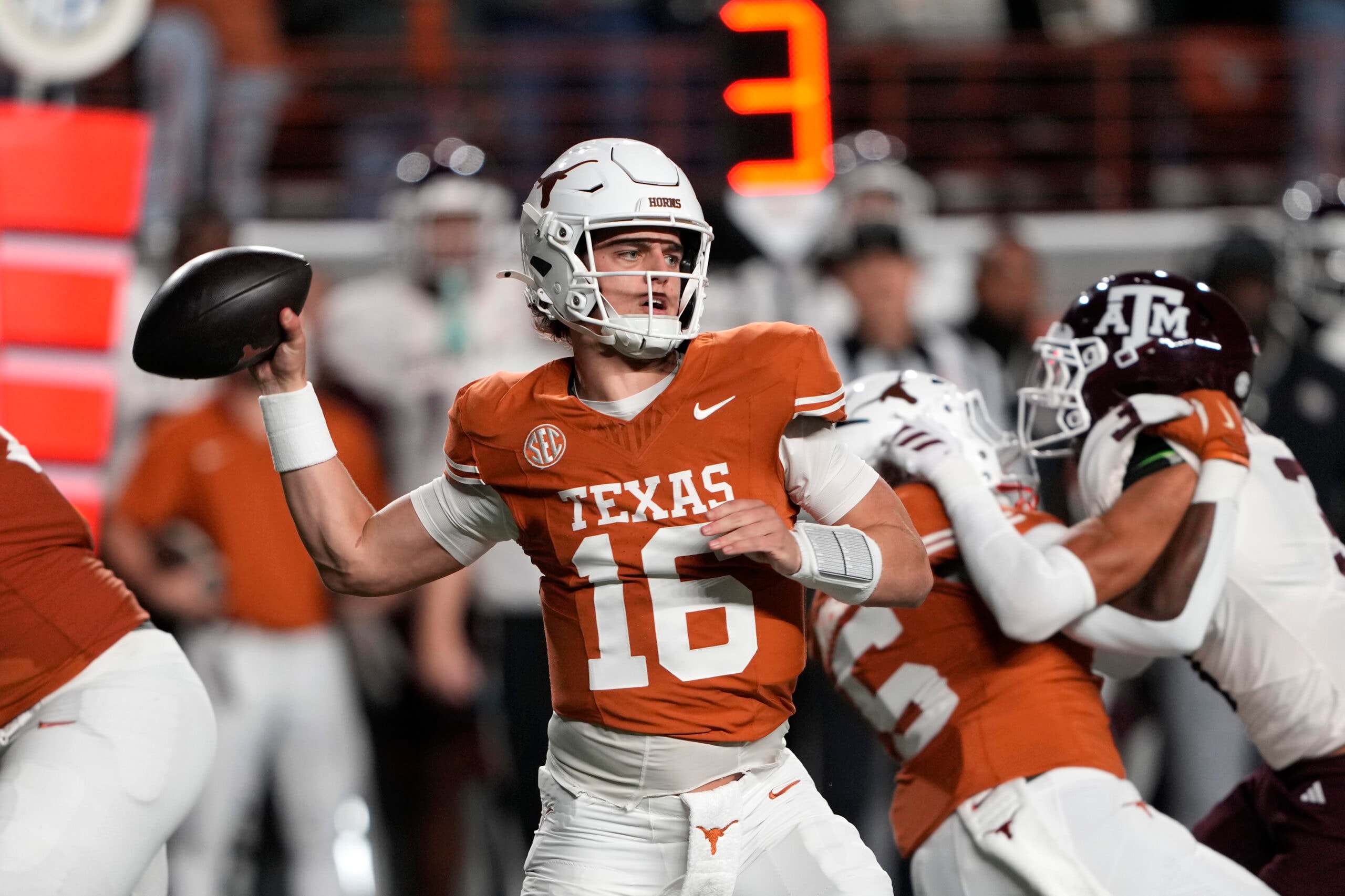
The center of the early projection is Arch Manning at Texas. The basic case is that Manning has the arm and developmental trajectory to “make a big leap,” and that the Longhorns’ offense should create consistent chances to rack up counting stats. In these kinds of projections, the “who” matters, but so does the offensive identity. If Texas keeps building toward more explosive passing outputs, Manning’s ceiling can translate quickly into league-leading yardage.
Sam Leavitt is the next major piece of the equation, and the argument is less about redemption and more about environment. Leavitt is moving into Lane Kiffin’s offense at LSU, where the passing rhythm and quarterback usage have been tightly linked to overall offensive production. Saturday Down South highlights that Kiffin’s quarterbacks have led the SEC in total passing yards in each of the past two seasons, and notes that while Kiffin’s teams do not necessarily run a “high pass play rate” compared with some reputations, they still rack up attempts because the tempo is fast enough to keep them near the top of the league in pass volume.
In 2025, Saturday Down South points to a low pass-play share (47%) while still projecting enough attempts to support big totals. That distinction matters for predicting yardage leaders. A quarterback can throw for enormous yardage even if the offense mixes in the run heavily, as long as the passing plays are frequent enough and the offense stays on the field long enough to sustain drives. For Leavitt, the betting factor here is not a single statistical category from the past. It is whether he can regain the form that previously brought success, including the 2024 benchmark that Saturday Down South references when discussing his output.
Marcel Reed, quarterback for Texas A&M, rounds out a key trio based on the type of production that tends to travel in a league full of competitive defenses. Saturday Down South frames Reed as a passer with limitations, but emphasizes that he still delivered meaningful yardage, including 3,169 yards among SEC passers when postseason games are included (13 games), along with an 8.4 yards-per-attempt rate. The logic is that even if his style is not the purest “drop back and dissect” profile, his efficiency and playmaking can support the kind of yard-per-throw production needed to climb the league ranks.
The remaining two projected spots in the top group are not fully visible in the excerpt available here, so this should be treated as an early map rather than a locked preseason hierarchy. What is most consistent across the approach is the mix of three variables: proven ability to produce from his system, an expected role that supports enough attempts, and a schedule and game plan that does not constantly require the quarterback to throw only in narrow situations.
For 2026, the watch points are straightforward. First, will the offenses that are built around quarterbacks create enough passing volume to compete for league-leading totals. Second, can the quarterbacks mentioned in the early conversation convert their roles into consistent efficiency, not just sporadic big games. And third, which teams keep their passing attack stable enough through the season to avoid falling out of the yardage race. Those are the elements most likely to decide who truly separates at the top by season’s end.
The 2026 season still has to be played, so the safest takeaway from early projections is about what to look for, not where the list will finish. Arch Manning’s next step, Sam Leavitt’s fit with Kiffin’s fast-tempo passing opportunities, and Marcel Reed’s ability to keep generating yards despite limitations are the clearest pieces of the current picture. The SEC’s quarterback title picture will likely be decided by execution across full seasons, not one snapshot of talent.
Why It Matters
- Passing-yard leaders often reflect not just quarterback quality but also offensive tempo, play-calling balance, and how frequently teams can sustain drives.
- If Kiffin’s offenses continue to generate SEC-leading attempt totals, the league’s yardage race could tilt toward LSU even with a lower pass-play share.
- Reed’s inclusion underscores that a quarterback does not need a pure “traditional passer” skill set to generate yardage if efficiency and volume line up.
- Manning’s expected leap matters for Texas’s national profile in its first full SEC-era rhythms, because quarterback production is the most direct driver of offensive scaling.
Key Facts
- Saturday Down South’s early projection frames SEC passing leaders for 2026 around both quarterback talent and expected passing opportunity.
- Arch Manning is highlighted as an early favorite to become one of the SEC’s most productive passers in 2026 and “hoping to make a big leap.”
- The projection centers Sam Leavitt’s outlook around LSU’s move into Lane Kiffin’s offense.
- Saturday Down South states that Kiffin’s quarterbacks have led the SEC in total passing yards in each of the past two seasons.
- Saturday Down South notes that Kiffin’s offenses have had a relatively low pass play rate (47% in 2025) while still producing high pass attempts due to fast tempo.
- Marcel Reed is included despite his passing limitations, with Saturday Down South citing 3,169 total passing yards (including postseason) and 8.4 yards per attempt in 13 games.