
THE APEX TIMES
Quinnen Williams says he “definitely” wants to stay with the Dallas Cowboys long-term
The Cowboys Pro Bowl defensive tackle emphasized his long-term intentions while also focusing on the team’s immediate work toward winning.
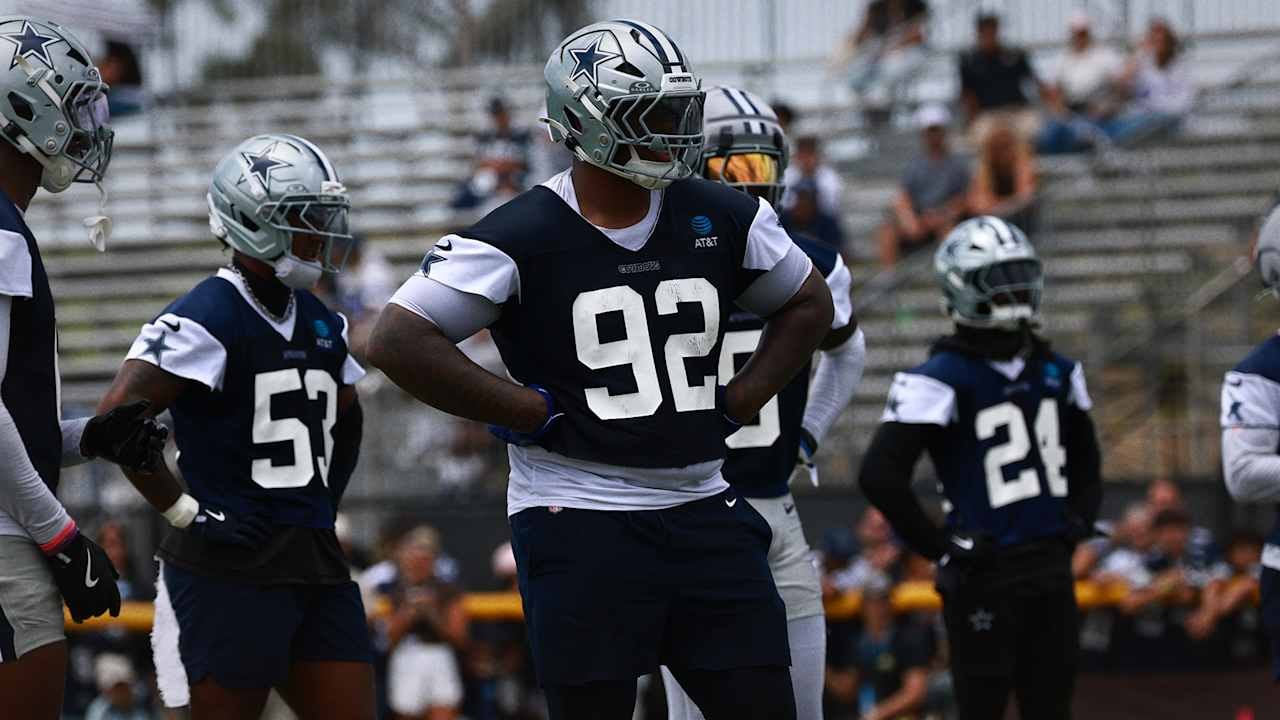
Dallas Cowboys defensive tackle Quinnen Williams said Wednesday that he “definitely” wants to remain in Dallas long-term, indicating a desire to make the Cowboys his long-term NFL home. In the same remarks, Williams framed his priorities for the present as performance and preparation rather than lingering on anything outside the daily work it takes to win.
Williams, a Pro Bowl-caliber interior presence, addressed his outlook with a message aimed at both the franchise and the locker room. While his “definitely” comment leaned toward commitment, his follow-up focus was on the process, describing how he is currently locked in on the work needed to win for himself and his teammates. The distinction mattered, because it positioned the offseason talk as part of building toward the next competitive stretch rather than a distraction from it.
For the Cowboys, Williams’ stance carries weight because the defensive tackle role is central to how a team controls the line of scrimmage. An interior player who can disrupt gaps and manage double teams changes what a defense can ask of the linebackers and the secondary. In that sense, a long-term desire from Williams also functions as an indicator of how the team’s leadership group wants its defensive core to be sustained.
The comments also landed at a time when NFL teams increasingly balance short-term roster execution with longer-term stability. Publicly expressing a preference to stay can be part of a broader organizational message that the player and the team are aligned on the direction they are heading. Still, Williams’ remarks did not spell out contract specifics, timeline details, or any formal agreement, so the only confirmed takeaway remains his expressed intention and mindset.
Williams’ framing of his immediate focus is notable as well. By emphasizing the “work needed to win,” he suggested that contract-related uncertainty, if any exists in the background, is not what is driving his day-to-day attention. For coaches, this type of message matters because the interior defensive line depends on consistency, communication, and conditioning across the entire offseason-to-regular-season runway.
As the Cowboys move forward, what to watch is whether Williams’ public posture is matched by continued on-field production and leadership during training and preseason work. Even without new transaction details in the remarks, his stated intent sets a tone for how the defensive tackle spot should be viewed within the team’s longer-term planning.
In the meantime, Cowboys fans will likely look for confirmation through practice habits and role execution. If Williams maintains the same high tempo and influence described in his approach, his desire to stay in Dallas long-term will resonate not just as a quote, but as part of the team’s effort to build a defense that can hold up when the season tightens.
Why It Matters
- Long-term player commitment is often a report of roster stability, especially for a defensive tackle whose role is foundational to run defense and interior disruption.
- Williams’ emphasis on winning-focused preparation reinforces the Cowboys’ competitive priorities heading into the next phase of the offseason.
- Public intent from a core defender can influence locker-room alignment, since interior defensive roles require constant coordination and shared effort.
- Because no formal transaction details were provided, the practical impact will be measured through performance, availability, and leadership as training progresses.
Key Facts
- Quinnen Williams, a Cowboys Pro Bowl defensive tackle, said he “definitely” wants to remain with the Cowboys long-term.
- Williams’ remarks also emphasized that he is currently focused on the work needed to win for himself and his teammates.
- The comments were delivered in a Cowboys news release dated July 29, 2026.
- The source did not provide contract terms, timeline language, or other formal agreement details.