
THE APEX TIMES
Raiders emphasize running-back versatility in 2026 camp preview, pointing to Ashton Jeanty’s role in the backfield
In a position-by-position look ahead to training camp, Las Vegas highlighted how its running-back group is being built for flexibility, with a focus on wide-zone fit and multiple ways to use the ball.
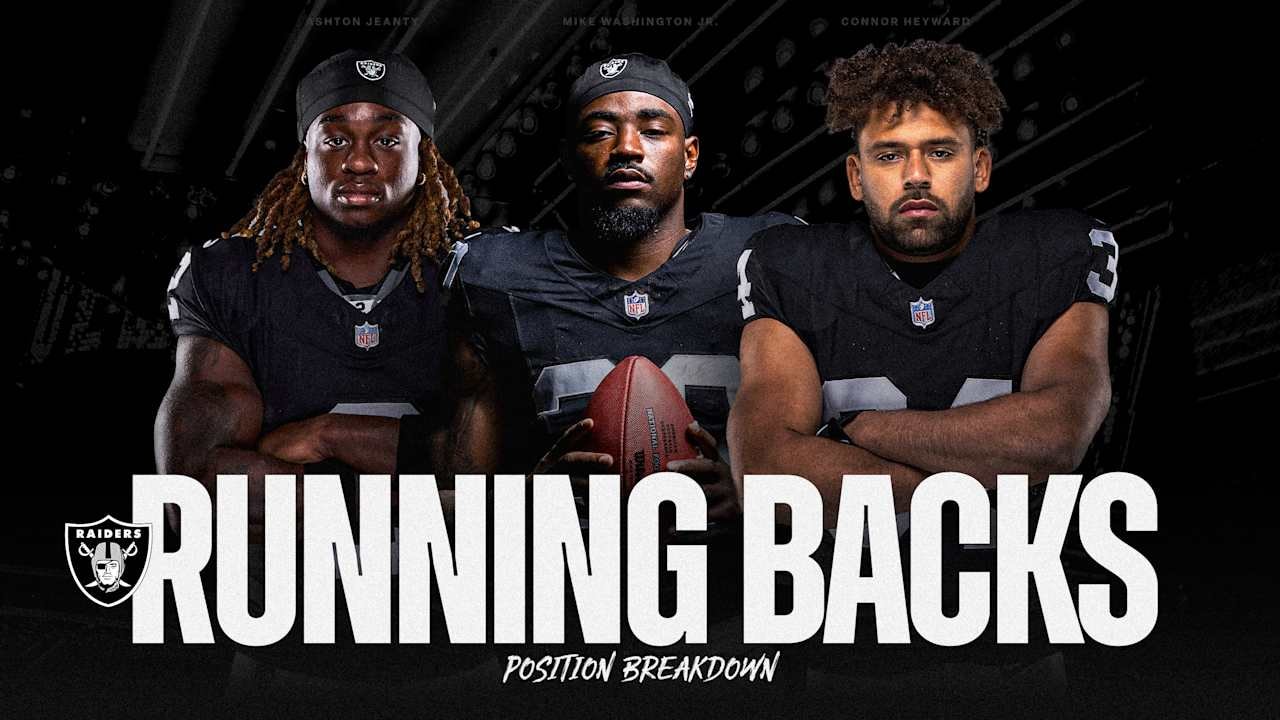
The Las Vegas Raiders’ annual running-back breakdown for the 2026 training-camp stretch frames the room as a system-first group, one designed to keep defenses moving while featuring Ashton Jeanty as the focal point of the backfield. presented its theme in plain terms: versatility. The club’s goal, at least in this early look, is to pair Jeanty’s production with complementary skill sets so the offense can get the same result through different personnel and formations.
Jeanty is treated as the anchor of that plan, with the team’s writers describing how the 2025 first-round pick is being asked to build on his rookie foundation. The backfield, in the Raiders’ presentation, is not simply about carrying the ball. It is also about fitting into how Las Vegas wants to run, and how it wants to distribute work across the group rather than forcing one player to handle every down.
The most specific supporting piece in the Raiders’ preview is Mike Washington Jr., the team’s newest depth and explosive option. notes that Washington still offers speed and power as an outgrowth of his testing profile, describing him as a 6-foot-2, 228-pound runner who posted a 4.33-second 40-yard dash and a 1.51-second 10-yard split at the Combine. The club also emphasizes production over a longer stretch, citing nearly 3,000 rushing yards and 29 scrimmage touchdowns across his college stops, and it ties that profile to the Raiders’ wide-zone approach.
Washington’s college path is also used to justify why the Raiders view him as more than a one-season highlight. characterizes him as super productive and high character, and it frames his skill set as a fit for the offensive scheme associated with head coach Klint Kubiak and coordinator Andrew Janocko, specifically referencing the wide-zone system. The takeaway from the club’s own words is that Washington’s ability to create explosive runs and give the team a different look in the run game is a key part of what they want from the backfield.
The Raiders also point to another kind of versatility in Connor Heyward, describing him as a fullback type who can contribute as a rusher, blocker, and receiving piece out of an H-back role. Heyward’s inclusion in this breakdown indicates that Las Vegas is planning for a backfield that can change shape without changing the base identity of the offense, keeping play-calling options open in short-yardage packages and in formations where a traditional fullback might not be expected.
Rounding out the room’s depth, also highlights Roman Hemby, a graduate-level addition who the club describes as having college production as a multi-year back even before his role expanded. The preview attributes 2,347 rushing yards and 22 rushing touchdowns across four seasons at Maryland to Hemby’s output, and it also notes a national-championship run connection during his graduate transfer season at Indiana where he played in the same backfield grouping as Fernando Mendoza and rushed for 1,120 yards.
What to watch next is how these roles translate from camp planning to actual reps. The Raiders’ own framing suggests Jeanty is expected to operate as the centerpiece while Washington supplies burst, Heyward provides formation flexibility as a receiving-and-blocking option, and Hemby offers another established rushing profile. If the early days of training-camp work reflect the breakdown, the offense will likely look for different running-lane angles, with personnel switches used to keep defenses from keying in on one type of back.
In the short term, the key question is whether Las Vegas’ wide-zone emphasis produces consistent rushing lanes with the same efficiency across multiple personnel groupings. The club’s breakdown does not, by itself, project outcomes on game days, but it does clarify what the Raiders are prioritizing: a backfield built to function as a unit rather than as a single dependency, and a system where versatility is treated as a requirement, not a bonus.
Why It Matters
- A backfield built around wide-zone versatility can affect how the Raiders design carries, pass protection, and third-down run/shot plays.
- Using multiple backs and an H-back role can change how defenses plan personnel, potentially reducing how often they can load the box for one player type.
- Jeanty’s development as the centerpiece matters not just for individual stat lines, but for whether Las Vegas can spread workload without sacrificing run efficiency.
- Training-camp reps for these roles will show whether the team’s scheme priorities match the on-field execution it wants during the regular season.
Sources
Key Facts
- Las Vegas’ 2026 running-backs breakdown emphasizes versatility as a core theme for the backfield.
- describes 2025 first-round pick Ashton Jeanty as the anchor of the running-back room, with expectations to build from his rookie foundation.
- Mike Washington Jr. is profiled as a 6-foot-2, 228-pound runner who posted a 4.33-second 40-yard dash and a 1.51-second 10-yard split at the Combine.
- The team links Washington’s skill set to a wide-zone fit and ties it to the scheme associated with Klint Kubiak and Andrew Janocko.
- highlights Washington’s production history, citing nearly 3,000 rushing yards and 29 scrimmage touchdowns across multiple college stops.
- Connor Heyward is described as a fullback/H-back who can rush, block, and catch out of the backfield.
- Roman Hemby is noted for college rushing production at Maryland and a graduate transfer season at Indiana, including a 1,120-yard rushing year and a national championship context.