
THE APEX TIMES
Raiders’ quarterback plan points to Fernando Mendoza sitting longer, with Kirk Cousins set as the bridge
An NFL transition is rarely gentle. For the Las Vegas Raiders, the approach appears designed to slow-roll Fernando Mendoza’s debut, using veteran quarterback Kirk Cousins as the on-field stabilizer while Mendoza continues to learn the pro game.
The Las Vegas Raiders are leaning into a familiar NFL remedy for a quarterback coming into his first full exposure to league speed: keep the offense anchored while the younger report-caller gets dialed in. According to a Yahoo Sports analysis, the Raiders should stick to the plan that places Kirk Cousins in the starting quarterback role, with Fernando Mendoza taking the seat for now to develop through the process rather than forcing a faster timetable.
The central argument is developmental. Mendoza, in this telling, has flashed the traits that made the team confident in him, but the gap between college and NFL nuance is still present. The NFL is not only about throwing decisions under pressure, it is also about reading protections, processing coverage disguises, and managing the rhythm of a full-game offense. Mendoza is being evaluated through that lens, and the case for patience is that learning those layers takes reps that are easiest to absorb when a quarterback is not being asked to carry every late-game burden immediately.
Cousins’ role, as described in the report, is explicit and structural. He was brought in to start, giving the Raiders a known stabilizing option while Mendoza takes time to adjust. In that framework, the quarterback competition is less about who wins a snap-by-snap duel and more about what development path best preserves the organization’s offensive floor.
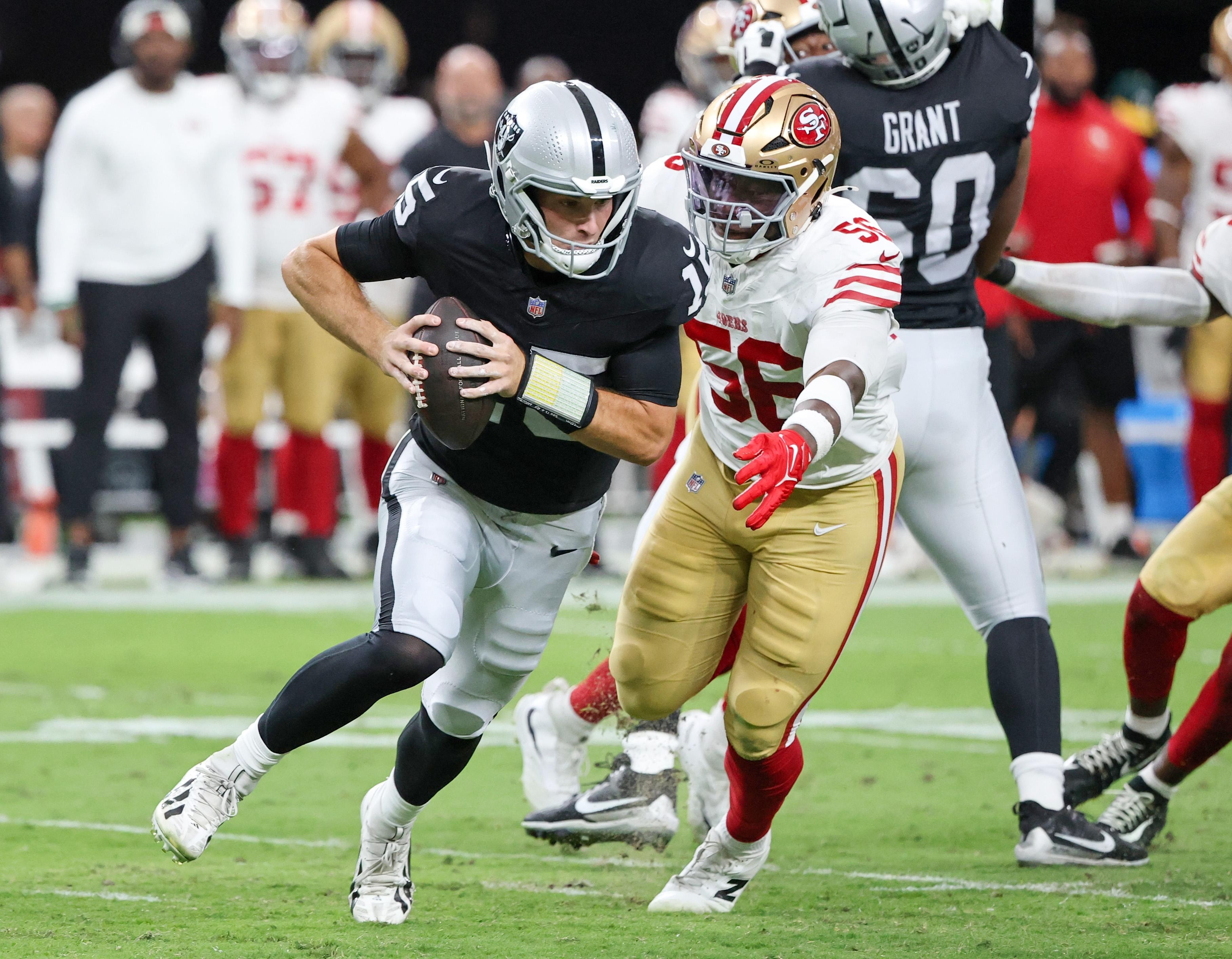
Mendoza’s preseason experience, again as characterized by Yahoo Sports, includes both encouraging stretches and frustrating ones. The analysis points to pass protection as a key factor, suggesting Mendoza’s progress has been limited not solely by his play, but by what he has around him. In particular, the report argues that second-tier wide receivers have not separated clearly, leaving Mendoza with fewer consistent windows. When a quarterback is simultaneously adjusting to NFL coverage concepts and operating behind a shaky pocket, the learning curve can look steeper than it actually is.
The article also describes Mendoza as pressing for more responsibility. That dynamic is common when a young quarterback senses he can push a veteran or accelerate a depth-chart timeline. But the Raiders, per the argument, should resist the temptation to reward effort or highlight reels with immediate starting time if the surrounding components are not ready to support consistent throws.
For Raiders fans, the takeaway is not that Mendoza is being dismissed, but that the team’s quarterback strategy is being framed as a long-term resource-management decision. An NFL offseason and preseason often create a false sense of readiness. The report’s theme is that readiness is situational, and Mendoza’s current environment has not yet produced the clean, reliable conditions that make quarterback development most efficient.
What to watch next is whether the Raiders can create more stability around Mendoza’s development while continuing to let Cousins handle the starting workload. If the offense’s pass protection holds up better and the receiving group produces more separation and route-window clarity, it could reduce the degree to which Mendoza’s learning is masked by external issues. Conversely, if the Raiders keep struggling to protect and to distribute targets in a way that consistently forces defenses to respect the middle of the field, the case for patience may intensify rather than fade.
If Mendoza does sit deeper into the regular season, the key question becomes how the organization measures progress. In modern quarterback development, it is less about a single game’s results and more about whether a quarterback’s decision-making improves on schedule: faster reads, steadier pocket management, better timing, and more efficient error rates. If those areas trend upward during his limited live reps, the eventual switch from bridge quarterback to primary starter would be easier to justify. If not, the Raiders could revisit the plan, but the argument in this report is that sticking to the current development structure gives them their best chance to get the transition right.
Why It Matters
- Quarterback development timelines shape how quickly a team can stabilize its offense and decision-making under pressure.
- Using Cousins as a bridge can protect an immature offensive rhythm while the team evaluates Mendoza’s long-term readiness.
- If pass protection and receiver separation do not improve, it can obscure a young quarterback’s true potential and increase the value of patience.
- A slower rollout can reduce the risk of compounding mistakes that come from asking for full-game execution before timing and reads are fully automated.
Key Facts
- Yahoo Sports argues the Raiders should keep Kirk Cousins as the starting quarterback role while Fernando Mendoza sits to develop.
- The report frames Mendoza’s adjustment as needing time for NFL nuances rather than immediate full-time responsibility.
- The analysis cites pass protection as a significant factor affecting Mendoza’s preseason process.
- The report also attributes part of Mendoza’s issues to limited separation from second-tier wide receivers.
- The piece characterizes Mendoza as pushing for a larger role, but says the Raiders should maintain the current plan.
- The underlying theme is that the supporting environment has not yet made Mendoza’s learning as efficient as it could be.