
THE APEX TIMES
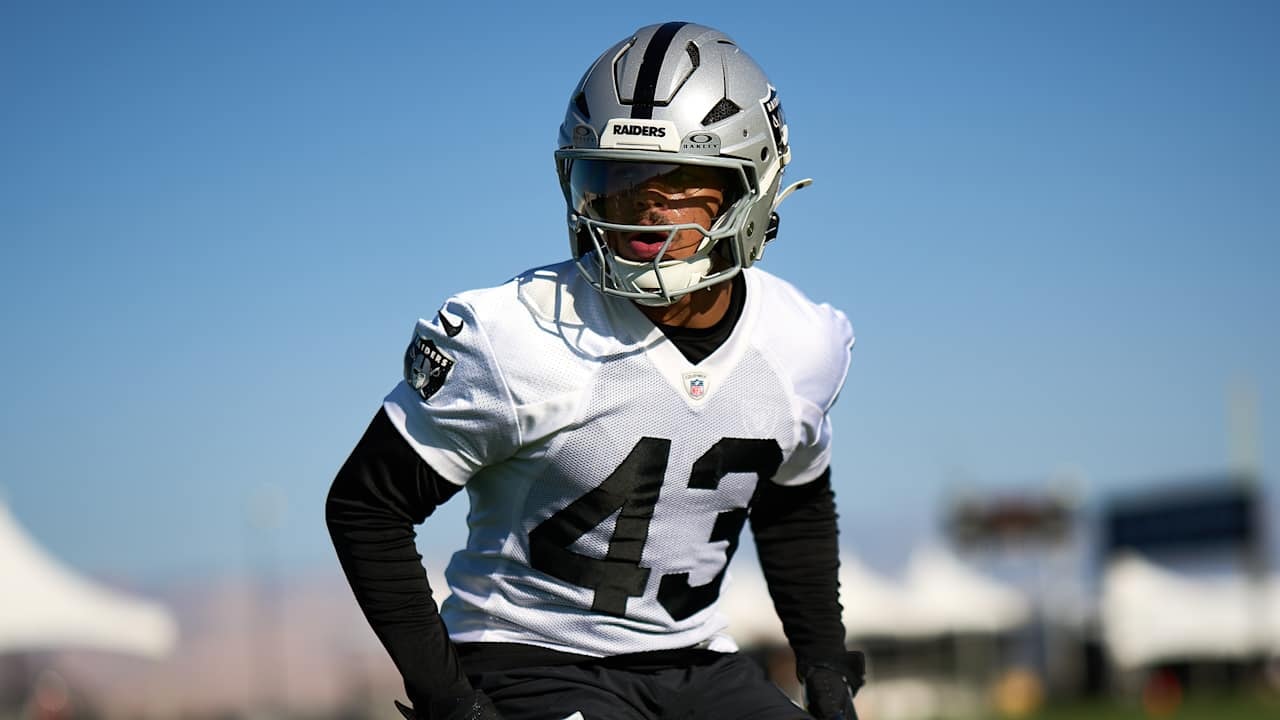
Raiders safety Dalton Johnson turns training-camp reps into visible two-way impact
In a Raiders training camp setting where coaches look for more than effort, safety Dalton Johnson has been leaning into the kind of playmaking habits that show up in both coverage and contact.
The Raiders’ training camp has always functioned as a pressure test for players competing for roles. On Monday’s practice coverage from Raiders headquarters, safety Dalton Johnson was framed as an example of how those reps can translate into something tangible, not just consistent participation. In a Raiders feature, team staff described Johnson as a player who is approaching “camp moments” with a clear, dual-minded goal: make plays in the secondary and deliver the physicality the position demands.
According to the Raiders’ write-up, Johnson was asked what was more satisfying, and his answer captured the approach. When wearing the Silver and Black as a safety, he was portrayed as weighing the thrill of generating a takeaway against the satisfaction of sticking a ball carrier or receiver with a hard tackle. That framing matters because it highlights a mindset coaches generally want from a safety even when the ball does not come his way, namely, communicating, reading routes, and finishing plays in space.
That “two-way” idea is particularly relevant for the Raiders because safeties are expected to do more than cover. They act as the defense’s last line, they help coordinate support behind the front, and they often decide whether an explosive play ends quickly or extends into a longer gain. A player who is both comfortable challenging the ball and willing to attack in the run game can affect multiple phases of what a defense is trying to accomplish during live work.
The Raiders’ team context also gives the statement additional weight. Training camp is where veterans and newcomers alike try to separate themselves in front of coaches and evaluators. With Johnson, the focus in the release is less about a single outcome and more about momentum: the idea that performing at the right intensity, in the right moments, can become a habit that carries forward. Even the way the Raiders describe the question he was asked suggests staff is monitoring not only what he does, but what he prioritizes when the play unfolds.
Because the published feature is written as a camp narrative, it does not turn into a box-score accounting or a transaction update. It also does not provide specific practice stats, game-like results, or named opponents. What it does offer is a window into how the team is thinking about Johnson’s role and how he is trying to represent that role each day, by pairing ball production instincts with aggressive finishing mechanics.
For Johnson personally, the next step is maintaining that balance under increasingly game-like practice speed and coverage disguise. Camp reps tend to magnify both strengths and weaknesses: a safety who reaches for a hard hit too early can get exploited in coverage, while a player who only hunts interceptions can fall behind in the run fits. The most useful development over the remainder of camp will be whether his playmaking remains consistent across those different scenarios.
For the Raiders’ coaching staff, the practical takeaway is straightforward. If Johnson can sustain the kind of play he values, defenses gain a safety who is credible in multiple responsibilities, and that can help the unit simplify decisions elsewhere. As the team moves deeper into camp and works through more of the situational work, fans will have a better read on how the “interception versus tackle” mindset shows up in outcomes across coverage and open-field plays.
Why It Matters
- A safety who can contribute in both coverage and contact helps a defense control explosive chances from multiple angles.
- Training camp momentum can influence how coaches distribute reps and define roles as the preseason approaches.
- Johnson’s camp approach reflects the broader safety expectation for the position’s last-line responsibilities, including run support and tackling efficiency.
- How consistently he pairs aggression with awareness will be an early indicator of how he fits into the Raiders’ defensive identity.
Key Facts
- Raiders training camp coverage highlighted safety Dalton Johnson as a player turning practice reps into visible momentum.
- In the Raiders feature, Johnson was asked what was more satisfying: making an interception or delivering a hard tackle on a ball carrier or receiver.
- The Raiders’ framing emphasizes a two-way standard for safeties, combining ball skills and physical finishing in space.
- The release is focused on training-camp mindset and role approach rather than game statistics or a roster transaction.