
THE APEX TIMES
Raiders’ tight end group stands out, but defensive tackle depth remains a question entering the season
A preseason-time roster evaluation points to an advantage in the Raiders’ tight end corps, while defensive tackle help is viewed as an area that still needs clarity.
The Las Vegas Raiders’ roster review at this stage of the year circles around a familiar offseason theme: teams often have position groups that look sharper than others as training camp battles narrow the field. For Las Vegas, the emphasis is on tight ends first, with defensive tackles second, where the assessment is less settled.
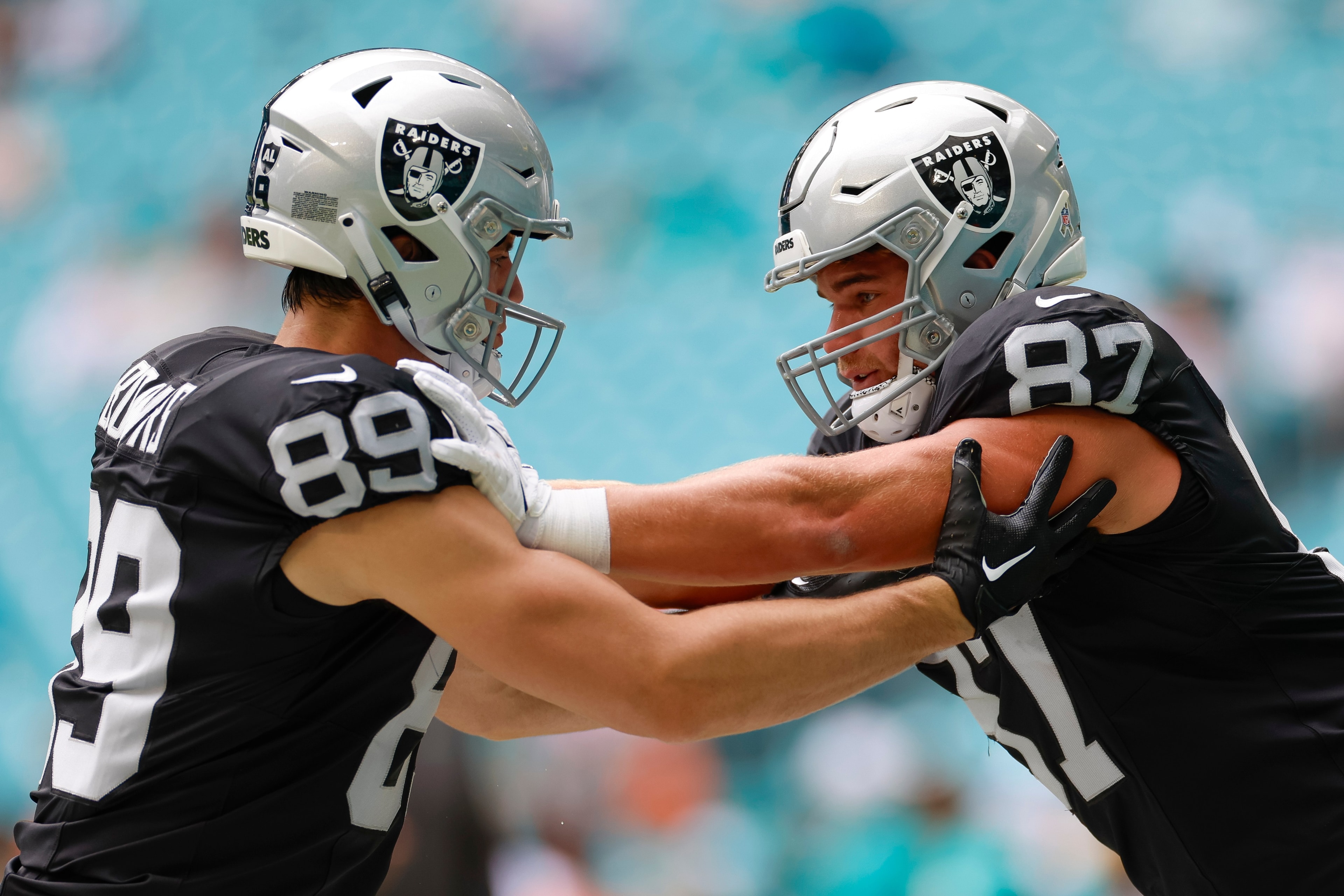
On offense, the tight end room is the part that draws the most praise. Brock Bowers and Michael Mayer are highlighted in the accompanying team-focused imagery, and the underlying point is straightforward, tight end has become a point of strength for the Raiders as they look for reliable routing, matchup versatility, and a functional set of weapons in both the passing game and run support. At this time of year, those are the kinds of traits coaches tend to stress because they translate quickly when teams shift from scripted work into live-game tempo.
The core of the evaluation is less about one player’s singular ceiling and more about how the group fits together. Tight ends affect multiple phases of an attack, they can compress coverage, they can serve as short- and intermediate-field answers for quarterbacks, and they can create favorable blocking angles when the offense wants to run out of condensed formations. If the Raiders’ tight ends are operating cleanly, it simplifies play-calling and helps the rest of the offense look more organized.
The article’s concern, meanwhile, is defensive tackle. That is a position that often determines the character of a defense, especially against teams that emphasize power running or quick interior pressure. In roster terms, defensive tackle depth and readiness can shape how aggressively a unit plays in the middle of the line, and it can also determine whether an opponent can secure easy yards in short-yardage situations.
When writers characterize DTs as a worry area, it usually reflects uncertainty rather than a single definitive problem. It can be about how consistent the rotation looks, whether the starting group can sustain pressure for a full sequence, or whether backups have shown enough to prevent opponents from exploiting predictable gaps. Entering a season, those are the kinds of concerns that can linger until late preseason snaps and early regular-season games force the issue.
It is also worth remembering that preseason assessments often operate under incomplete information. Teams may be experimenting with personnel groupings and defensive alignments, and some matchups are designed to test schemes rather than to showcase the deepest strengths of a roster. That context matters, because a tight end room that looks fluid in camp can still face obstacles when opponents game-plan for it, and a defensive line that looks inconsistent can improve rapidly once roles are finalized.
For Las Vegas, the practical question going forward is which storyline becomes the dominant one once the Raiders enter games that count. If the tight ends continue to look like a genuine weapon group, the offense will have a clearer identity and a more consistent set of options under pressure. If the defensive tackle situation does not firm up quickly, opponents will likely search for interior advantages as the season begins. Either way, the next phase of evaluation will be less about opinions and more about how the Raiders perform when every snap is part of a larger, visible chess match.
Why It Matters
- A productive tight end group can stabilize an offense by improving route options, creating matchup flexibility, and helping the run game in compact formations.
- Defensive tackle depth and consistency can influence how a defense handles interior rushing and how confident it feels using multiple-gap pressure.
- If the Raiders’ DT concerns persist, opponents may be able to draw predictable advantages in short-yardage and power-running situations.
- If the tight ends remain a clear strength, the Raiders may be able to build offensive identity around reliable targets and efficient blocking.
Key Facts
- A preseason-time roster evaluation for the Las Vegas Raiders emphasizes strength at tight end and concern at defensive tackle.
- The evaluation specifically references Brock Bowers and Michael Mayer as part of the tight end picture.
- Defensive tackle is framed as a less settled area compared with other parts of the roster.
- The piece is presented as a team-wide balance of “good and bad” rather than a single-player feature.
- The assessment is tied to what teams look like “this time of year,” indicating an early-season view rather than a final verdict.