
THE APEX TIMES
Rainy conditions and a shifting practice-style look: Quinshon Judkins and the Browns’ offense fail to find rhythm vs. the Jets
A weather-driven slog and changing wide receiver reps helped explain why the Browns could not establish consistent offensive production, leaving Quinshon Judkins short of the impact the offense was built to produce.
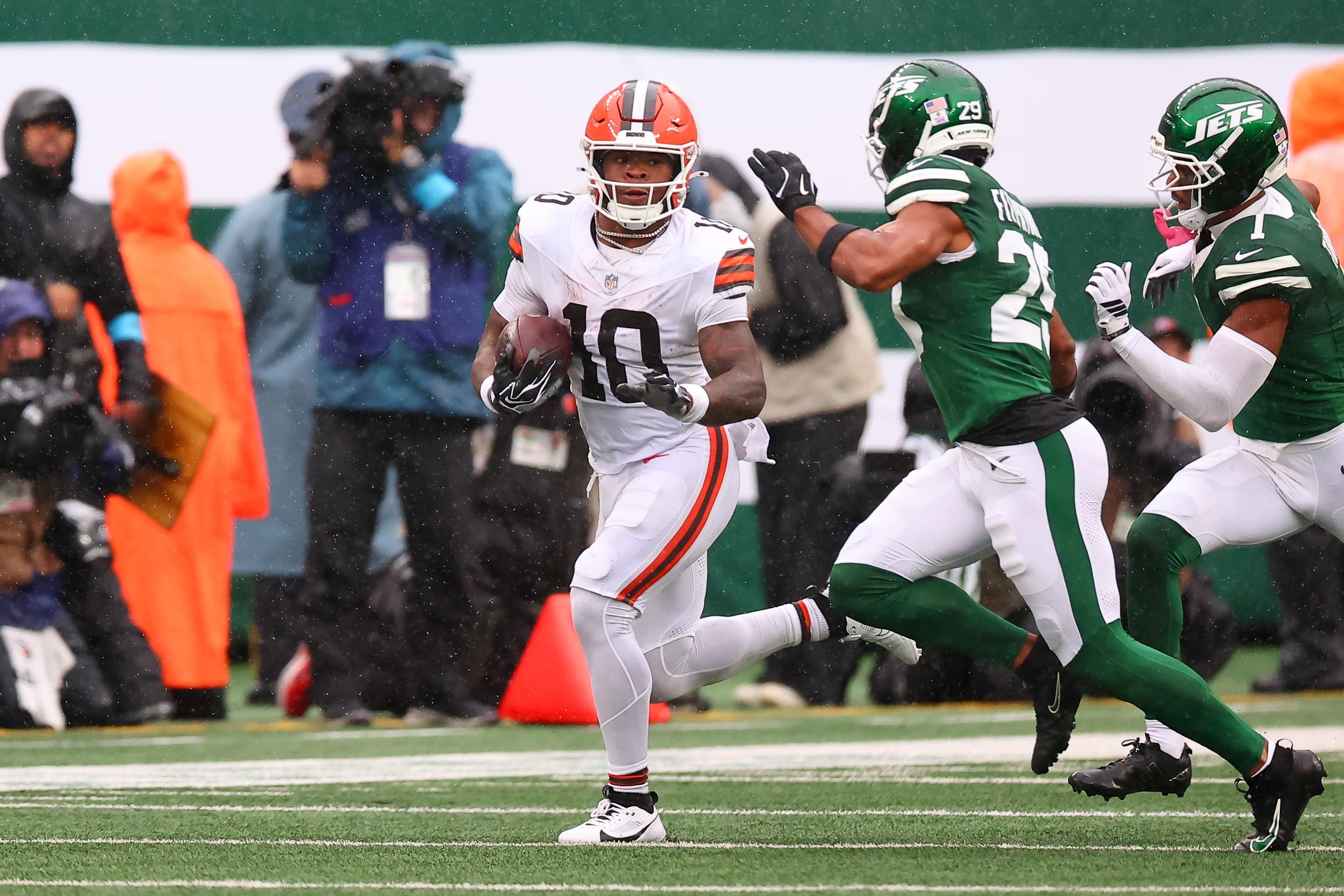
The Browns’ offense ran into a matchup problem it could not solve, not only because of the opponent and game plan, but because the environment turned the most basic parts of execution into a grind. In a game played through rain that intensified in the fourth quarter, the Browns struggled to generate the timing and spacing needed for a clean running game and stable passing downs.
Quinshon Judkins, the Browns’ featured back, never got into a rhythm that normally allows a team’s run game to start dictating defensive adjustments. The theme highlighted in the postgame discussion is straightforward: Judkins could not get going, and without that early momentum, the offense was forced to spend more possessions reacting rather than controlling the tempo.
The weather matters because it reshapes the value of every play. When conditions worsen, offenses lose some of the margin for error on routes, handoffs, and ball security, and they typically see drives become more sequence-based instead of scheme-based. What might have been a manageable down-and-distance becomes a prolonged set of third-down conversions, and the Browns’ inability to create repeatable gains made those drives harder to sustain.
Alongside the run-game issue, there was also a change in wide receiver reps that reflected a broader effort to find workable matchups under unstable conditions. When a team starts shuffling who is getting the most looks in practice or during the flow of a game, it usually indicates that the staff is searching for quicker decisions at the line of scrimmage, more reliable hands in wet ball traffic, or simply routes that can be run with less precision than the offense prefers.
Judkins’ lack of traction helped set the context for that wide receiver experimentation. In offenses that lean on a back to influence coverage, a stalled run game compresses the spaces the passing game is designed to attack. That can force wide receivers into tighter windows and quicker throws, which becomes more difficult when the ball and footing do not behave consistently.
The Browns’ night, as described in the analysis of the game, ultimately reads like a case of expectations meeting reality in the worst way. Forecasts and the likelihood of low scoring often point to fewer opportunities for big-play swings, but the Browns still needed to make the most of the plays they could execute. Instead, once the rain deepened, the offensive performance drifted further from the kind of steady production that turns a one-game weather problem into a brief inconvenience.
For what comes next, the key questions are less about this single contest and more about how the coaching staff responds to the combination of a stalled featured-back workload and receiver rep volatility. Fans should watch whether Judkins’ role returns to its usual rhythm, and whether the wide receiver rotation stabilizes to support the run game’s influence on the passing game.
If the Browns can reestablish a consistent run flow early, it should make the rest of the offense simpler: tighter coverage at the edges, cleaner passing concepts, and fewer emergency adjustments. If they cannot, this type of environment-driven inefficiency could be a recurring challenge whenever weather or opponent physicality disrupts timing across the offense.
Why It Matters
- A run game that cannot get started forces the passing attack into less favorable downs and situations, and that compounds in poor weather.
- Receiver rep changes can be a sign of uncertainty in the passing game, which affects offensive continuity week to week.
- Even in difficult conditions, offenses that find a way to generate steady first downs usually prevent a late-game collapse, and the Browns’ struggle highlights that gap.
- Judkins’ ability to impact games is central to the Browns’ identity, so this type of outing raises follow-up questions for the next opponent.
Key Facts
- The Browns’ offensive performance was discussed in connection with heavy rain that intensified, especially late in the game.
- Analysis centered on Quinshon Judkins not getting into a productive rhythm as a featured back.
- The game featured changing wide receiver reps, described as part of the offense’s effort to adjust.
- The overall framing was that, despite expectations for a low-scoring, turnover-prone environment, the Browns’ offense still did not perform at a level consistent with those conditions.