
THE APEX TIMES
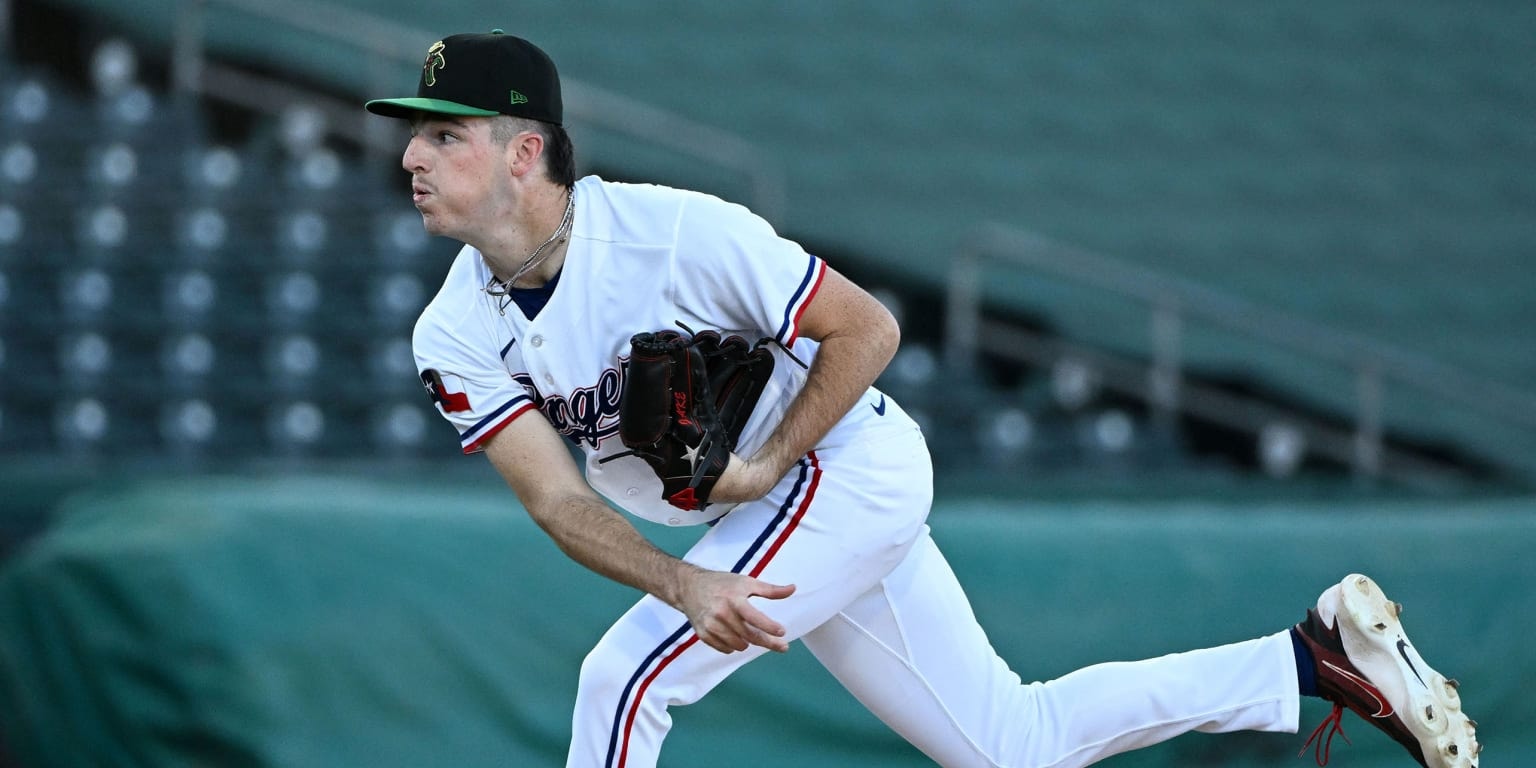
Rangers RHP prospect Jacob Johnson uses Arizona Fall League to broaden his pitch mix
The right-hander, who finished his first full pro season at Single-A Hickory after time in the Arizona Complex League, is leaning into the Fall League as a live, instructional stretch to add to his arsenal.
Arizona Fall League play is often less about outcomes than about adjustments, and Texas’ right-hander Jacob Johnson is treating it that way. In a late-season look at the next step of his development, MLB reported that the Rangers prospect was “pretty content” with how his first pro season was ending, but also clear-eyed about what comes next as he continues to refine his repertoire.
Johnson’s pro résumé before the Fall League included a quick climb. He spent most of the year in the Arizona Complex League, then moved up to Single-A Hickory, where he appeared in his sixth outing at the level and, according to MLB, turned in a stretch that included five no-hit innings. The milestone is the kind of report teams watch for at the lower levels, because it combines swing-and-miss ability with the ability to limit damage over multiple frames.
Even with that production, the focus has shifted. MLB’s report framed Johnson’s current work in Arizona around expanding his repertoire, which in prospect terms usually means adding more reliable options, increasing the usefulness of existing pitches, and improving how hitters experience him across different counts.
Fall League stints are one of the few times a prospect faces a dense mix of quality opponents in a concentrated window while the organization can be intentional with instruction. For Johnson, that environment matters because it gives his coaching staff repeated opportunities to evaluate whether his added pitch usage translates into better at-bats for hitters, not just flashes of dominance.
The Rangers’ interest in broadening Johnson’s arsenal is also consistent with the way organizations try to prepare right-handed starters for the next jump. Command and sequencing tend to show up first, but the ability to repeatedly threaten hitters with multiple looks is what keeps a pitcher from becoming predictable as the level rises. By treating the Fall League as a workshop, Johnson can earn clarity on which new approaches can hold up when hitters are more disciplined.
MLB did not detail specific pitches in the report, but it emphasized the theme of repertoire growth. For a young right-hander, that often shows up as more frequent use of secondary offerings, a more consistent feel for location, and a clearer plan for how to respond when hitters reach a base state, such as getting ahead or working the count.
What to watch next is not whether Johnson strings together highlight innings, but whether his pitch decisions start to look more repeatable. If the “expanding repertoire” approach results in smoother sequences and fewer hard-contact innings during Fall League appearances, it will give the Rangers a stronger read on his readiness for the next rung of their system.
With his first pro season now firmly in the rearview mirror, Johnson’s immediate task is to translate learning into consistency. If he continues to combine the type of performance streaks that produced five no-hit innings at Single-A with a broader set of tools, his development track will remain on a path the Rangers can build on for the next phase of his career.
Why It Matters
- Expanding a pitching repertoire is often a prerequisite for advancement, because future levels punish pitchers who can only win with one or two looks.
- Johnson’s late-season performance at Single-A Hickory, paired with the focus on repertoire growth, helps the Rangers evaluate both results and process at once.
- The Arizona Fall League accelerates learning because prospects face varied, high-end competition in a compact schedule window.
- If Johnson can make new or expanded pitch usage repeatable, it strengthens Texas’ internal pipeline options for the next promotion cycle.
- Development streaks matter less than whether improvements hold up against more advanced hitters, which the Fall League is designed to test.
Key Facts
- MLB reported that Rangers right-hander Jacob Johnson was content with how his first pro season was ending as he took part in the Arizona Fall League.
- The report said Johnson spent most of the season in the Arizona Complex League before moving to Single-A Hickory.
- MLB stated Johnson threw five no-hit innings for Single-A Hickory in his sixth outing at the level.
- The Fall League emphasis in the report was on Johnson expanding his repertoire as part of his development.
- The report framed Johnson’s approach as using the Fall League to build on what he showed during his season run through the Rangers system.