
THE APEX TIMES
Rays’ ALCS Game 1 slip: Rasmussen settles in, bullpen finishes the job the wrong way
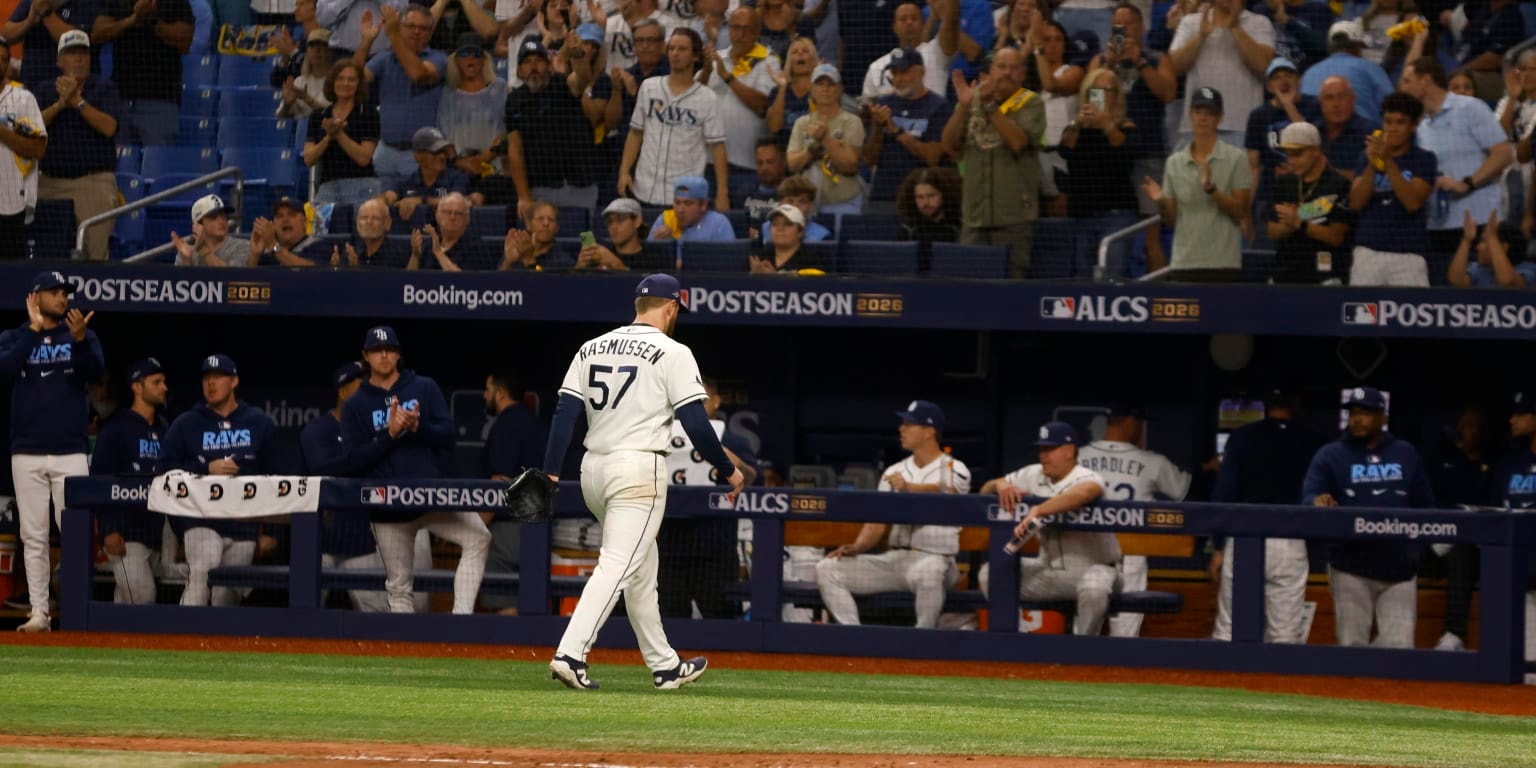
Drew Rasmussen turned in a steady start at Tropicana Field in the American League Championship Series opener, but Tampa Bay’s late relief made the margin narrow after it had been under control.
Drew Rasmussen looked poised to turn the first American League Championship Series game into a launching point for the Tampa Bay Rays. Through six innings at Tropicana Field, Rasmussen had both a one-run lead and the kind of control that typically defines postseason starts. The Rays moved him from “effective” to “trusted,” and for a stretch it worked, setting up what should have been a relatively routine finish for the team that has earned reputations for surviving close games.
But the ALCS is a short series that punishes even small breakdowns. As the game transitioned from Rasmussen’s work to the Rays’ later-leverage relievers, control gave way to trouble. The bullpen, which had a chance to protect that one-run advantage, stumbled instead. What began as a lead with firm pitching around it ended with the Rays unable to hold their grip on Game 1, handing the opposing team an early edge in the championship series.
The story line in the Rays’ loss was less about an early collapse and more about how postseason innings get “banked” and then withdrawn. Rasmussen’s outing mattered, not only because he logged the innings, but because he carried the Rays into the late stages while they still had a workable, game-managing lead. When a starter does that, a bullpen’s job becomes clear: keep the opponent from turning momentum into base runners and runs once the margin gets thin.
The release framed the turning point as a backfire moment tied to how Tampa Bay stayed with Rasmussen as the game progressed. Rasmussen’s performance, described as not matching the dominance of his most recent start, still carried the Rays into a critical stretch. In October, that still counts for a lot, because command tends to fade later in the order, and the league’s best lineups punish hitters who see the ball too well for too long. In this case, Rasmussen gave Tampa Bay innings, but the Rays did not convert that foundation into a win.
The game also served as an early reminder that ALCS series are often defined by the details that show up in relief. One bullpen inconsistency can make the rest of the pitching plan harder, forcing subsequent starters and relievers into roles they did not intend to fill. After a Game 1 loss, Tampa Bay will have to treat the next approach like a response plan, not just a continuation, with bullpen usage and leverage assignments becoming even more consequential.
What to watch next is whether the Rays can rebound quickly with sharper late execution, the same way they have chased tighter control earlier in the playoffs. Rasmussen’s line at the start of the series will likely factor into how Tampa Bay evaluates its plan for future games, especially around the handoff between starter and bullpen. For the ALCS title picture, the immediate takeaway is straightforward: a one-run lead protected through six innings is exactly the kind of position you want in October, and the Rays will be looking for a correction on the back end in the next game.
Why It Matters
- Game 1 in a championship series sets the tone for bullpen management and leverage decisions for the rest of the ALCS.
- A late-game failure turns a strong starter’s outing into a wasted opportunity, increasing pressure on Tampa Bay’s next-game plan.
- The Rays’ ability to correct bullpen execution quickly will be central to keeping the series competitive.
- Rasmussen’s effectiveness through the early middle innings provides a template for what Tampa Bay needs again, even if the end result did not follow.
Key Facts
- Drew Rasmussen started for the Tampa Bay Rays in the American League Championship Series Game 1 at Tropicana Field.
- Rasmussen worked six innings while holding a one-run lead and maintaining control early in the contest.
- The Rays ultimately lost Game 1 after struggles in late relief.
- The official report framed the outcome as a consequence of staying with Rasmussen that did not produce the expected end result, with the bullpen failing to protect the advantage.