
THE APEX TIMES
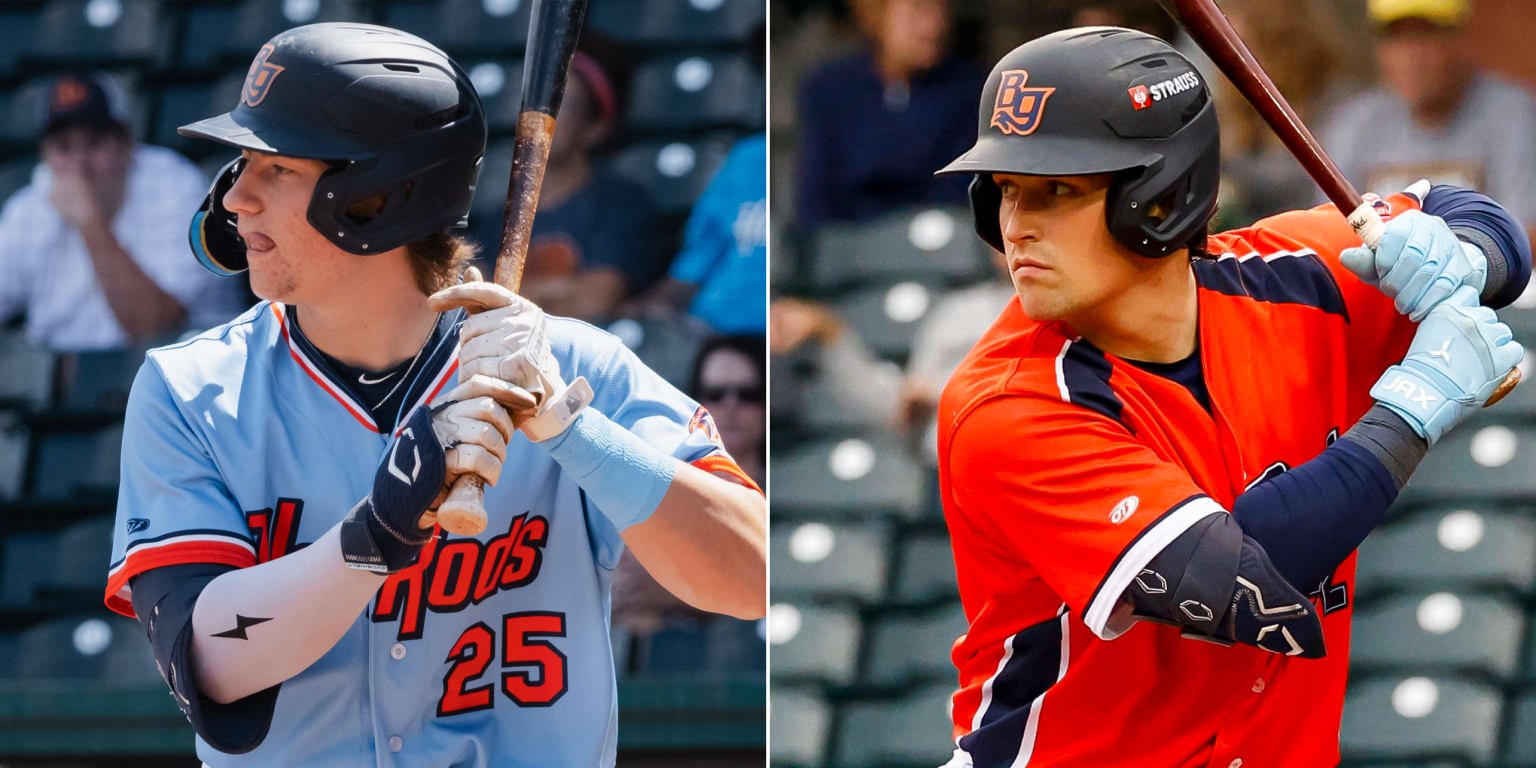
Rays prospects Nathan Flewelling and Caden Bodine split catching work in High-A, pushing for the next long-term answer
With the Tampa Bay organization still searching for a true homegrown catcher breakthrough, two of its top prospects are sharing duties in High-A, turning their competition into a developmental priority instead of a distraction.
The Tampa Bay Rays are leaning into a familiar organizational challenge, trying to convert elite talent into a durable, everyday catcher at the major-league level. In a new update from the club, two of the system’s catching prospects, Nathan Flewelling and Caden Bodine, are splitting catching responsibilities in High-A, a setup that the organization is using to measure progress while keeping both players on a clear path toward becoming the long-term answer behind the plate.
Catcher has been a recurring need for the Rays, especially when it comes to finding a homegrown backstop who can hold the job for years. Since John Jaso left after the 2011 season, Tampa Bay has not had a notable homegrown catcher that matched the kind of sustained impact the franchise has relied on elsewhere. MLB’s Rays release points out that even during Jaso’s Tampa tenure, his total value in the organization’s player-development window was limited, with the club citing 3.0 total WAR across 2008 to 2011 before he later found more success with other teams.
Against that backdrop, the Rays are treating their High-A catching competition as more than a roster-management choice. Flewelling and Bodine are both positioned as premium prospects, and the “push each other” framing is important. By sharing duties, they can stay in a game environment that matters for the most specific demands of the role: receiving and blocking, managing pitchers day-to-day, and handling the pace of hitters at their level. At the same time, the Rays can compare how each responds to repetition and pressure, rather than letting a single player’s workload mask potential gaps in development.
The Rays have often built depth through their farm system rather than through one-off solutions, so finding catcher is not just about a prospect reaching the majors. It is about whether the organization can develop a repeatable skill set that survives at higher levels, where pitchers throw harder, strike-zone judgment shifts, and the demands of game-calling become more complex. A catching prospect who can do the job defensively and still contribute offensively gives Tampa the kind of flexibility that lets it keep building around its pitching staff.
While Tampa Bay has made progress in other areas of its prospect pipeline, the catching position is uniquely difficult to solve because it blends athleticism with specialist habits. Splitting the catching load in High-A suggests the Rays believe both players are close enough in development that the organization wants each to stay sharp rather than rush one ahead of the other. In practice, it also creates a clearer evaluation of trends, because the club can watch who improves faster at the things that do not always show up in traditional hitting-only measurements.
What to watch next is whether either Flewelling or Bodine begins to separate in the areas that predict success behind the plate at the next levels. The key questions are straightforward even if they are hard to answer early: who handles the pitching staff with more consistency, who shows more reliable receiving fundamentals, and who proves that any offensive gains translate under stronger advanced pitching. Over time, the Rays’ decision to keep splitting duties or to narrow the workload will reveal what the organization believes it has in its pipeline.
The Rays’ catching search is ultimately about timing, and prospect development is never linear. Still, a High-A duo pushing each other for the primary role is a sign that Tampa Bay thinks the future at catcher is not far away. If one player can establish a clear identity as an everyday option, the Rays could reduce their need to rely on stopgaps and instead keep their roster-building strategy centered on homegrown core stability.
That said, prospect competition also comes with caveats. Sharing duties can help both players avoid a plateau, but it can also blur comparisons if neither reaches a consistent baseline. The Rays will likely treat the next stages of play as the real sorting period, where workload, defensive responsibility, and offensive performance must align. For now, Flewelling and Bodine are doing what the Rays require from their best catching prospects, taking the long view seriously while competing in the present.
Why It Matters
- Finding a long-term, homegrown catcher is a roster-building priority for Tampa Bay, given the franchise’s recent history of limited homegrown stability at the position.
- How Flewelling and Bodine handle shared catching responsibilities will affect their next-level readiness and workload expectations.
- The Rays’ evaluation process in High-A can report whether Tampa is nearing a shift from development-by-committee to development through a clear top option.
- Catcher development has unusually strong spillover effects for pitchers, because game-calling and handling influence the day-to-day performance of the staff.
Key Facts
- The Rays report that catcher prospects Nathan Flewelling and Caden Bodine are splitting catching duties in High-A.
- The organization frames the arrangement as both players pushing each other in their development.
- Tampa Bay has not had a notable homegrown catcher breakthrough since John Jaso’s departure after 2011.
- The Rays’ release notes that Jaso totaled 3.0 total WAR during 2008-11 with the organization.