
THE APEX TIMES
Report: Wisconsin plans a 2026 roster without former NFL players, as LSU eyes two camp-trained signees with pro contracts
A new wave of college football roster building has centered on players coming off NFL contract signings and time around training camps. Wisconsin’s approach, per a recent report, is notably different heading into the 2026 season.
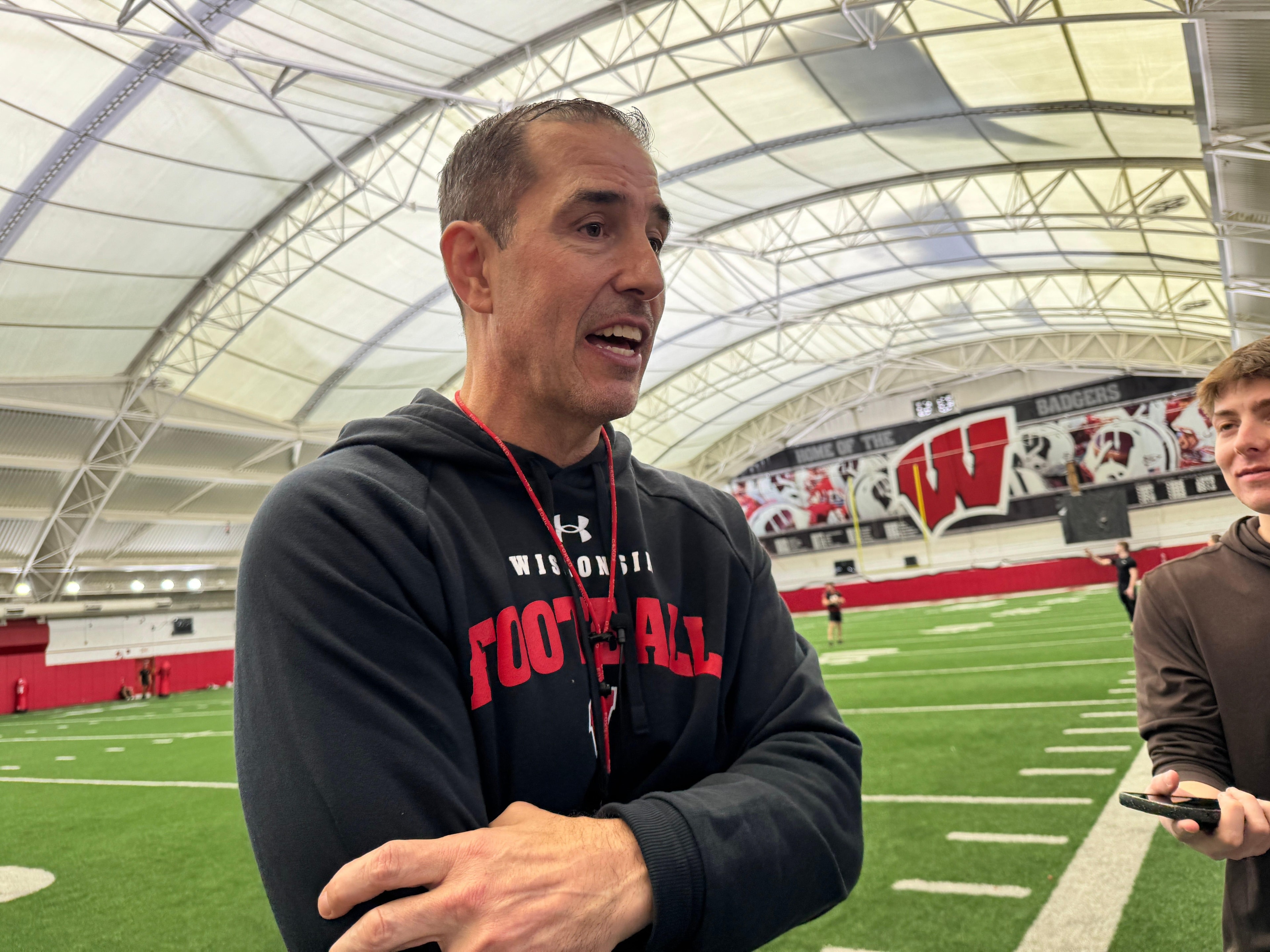
Wisconsin’s 2026 roster is not expected to include former NFL players, according to a report highlighted by Yahoo Sports. The backdrop is a broader college football reality in which programs are increasingly willing to take chances on players who have already been tied to NFL organizations through offseason contract activity and training camp opportunities.
The contrasting example in the same reporting points to LSU, which is described as expected to add two players who signed NFL contracts this offseason and had been in training camp. The names cited are Cleveland Browns tight end Dae’Quan Wright and New Orleans Saints defensive tackle Zxavian Harris, both of whom have had their professional inclusion described as part of the latest roster pipeline into the college game.
For Wisconsin, the reported decision is less about denying opportunity to talent and more about choosing a specific roster philosophy at a time when college depth charts can move quickly. The risk, in a general sense, is that players with recent NFL involvement may bring higher upside but also arrive with different development timelines, conditioning expectations, and learning curves than typical transfers.
Under the college football umbrella, the pathways that matter most for roster building typically include high school recruiting, the transfer portal, and walk-on evaluations, with offseason movement often accelerated by summer circumstances. Against that environment, the reported Wisconsin stance suggests it is trying to keep its 2026 evaluation process anchored in a more conventional collegiate track rather than using recent NFL contract/training camp ties as a primary recruiting hook.
It also speaks to how programs balance short-term needs with long-term culture. Wisconsin’s reported approach could indicate a desire to reduce disruption for player roles, especially on units that rely heavily on continuity, such as offensive line assignments and defensive front communication. When new arrivals come with a pro structure already in their background, coaching staff may still value the experience but can also face the challenge of fitting skill sets into a different scheme and play-calling pace.
If LSU indeed brings Wright and Harris to campus as described, the college season’s competitive picture becomes more interesting at the front end. Tight end and interior defensive line talent can swing both the run game and the ability to control third downs, and players who have been around pro coaching structures can sometimes compress the time it takes to contribute. Still, until an official roster announcement is made, any projection remains a report-based expectation rather than a confirmed final depth chart.
What to watch next is whether Wisconsin provides any official 2026 roster context that clarifies how it defines “former NFL” in this situation, and whether LSU confirms the reported additions with its own transaction or roster updates. In the meantime, the bigger takeaway is that college football continues to absorb more NFL-adjacent pathways, even as some programs appear determined to draw the line at where those pathways fit in their plans.
Why It Matters
- Roster-building is increasingly influenced by players who have already been connected to NFL teams through offseason contracts and training camp.
- Programs that avoid that path may prioritize continuity and collegiate development timelines over pro-style acclimation.
- If LSU adds NFL-camp veterans as reported, it could sharpen competition in key positions that affect both the run game and defensive third-down performance.
- Wisconsin’s approach, as described, could become a recruiting-and-culture report to prospects evaluating how a program develops players after high school or through the transfer portal.
Key Facts
- A Yahoo Sports report says Wisconsin will not have any former NFL players on its roster in 2026.
- The same reporting describes LSU as expected to bring in two players with offseason NFL contract signings and training camp experience.
- The players named are Cleveland Browns tight end Dae’Quan Wright and New Orleans Saints defensive tackle Zxavian Harris.
- The story frames this as a contrast in roster-building approaches among college programs heading into the 2026 season.