
THE APEX TIMES
Rhoades at Penn State, DeVries at Indiana, Diebler at Ohio State face “prove it” year pressure in 2026-27
With the Big Ten’s recruiting and on-court standards rising, three head coaches are entering a season where patience could run out if their teams do not reach expected levels.
The Big Ten has a way of turning coaching timelines into public debates. A new preseason conversation has now formed around three programs and three head coaches, framing 2026-27 as a “prove it or pack it” moment: Mike Rhoades at Penn State, Darian DeVries at Indiana, and Jake Diebler at Ohio State. The common thread is not a single game or a single roster problem, but the sense that each program is at a point where results must show a clear upward path rather than merely avoiding collapse.
For Penn State, the pressure narrative takes on extra weight because of what the team has looked like on the defensive end under its current staff. Rhoades took over in 2023 after coaching VCU to three NCAA Tournament appearances in six seasons. Those Rams teams, per the same reporting, built their identities around defense, including stretches in which Penn State’s coach had guided VCU units that ranked among the top-15 defenses by KenPom during his tenure. Yet the 2025-26 Nittany Lions, again according to that coverage, were about as far from that profile as Penn State’s fans have come to expect, ranking 230th defensively on KenPom. The contrast sets up a straightforward question for 2026-27: can Penn State recover the defensive consistency that made Rhoades’ reputation travel?
Indiana and Ohio State enter the season with similar stakes even if the specifics differ by program identity and recent trajectory. In both cases, the “defining year” framing is less about one tactical adjustment and more about whether the coach can establish a stable baseline in a conference where the margins are tight and scouting is constant. The Big Ten’s depth means that a team can look competitive in the middle of the schedule and still fail to become a reliable threat in the tournament picture, which is often where evaluations accelerate.
Ohio State’s head coaching transition has also intensified the standard by which Diebler will be judged. When a program like Ohio State looks for its next long-term answer, patience can exist while a roster is reshaped. But by 2026-27, the expectation typically shifts toward visible payoff, such as sustained half-court competence, better shot selection under pressure, and defensive structure that does not disappear at the end of games. Diebler will be judged on whether Ohio State’s identity feels more settled than the learning phase many teams go through after staff changes.
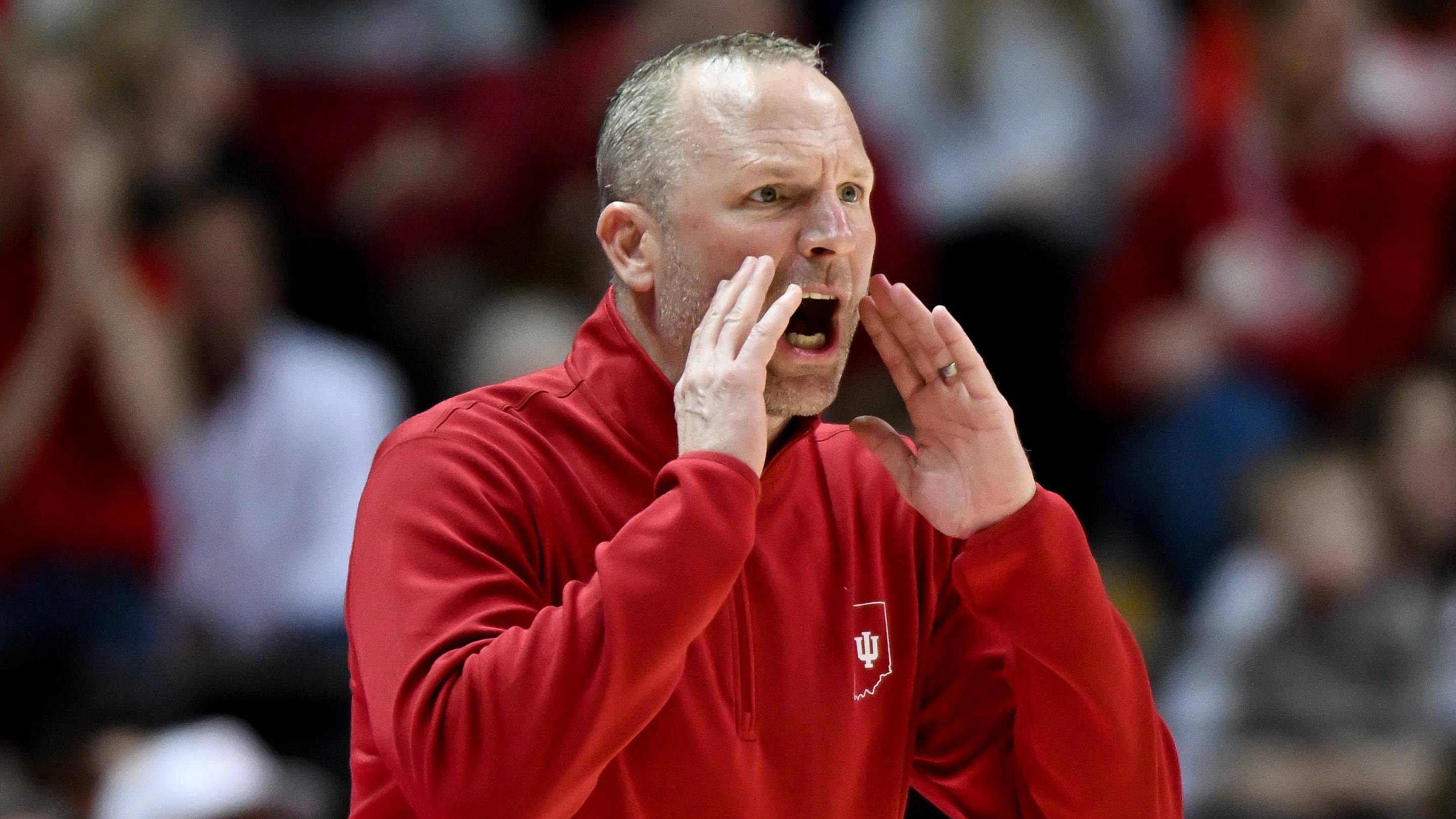
Indiana carries its own version of that same pressure. The Hoosiers do not merely play in the Big Ten, they have historically been one of the league’s expectation-setters. That history affects how quickly fans and administrators want to see tangible progress, especially with roster turnover that can either accelerate growth or expose a staff’s ability to recruit and develop under scrutiny. DeVries will be evaluated on whether the program’s style and performance can hold up across the entire conference season, not just in isolated stretches.
It is important to note what this kind of framing can and cannot prove. “Defining season” stories are inherently interpretive. They reflect how observers believe administrative patience tends to work in high-profile programs, but they do not themselves constitute official benchmarks, contracts, or internal timelines. Still, in the Big Ten, the environment makes these debates predictable: teams that do not reach the postseason regularly, or that fail to show a trajectory toward consistent tournament success, often find coaching decisions becoming harder to justify.
For fans and recruiting-watchers, the most practical takeaway is what to watch as the season develops. Penn State’s path likely hinges on whether the defense can return to the sort of profile that supported Rhoades’ prior success. Indiana and Ohio State will be monitored for whether their teams demonstrate durable identity and end-of-game execution against high-level conference opponents. By late season, the question across all three jobs will be the same, whether the results show a clear method and a credible plan to keep improving, or whether the next coaching search becomes the easier conversation to have.
Why It Matters
- Big Ten coaching evaluations can move quickly when teams fail to establish a consistent performance baseline against conference opponents.
- Defensive structure and overall identity tend to be the most visible markers of whether a coaching change is translating into long-term development.
- Indiana and Ohio State, as high-expectation programs, will face heightened scrutiny over sustained postseason readiness, not just competitiveness.
- Recruiting and roster stability become part of the storyline once a season is treated as a “must-prove” year.
Sources
Key Facts
- A preseason narrative is focusing on Mike Rhoades (Penn State), Darian DeVries (Indiana), and Jake Diebler (Ohio State) as head coaches facing “defining” expectations in 2026-27.
- Rhoades became Penn State’s head coach in 2023 after leading VCU to three NCAA Tournament appearances in six seasons.
- The same coverage describes Rhoades’ VCU defense work as including multiple top-15 KenPom defensive rankings during his time with the program.
- Penn State’s 2025-26 defense is reported as ranking 230th defensively on KenPom.
- The “defining year” framing centers on whether each program is demonstrating a sustained upward direction rather than stagnation.