
THE APEX TIMES
Robert Gasser answers the moment as Milwaukee explores rotation depth in Las Vegas
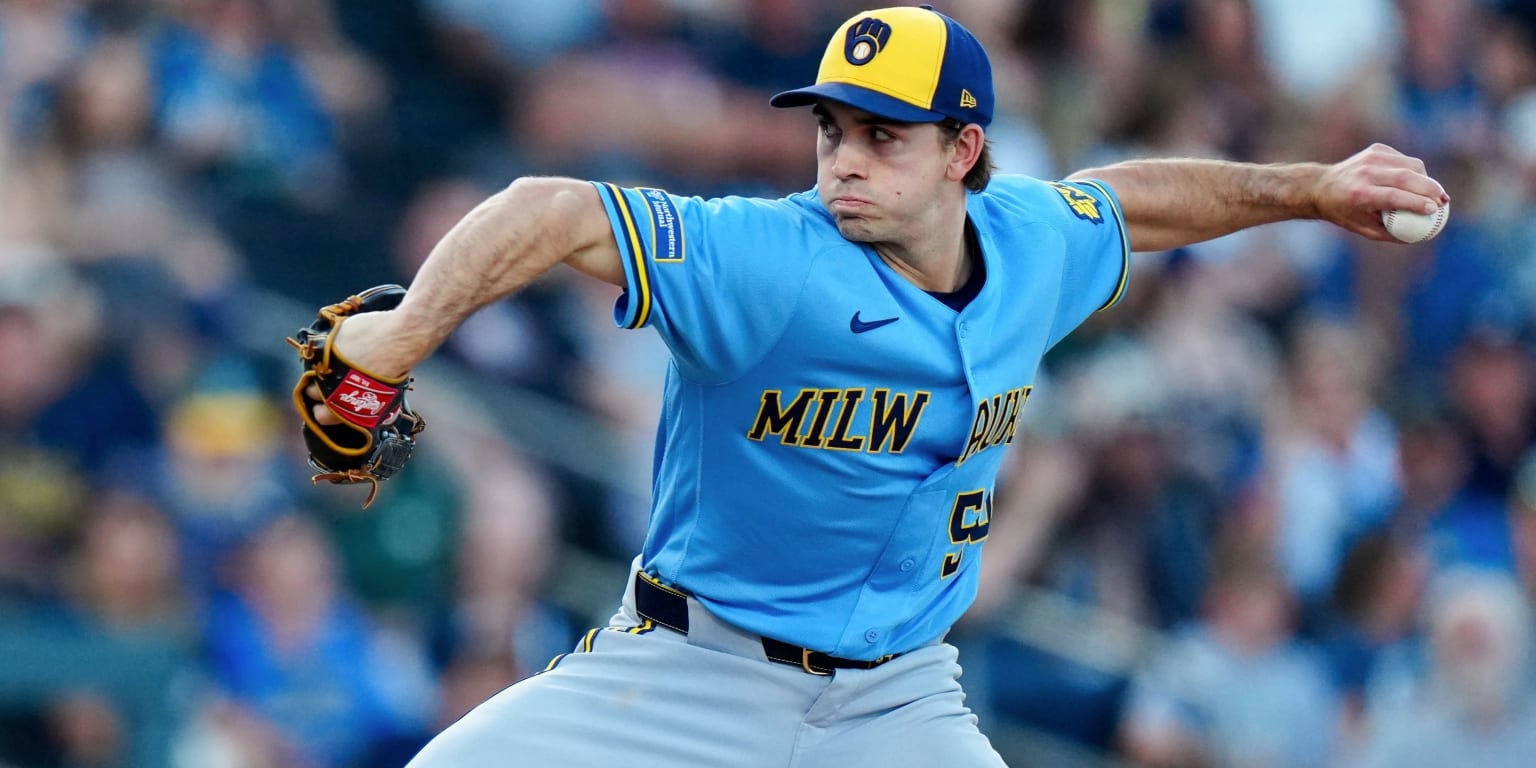
At Las Vegas Ballpark, the Brewers’ left-hander delivered a seven-strikeout effort and offered a clearer look at what he can provide as the organization weighs options behind its more familiar starters.
The Brewers used a high-variance series against the Athletics in Las Vegas as a reminder of how quickly pitcher development can be tested in real time. In that setting, Robert Gasser tried to do the one thing that most directly affects his path: stay available, compete for outs deep into the game, and give Milwaukee a chance to win despite the volatility around him. After Quinn Priester and Brandon Woodruff were both down in the Arizona Complex League working to get their seasons back on track, the window for Gasser to secure a more consistent spot in the big-league rotation becomes more tangible, even if it remains earned through starts, not projections.
Gasser’s outing produced a mixed ledger, but it carried an important thread for a pitcher fighting for a defined role. He surrendered four home runs in a 7-5 loss Tuesday night, an outcome that speaks to the power Arizona-and-elsewhere style of baseball currently rewards. Yet he also logged five innings and threw 93 pitches, the most in any start since Tommy John surgery cut short his rookie season two years ago. On a night when the Athletics repeatedly found the ball in the air, Gasser still managed to miss bats and keep the Brewers’ bullpen from absorbing an immediate, full workload.
The strikeout total, seven, was one of the more stabilizing parts of the performance. The left-hander pointed directly to the problem hitters present when they see fastballs they can drive, describing the challenge as limiting damage when “you have a barrel.” His focus, as he explained it, was executing offspeed pitches better, an emphasis that aligns with what rotation candidates need to demonstrate: the ability to turn contact into outs even when results are not uniformly clean.
The Athletics’ damage spoke loudly across the series. After a dramatic showing the night before featured a franchise-record-tying home run burst, Tuesday’s attack added to the total again, with the club hitting five more home runs and matching a Major League record by connecting on seven in the prior 15-14 loss. Against that backdrop, Gasser’s ability to keep the game within reach mattered, even if the homers prevented Milwaukee from fully controlling the tempo.
Milwaukee’s offense contributed sparingly in the power department, homering only once. Jackson Chourio hit an opposite-field fly ball two batters into the night that carried over the fence, but the Brewers otherwise struggled to sustain rallies while the Athletics answered early and then built on it. In the final picture, relievers Elvis Alvarado and Mason Barnett combined to strike out eight of the Brewers’ final 10 hitters, turning the finish into a mostly scoreless stretch and underlining the gap between “surviving” and “winning” when run prevention costs too much.
The Brewers’ rotation conversation does not exist in isolation. The franchise has been sending pitchers through structured environments, and the Arizona Complex League work for Priester and Woodruff is part of that longer arc. For Gasser, however, the immediate requirement is straightforward: translate developmental progress into repeatable major-league innings. If he can pair the kind of pitch volume and swing-and-miss he flashed with better results against the long ball, Milwaukee’s internal decisions become easier.
Looking ahead to the series finale, the Brewers planned to turn the start over to Brandon Sproat. The practical question is whether Milwaukee’s rotation depth can do more than “keep things decent” against an offense built on homers. For now, Gasser’s start offers a clear takeaway for the staff, even in defeat: his command of workload and his strikeout upside remain real, but the next step is limiting the specific damage that shows up as long-ball numbers.
What to watch next is whether Gasser’s offspeed execution improves quickly enough to keep barrels from becoming home runs. That will determine not just the outcome of one start, but whether Milwaukee can treat him as a more stable piece while other arms continue building toward the majors.
Why It Matters
- Gasser’s performance affects the Brewers’ internal rotation choices, especially as other starters work through development assignments.
- Home-run susceptibility remains the central swing factor for a starter trying to cement a major-league role, even when strikeout ability and inning coverage show promise.
- The Athletics’ two-game home run burst emphasizes how quickly pitching plans can be tested when an opponent’s power runs hot.
- The series also highlights the broader development pipeline, with Priester and Woodruff down in the Arizona Complex League while Milwaukee evaluates what ready arms can provide now.
Key Facts
- Robert Gasser pitched for the Brewers in Las Vegas Ballpark and struck out seven batters in a 7-5 loss to the Athletics.
- Gasser surrendered four home runs but covered five innings and threw 93 pitches.
- The 93-pitch outing was Gasser’s highest pitch count since Tommy John surgery interrupted his rookie season two years ago.
- The Athletics hit five more home runs on Tuesday, building on a power surge from the prior game that included a Major League record by hitting seven homers in a 15-14 loss.
- Milwaukee homered once, with Jackson Chourio hitting an opposite-field home run two batters into the game.
- Relievers Elvis Alvarado and Mason Barnett combined for eight strikeouts in 3 1/3 scoreless innings to finish the Brewers’ final stretch.
- For the series finale, the Brewers planned to start Brandon Sproat.