
THE APEX TIMES
Role Call: Drew Shelton’s versatility is a target for the Cowboys’ offensive line
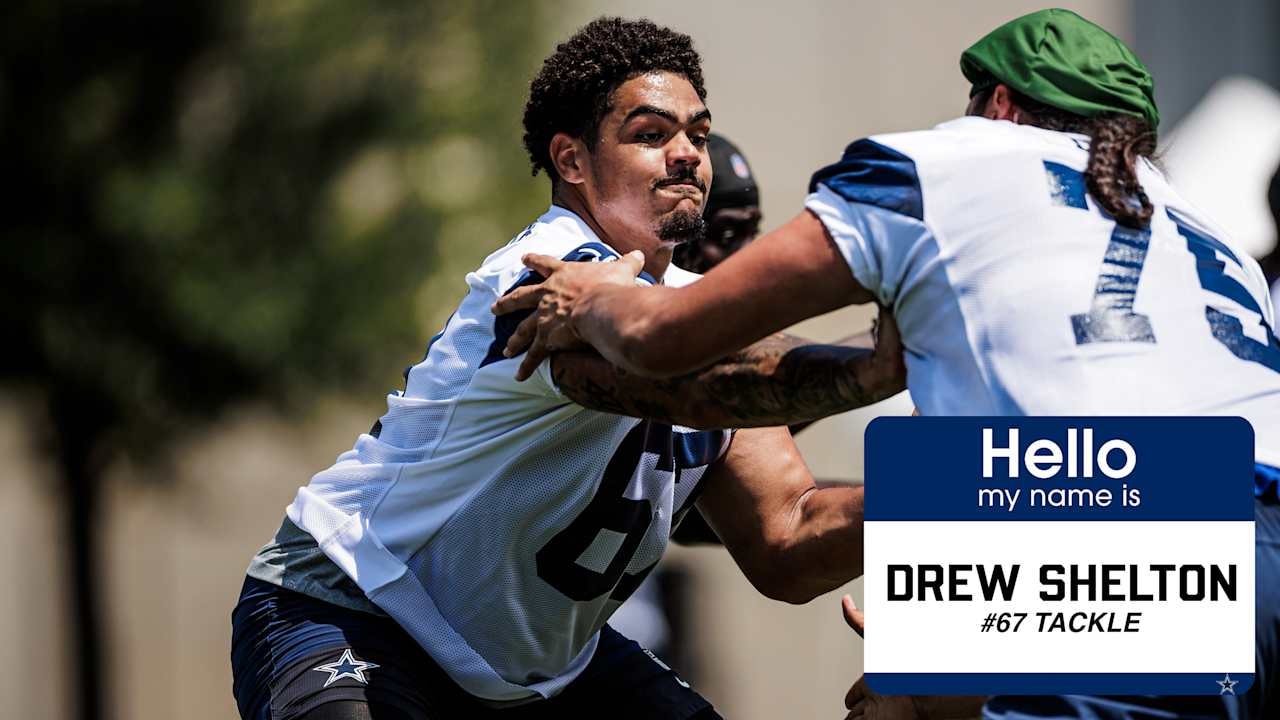
Dallas plans to test rookie offensive lineman Drew Shelton beyond his comfort zone at tackle, leaning on his cross-training as training camp begins.
The Dallas Cowboys are building a specific kind of depth up front as training camp approaches, and rookie offensive lineman Drew Shelton is at the center of that plan. In a “Role Call” installment introducing new members of the roster, the team framed Shelton as an option who can move and fit wherever the offense needs him most, even though his background has been largely defined by one side of the line.
Shelton’s college path ran through Penn State, where the Cowboys point to both the role he played and the context of the scheme he came from. He was a starter in at least one game during each of his four seasons, and he started 28 games during his final two years. The Cowboys also emphasized the broader style of the program, noting that Penn State’s rushing offense finished among the Big Ten’s top-five offenses during Shelton’s four-year stretch, a foundation the team believes should translate to its own line-building priorities.
The draft detail matters because it explains why Dallas invested late in the offensive line pipeline. The Cowboys said they have used offensive linemen in each of the last six drafts, and they continued that approach by selecting Shelton with the 112th overall pick, specifically described as the first of their three fourth-round selections. The team’s reasoning, as presented in the release, is that later-round draft capital can create both immediate depth and long-term development, giving players like Shelton a legitimate runway to contribute if and when matchups and attrition require it.
While Shelton’s experience has been rooted in left tackle, the Cowboys’ plan for camp points in multiple directions. The team indicated that, although he has primarily played left tackle, he will be tried at right tackle, with additional work that could extend inside to guard. That cross-training is not presented as a single-position experiment. Instead, the Cowboys portrayed it as a way to keep options open as the roster settles and as the coaching staff looks for a flexible group capable of adjusting to different looks.
The Cowboys also tied Shelton’s positional adaptability to what they believe the offensive line room has been emphasizing over the past year. In the release, the team referenced a fit between Shelton’s background and the instruction he received from coaches who recruited him out of high school, Klayton Adams and Conor Riley. The message to watch during camp is whether Shelton can apply those concepts quickly enough to handle the mechanical and footwork differences that come with moving from one tackle spot to another, and then potentially carrying responsibilities at guard.
What to watch next is less about immediate guarantees and more about reps and trust. If Shelton’s learning curve shows the kind of steady progress the Cowboys are asking for, his value could extend beyond a single depth chart slot. In a league where line rotation and matchup planning can become a recurring theme, the player Dallas described as “next in line” for versatility may become one of the easiest ways for the team to keep the unit coordinated under changing circumstances.
Why It Matters
- A versatile tackle-and-guard outlook can give Dallas more flexibility for lineup construction, especially as the offensive line adjusts through camp and preseason.
- Shelton’s ability to transition across positions affects the depth chart more than a traditional single-role prospect, because it can reduce the cost of shuffling assignments when matchups change.
- The Cowboys’ repeated offensive line drafting suggests they are treating internal competition and development as an ongoing process, not a one-time bet.
- If Shelton’s cross-training progresses quickly, it could influence how the team manages snaps for multiple linemen and protects continuity in the run game.
Sources
Key Facts
- Drew Shelton is one of the Cowboys’ new roster additions highlighted in the team’s training camp “Role Call” series.
- Shelton played at Penn State for four years, with the Cowboys noting he started in at least one game in each season and started 28 games in his final two years.
- The Cowboys selected Shelton with the 112th overall pick, described as the first of their three fourth-round picks.
- The Cowboys said Shelton’s primary experience is at left tackle, but he is expected to be tried at right tackle and potentially worked at guard.
- Dallas framed its offensive line drafting approach as an effort to build depth while developing players for when they are needed, pointing to a recent string of offensive line selections.